_inst: 5 fen fires (ex dogana, rome 2018)
5 fen fires (opposing immersion)
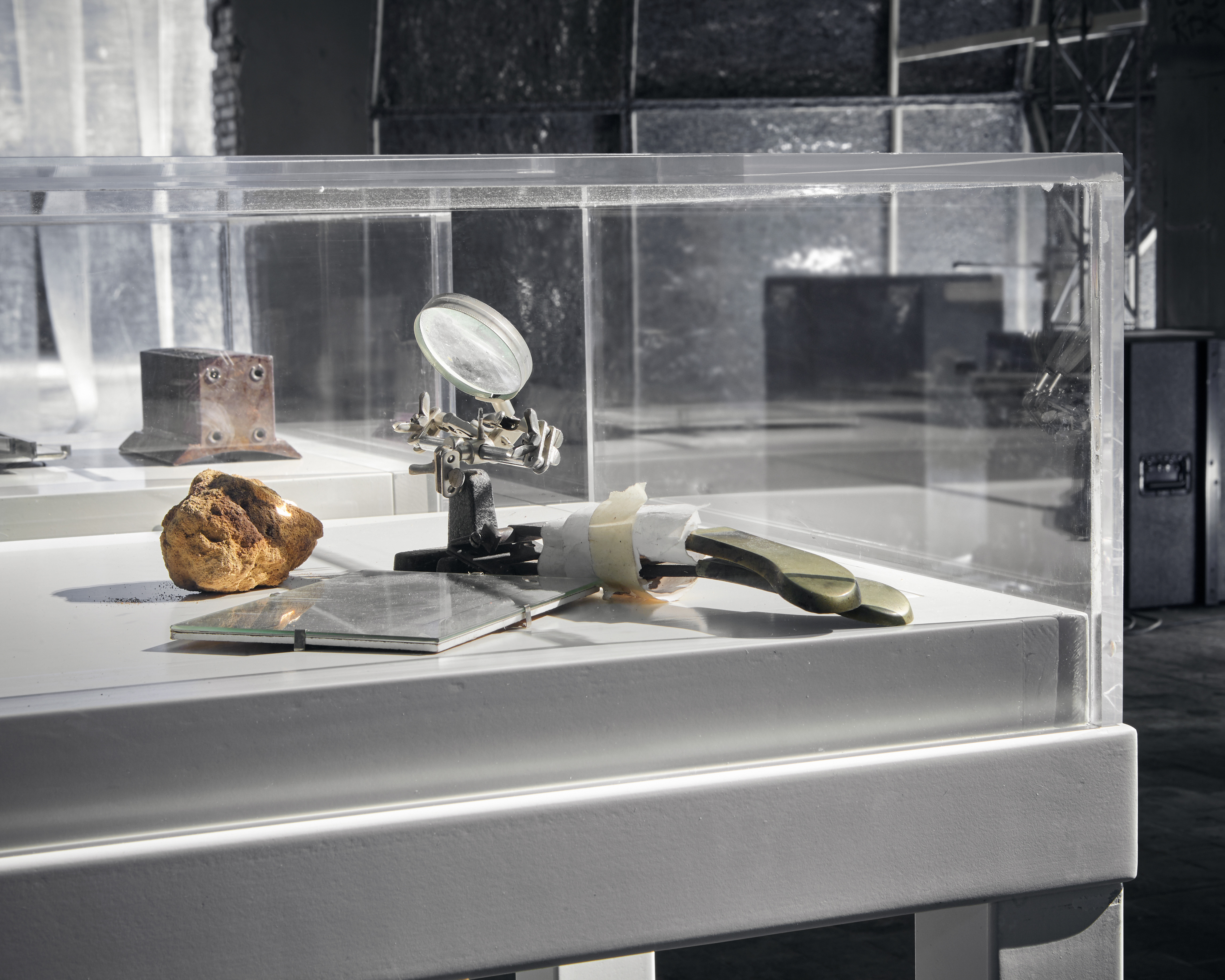
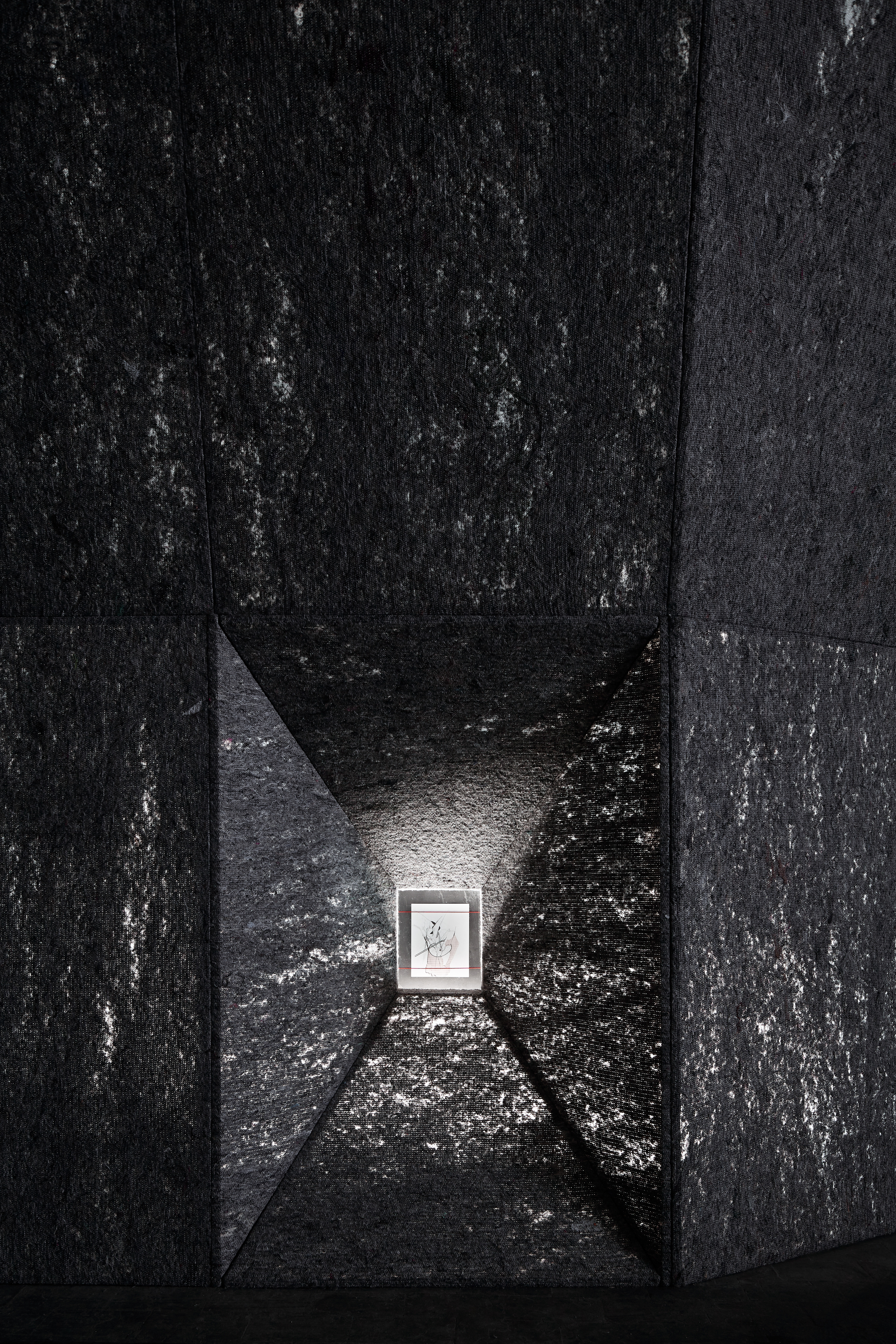
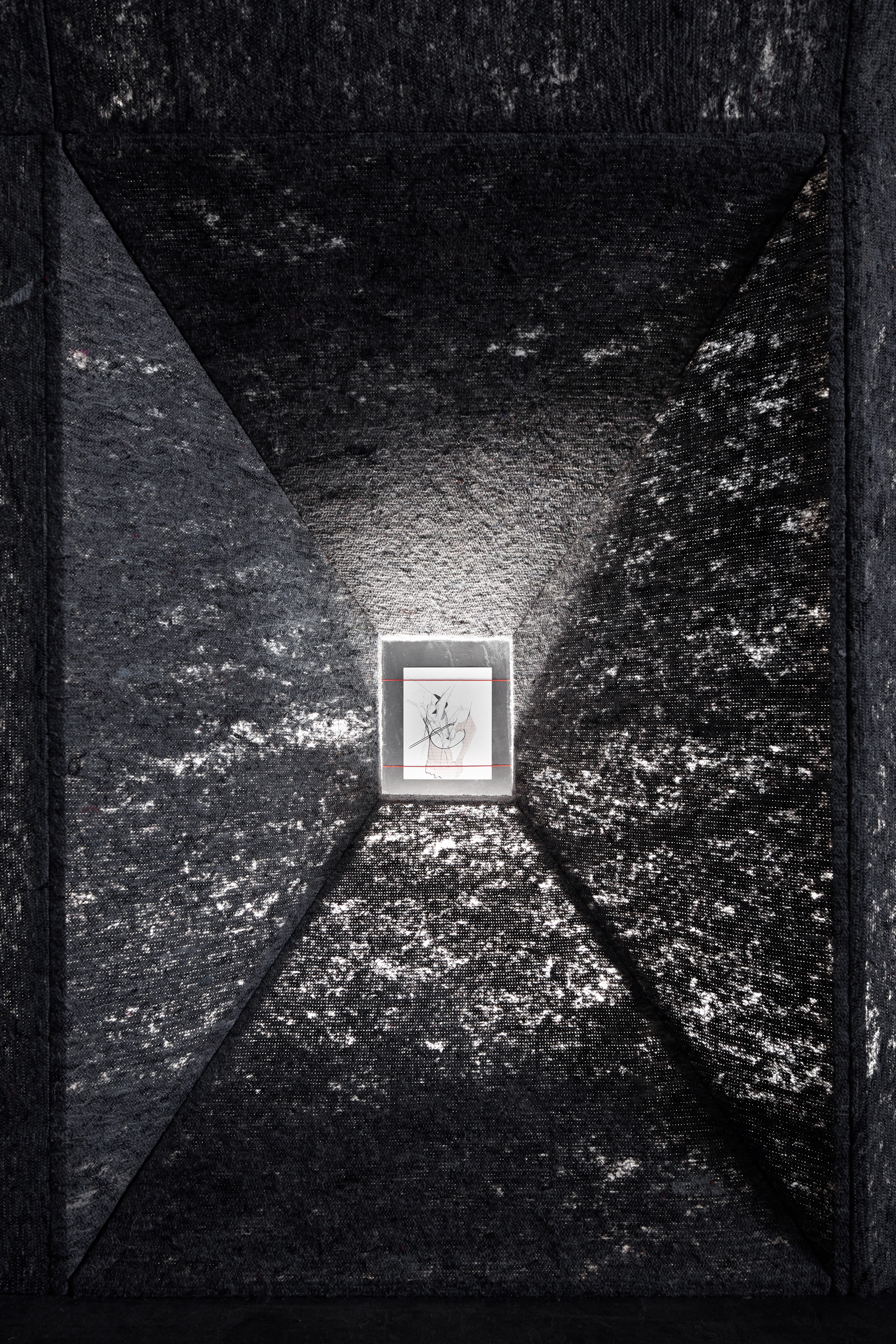
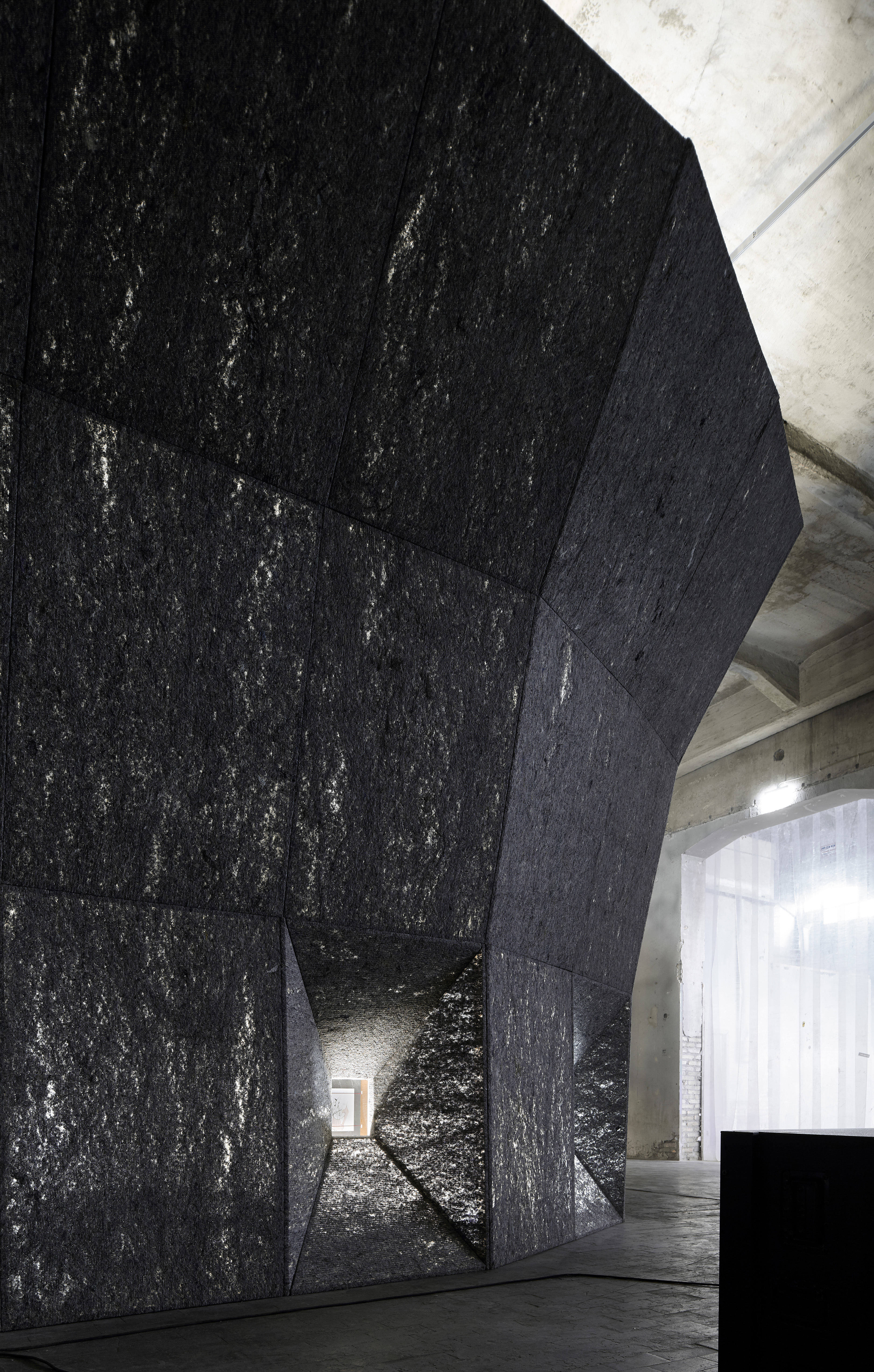
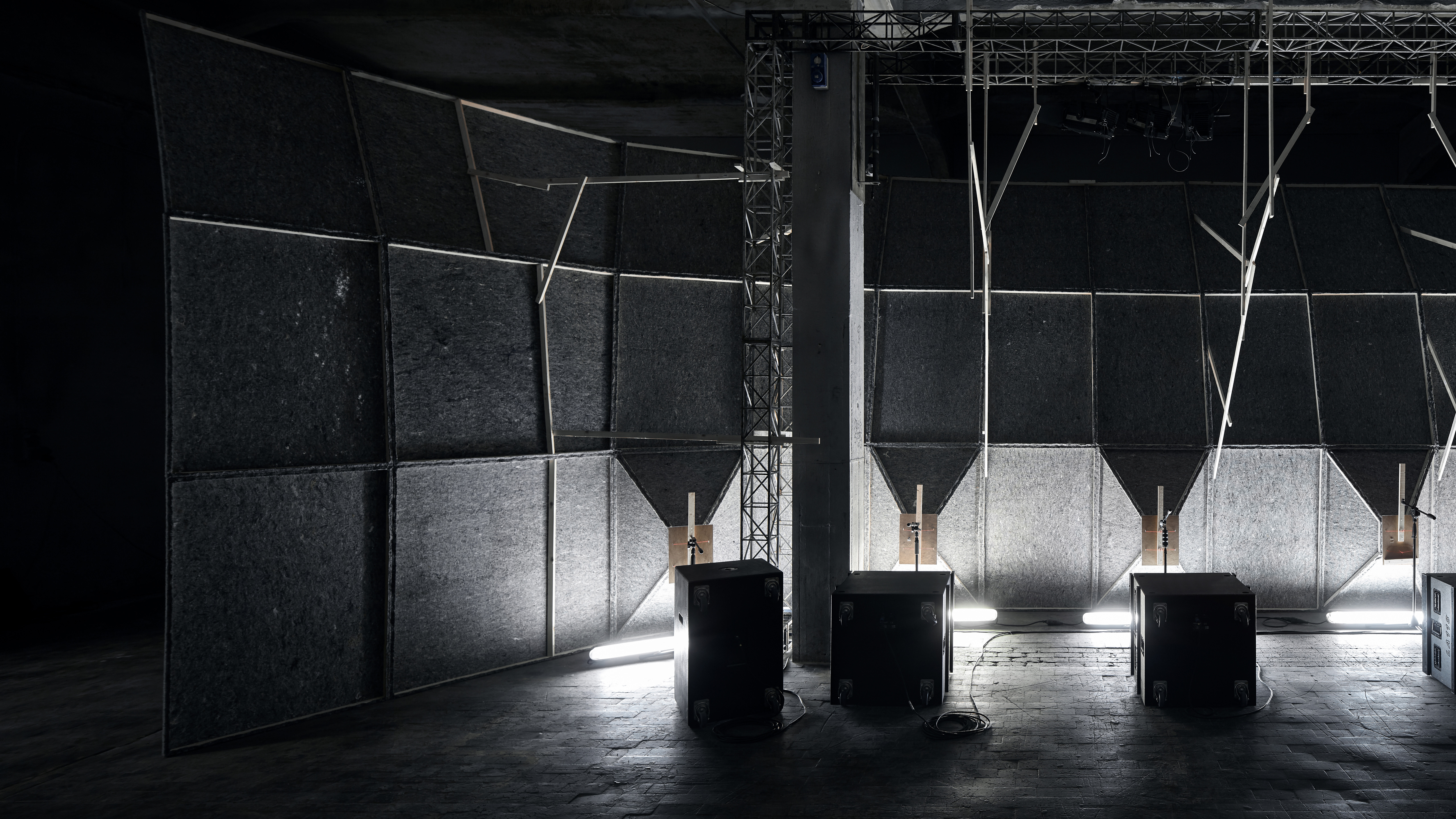
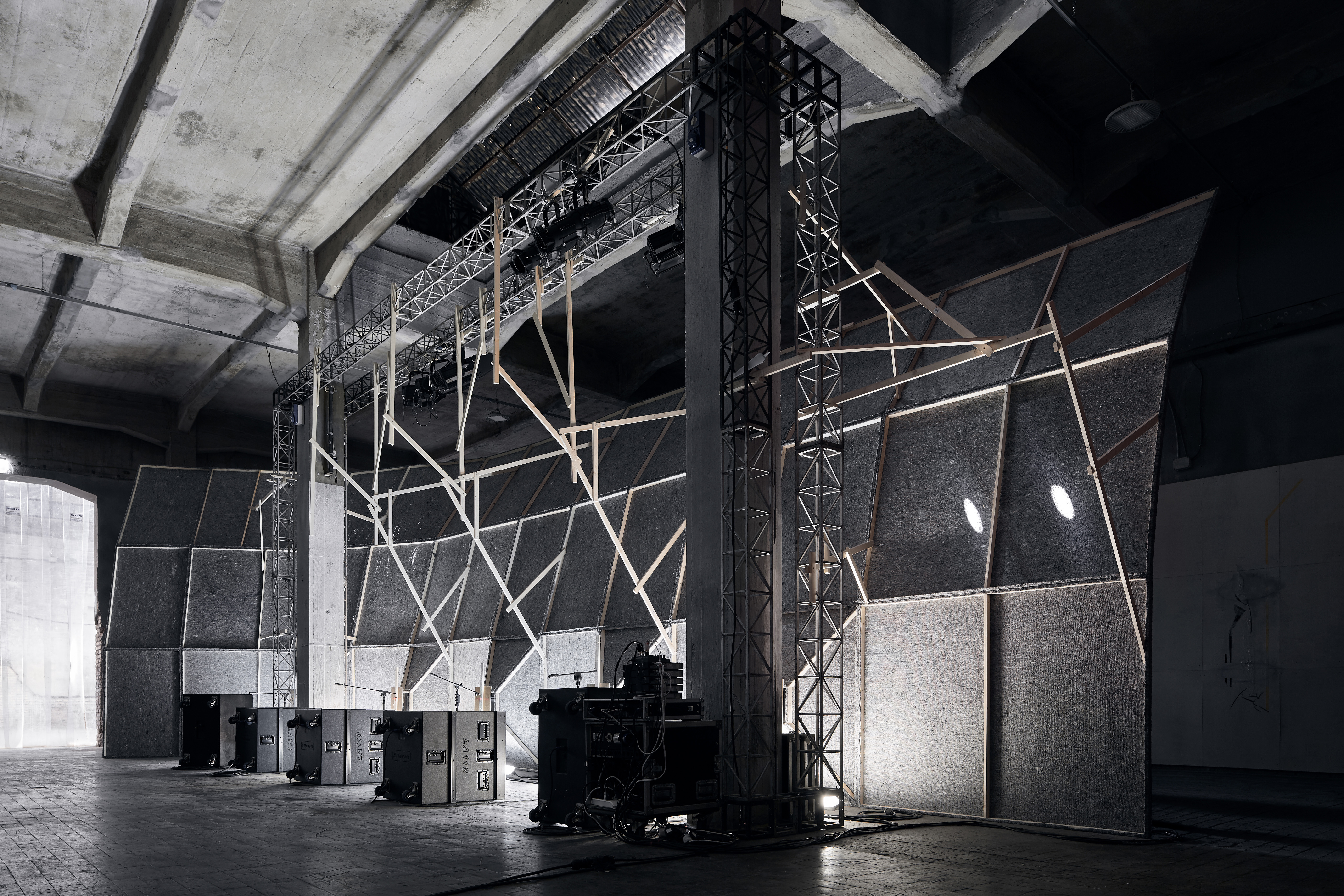
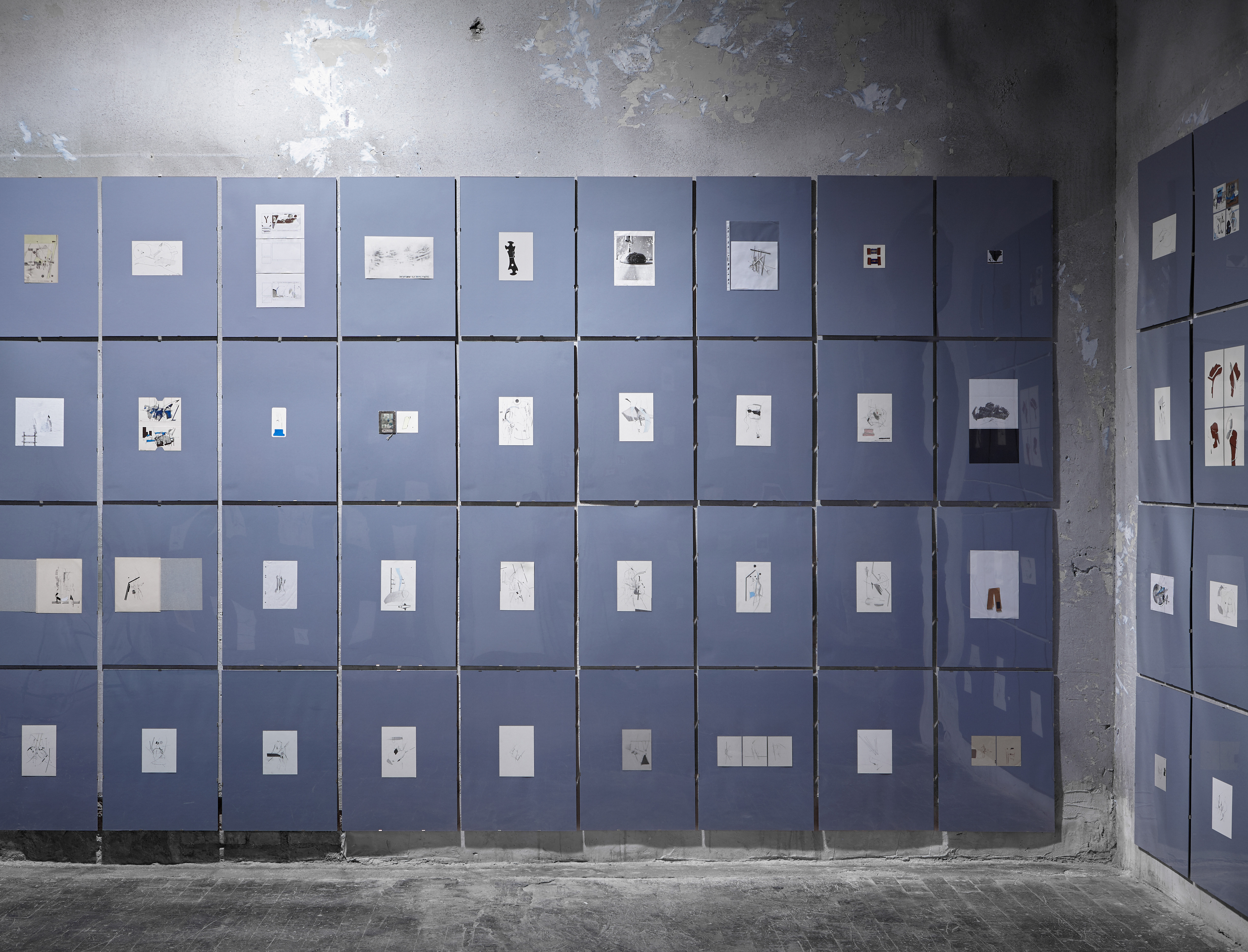
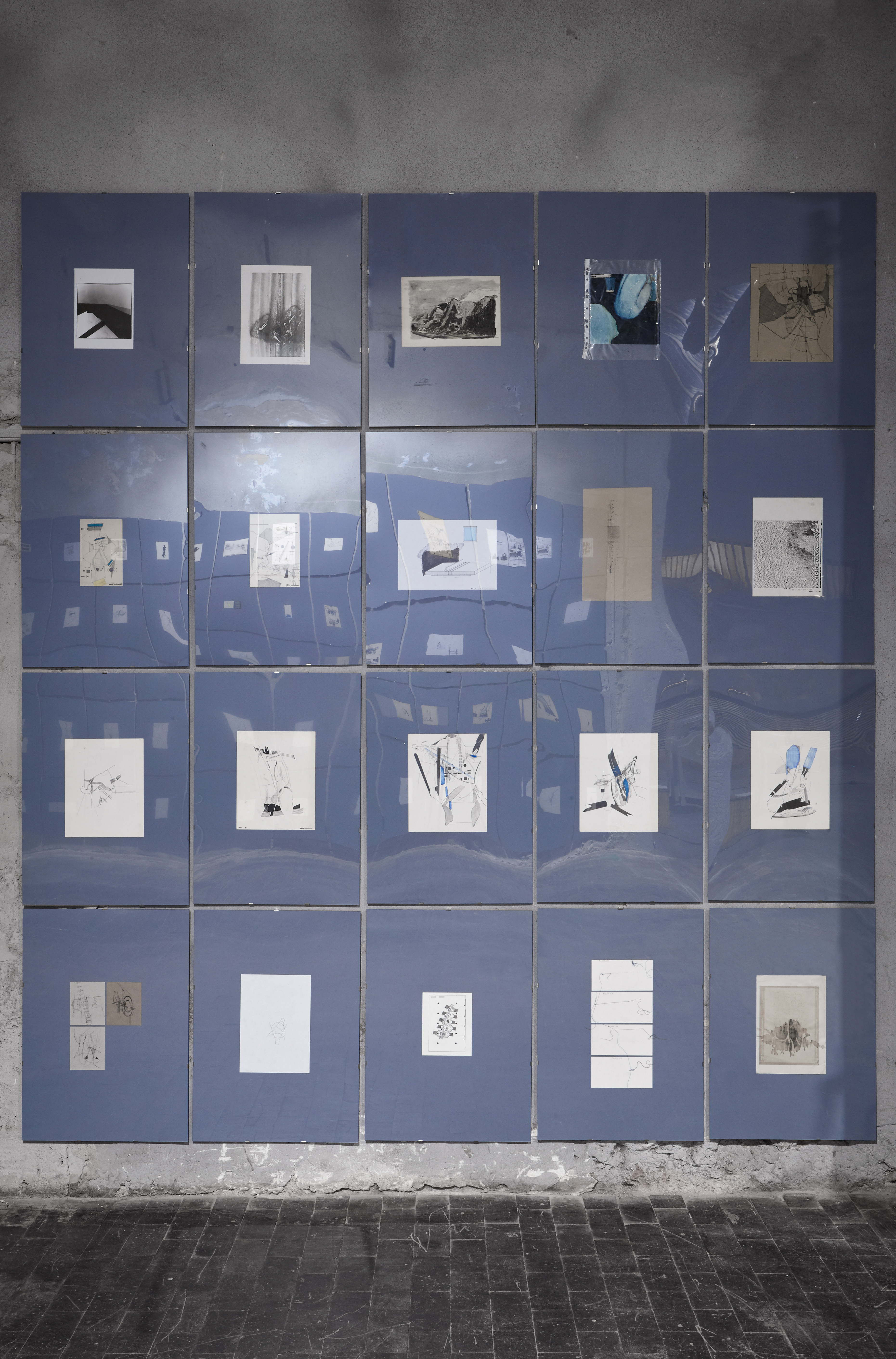
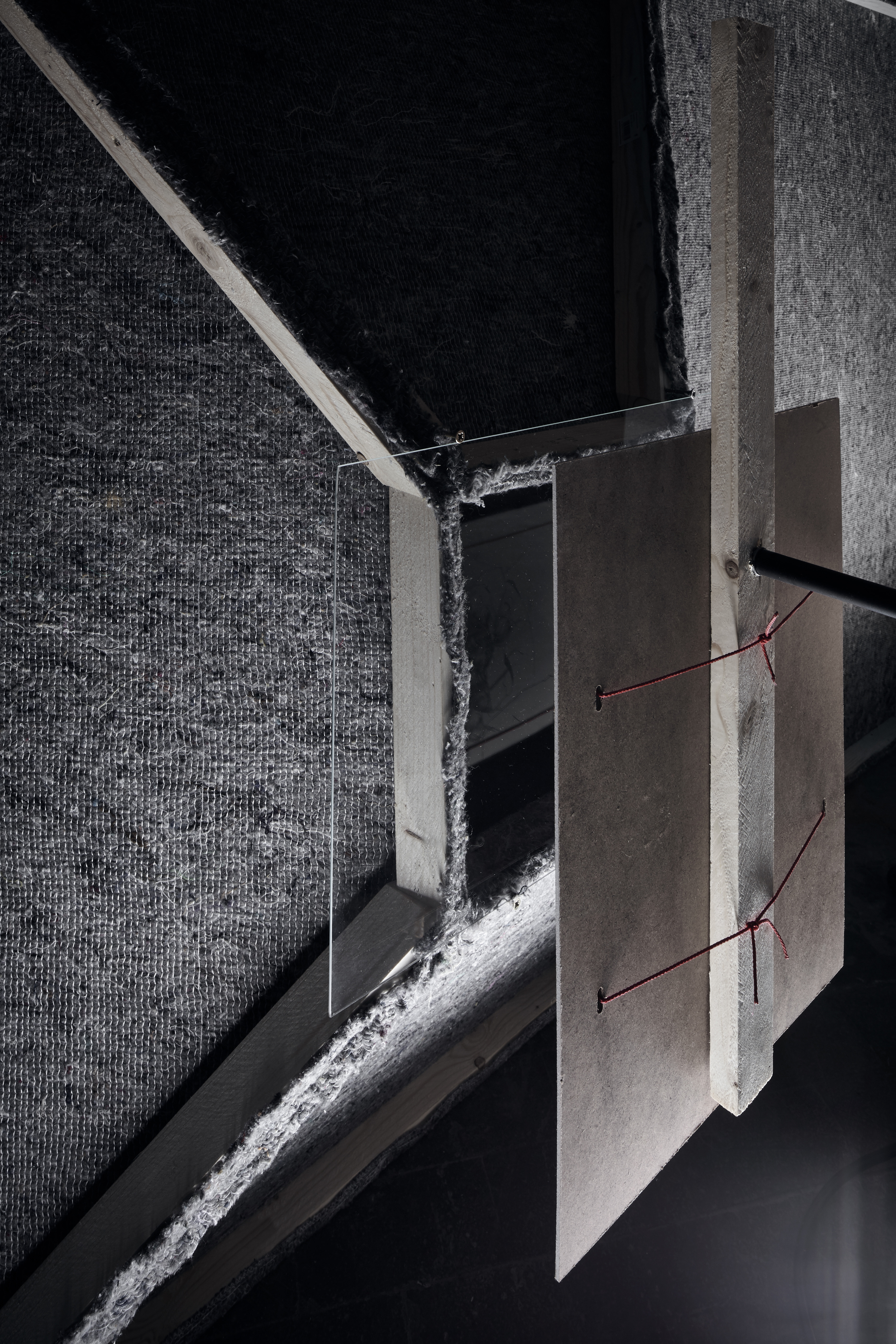
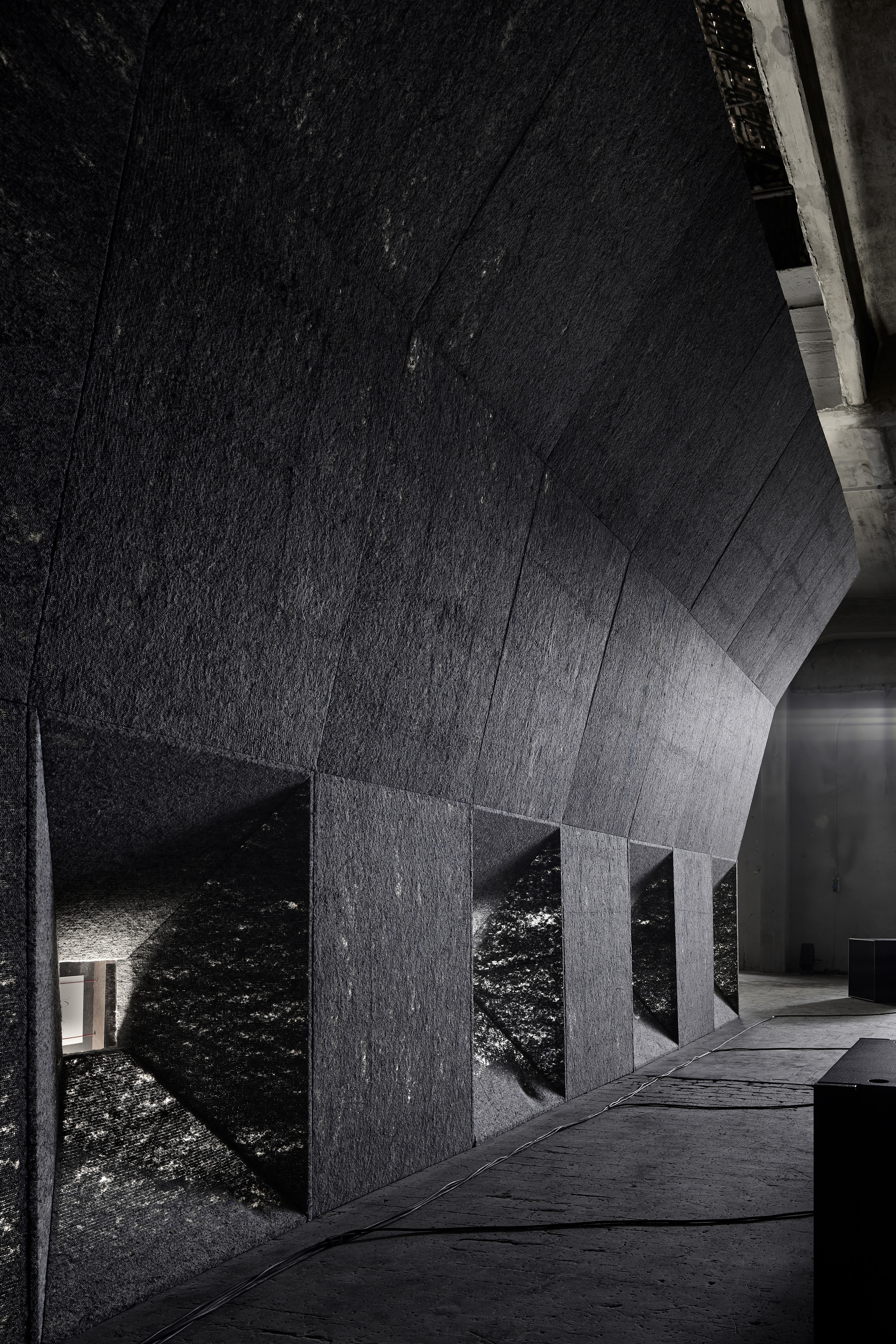
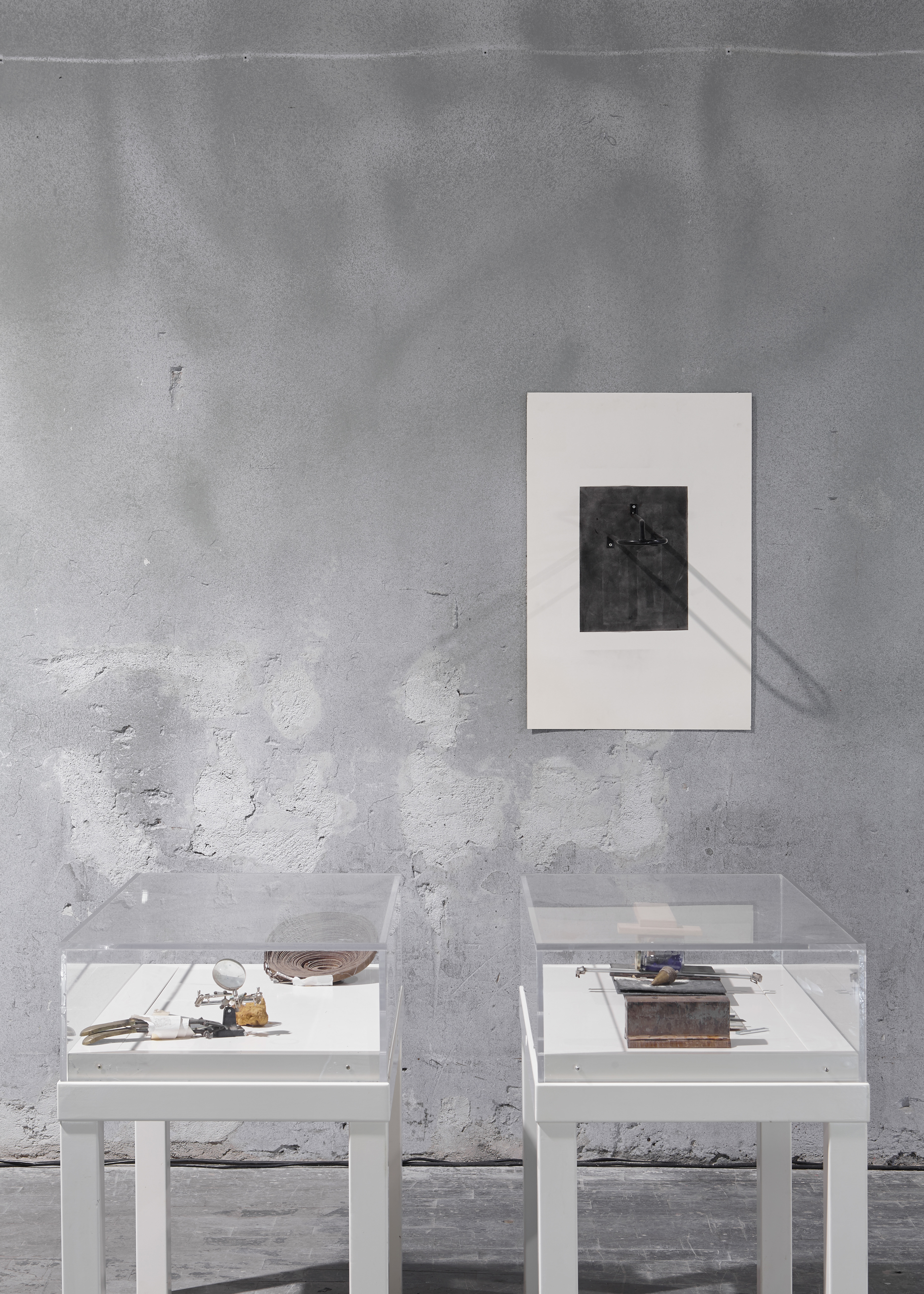
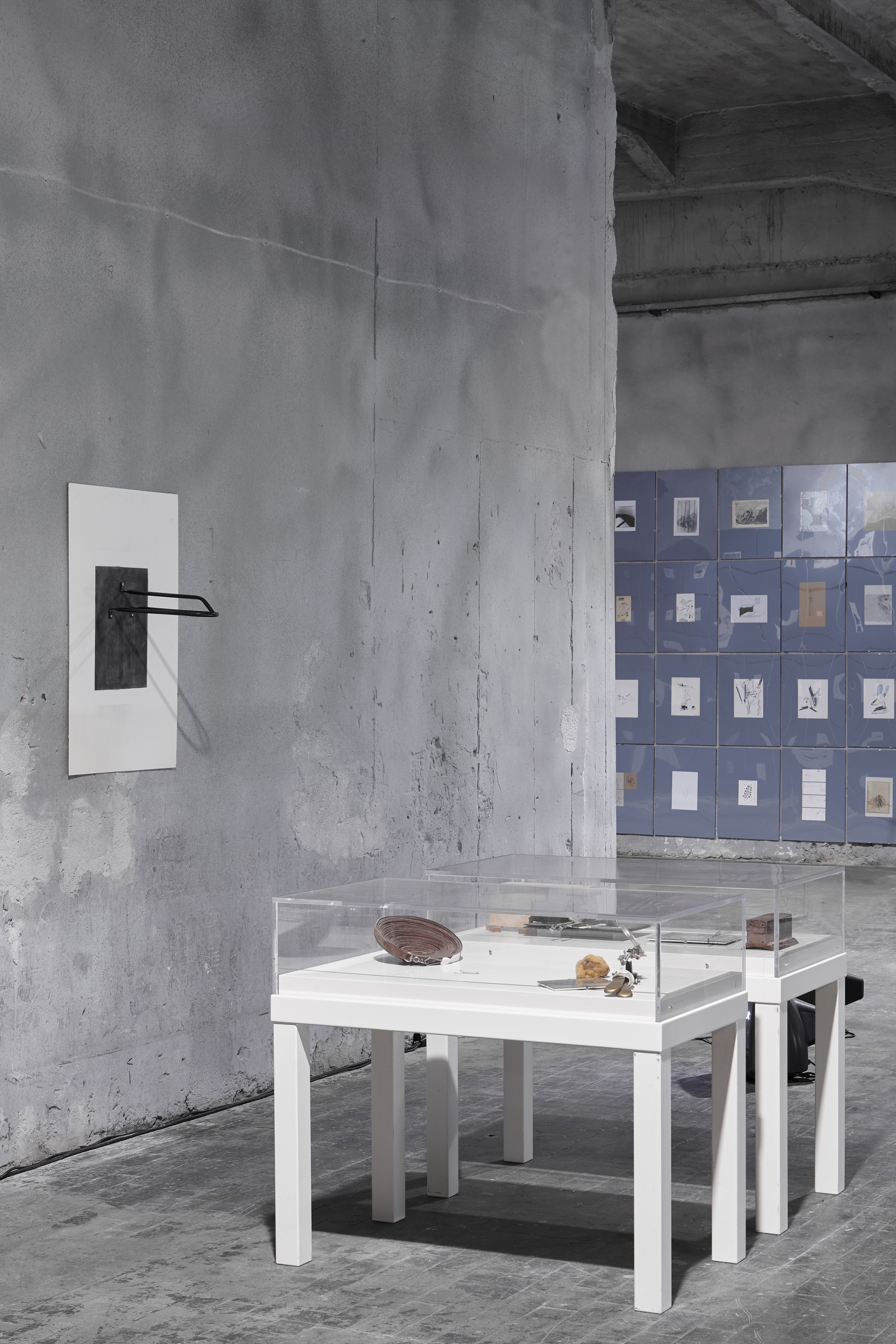
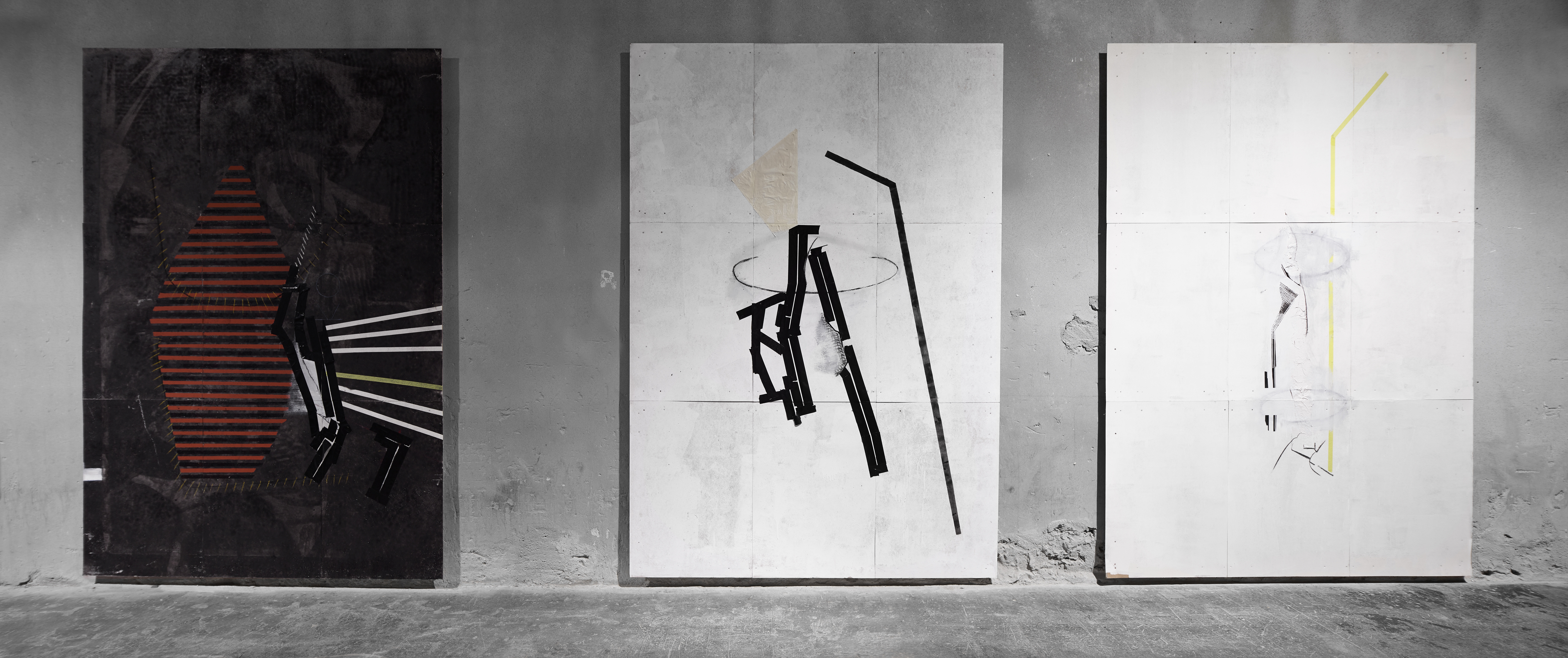
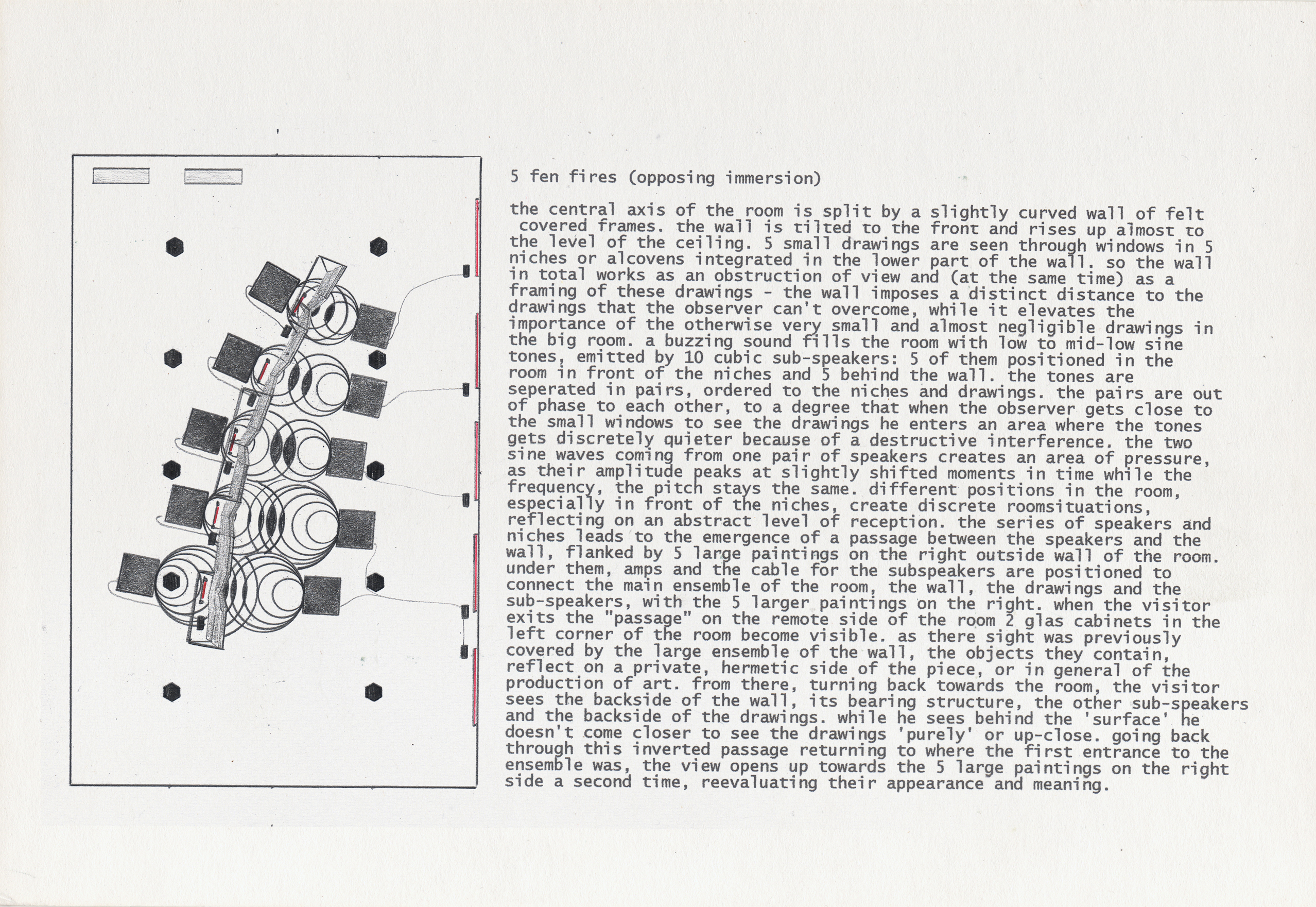
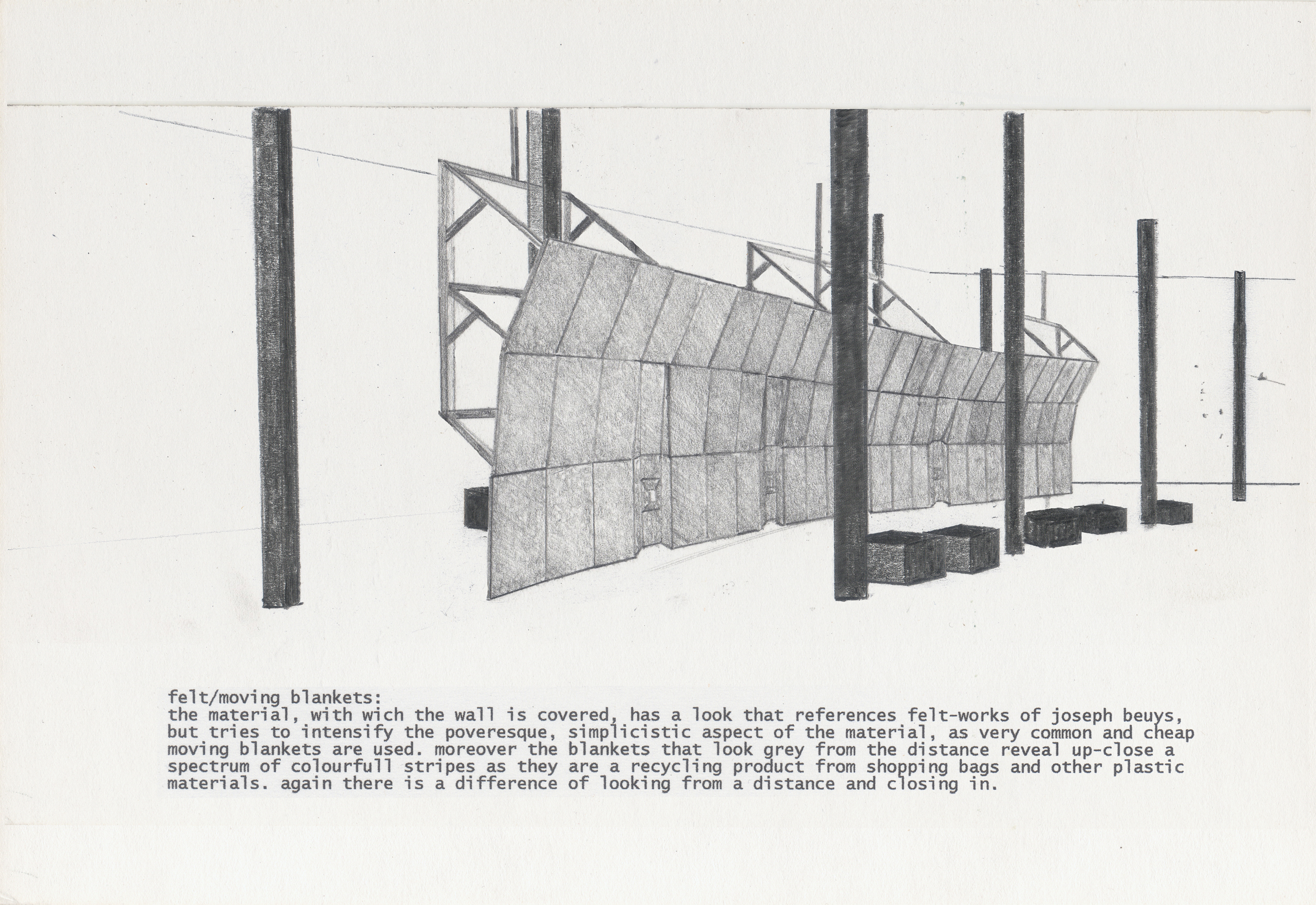
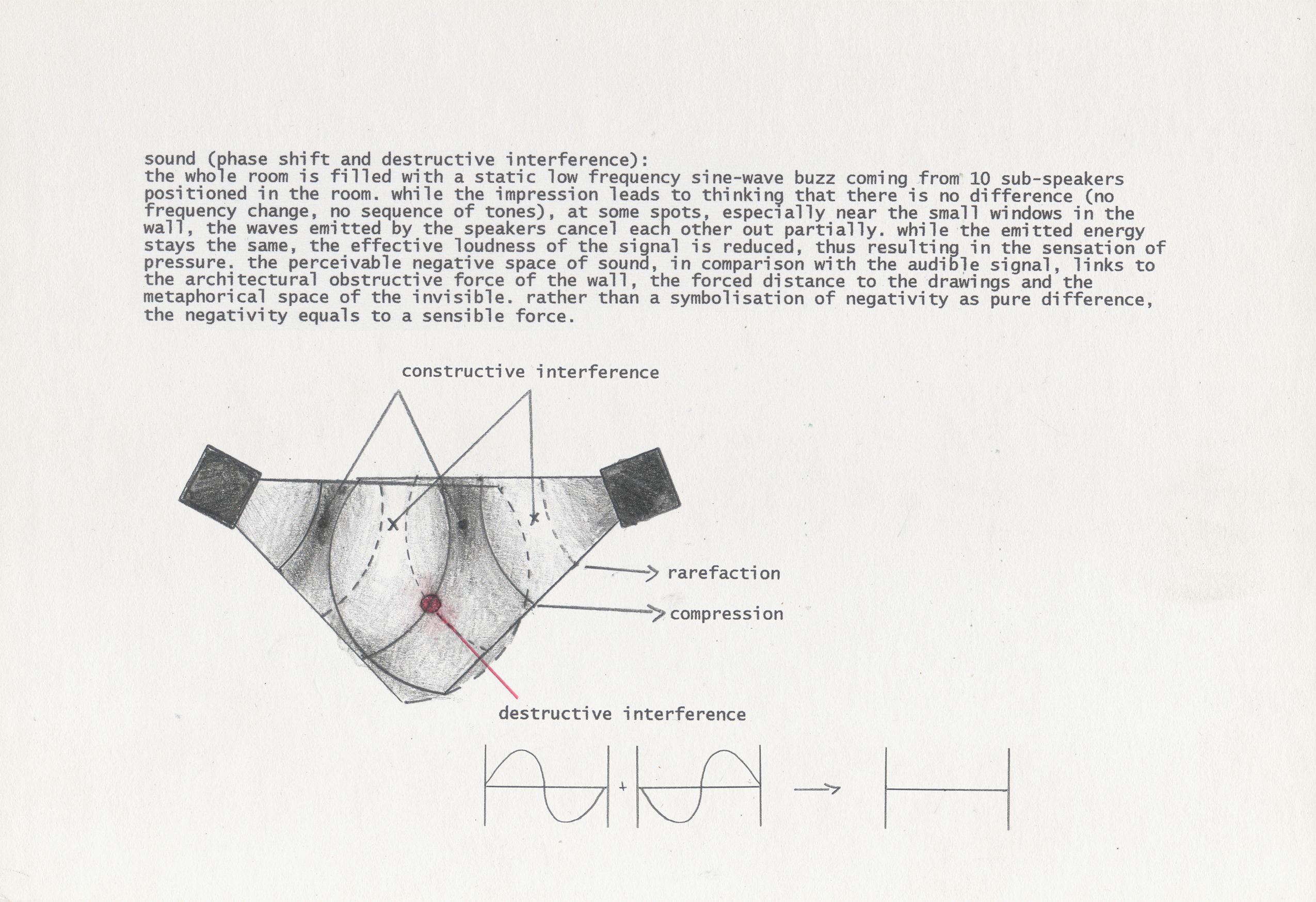
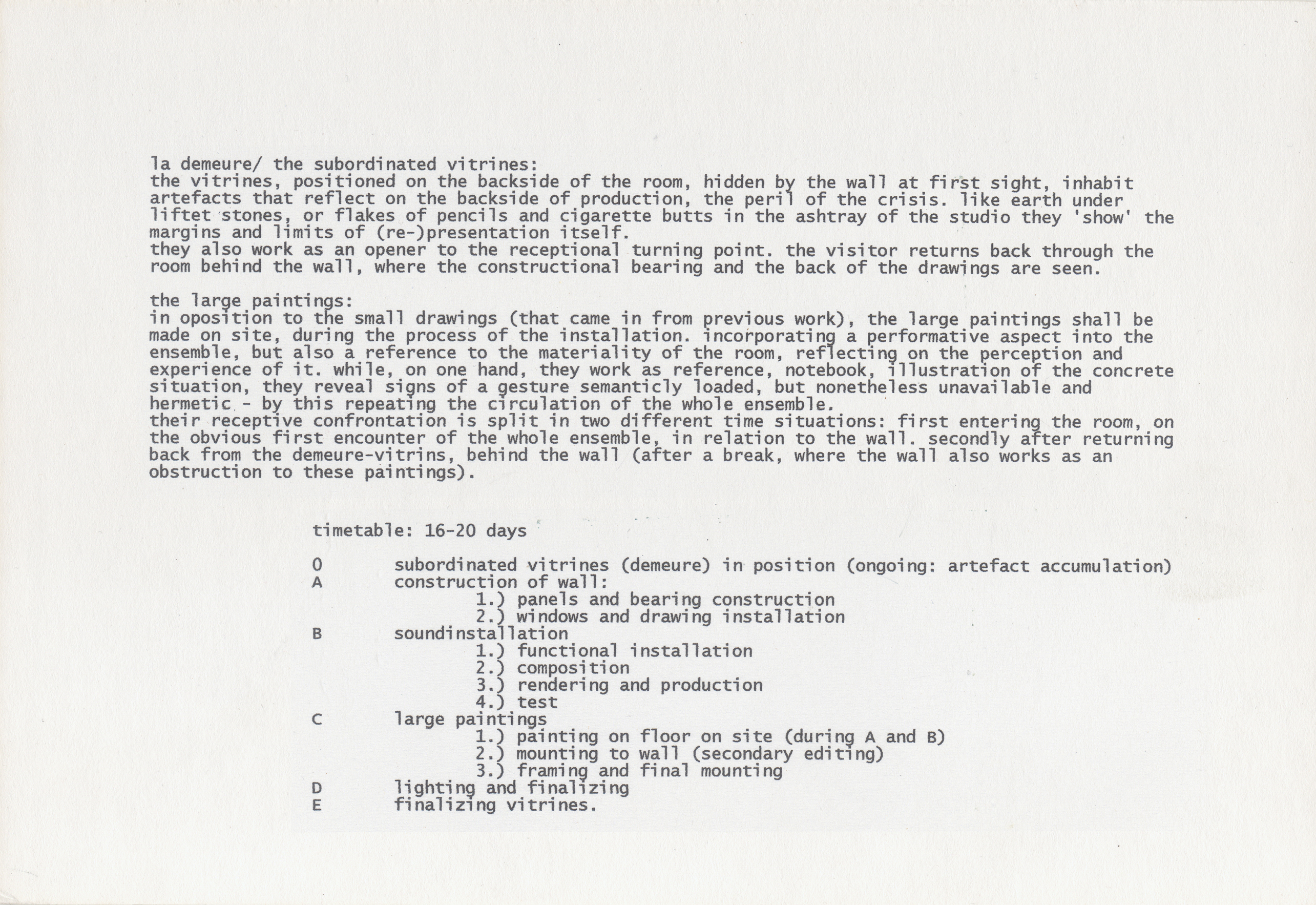
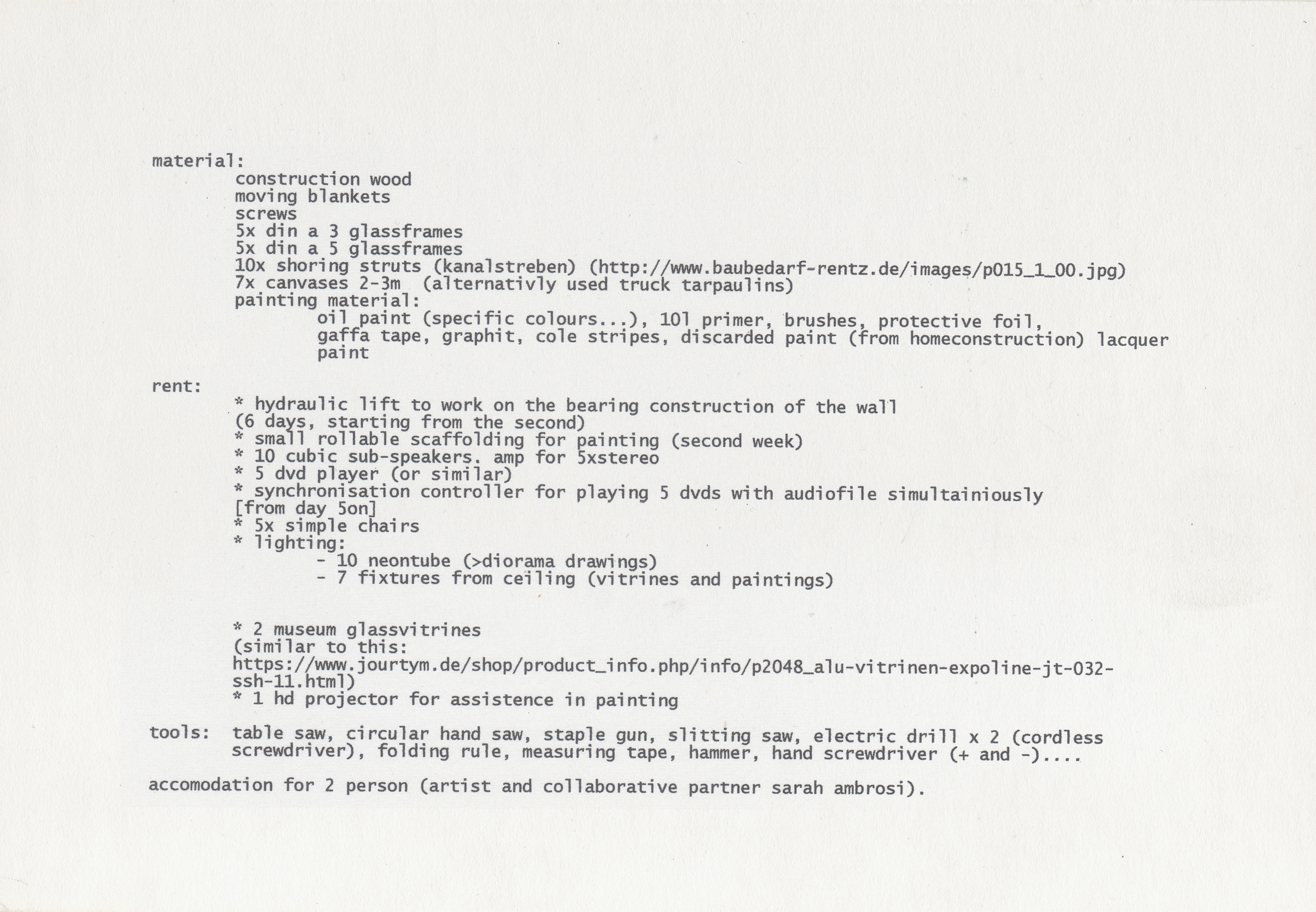
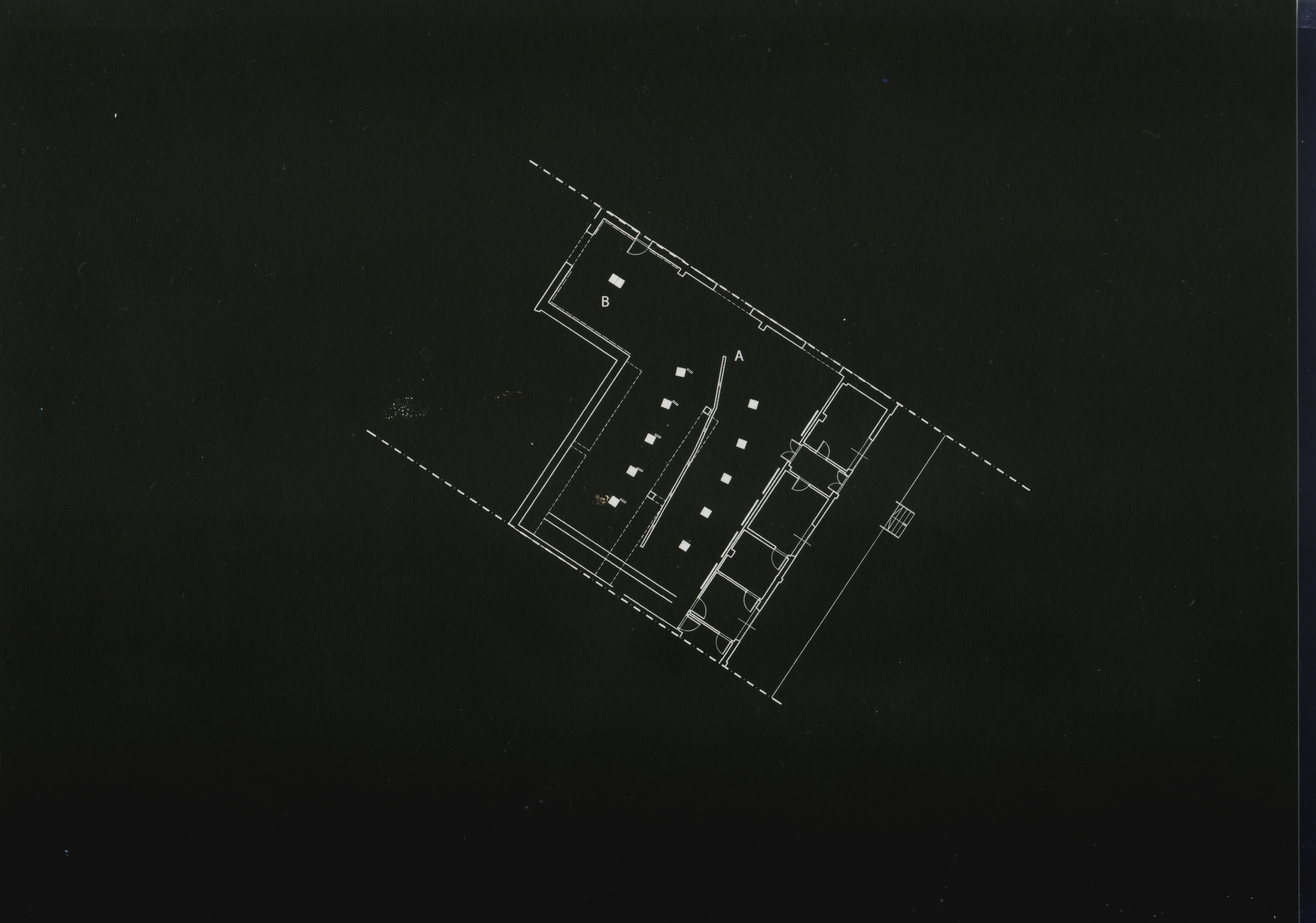
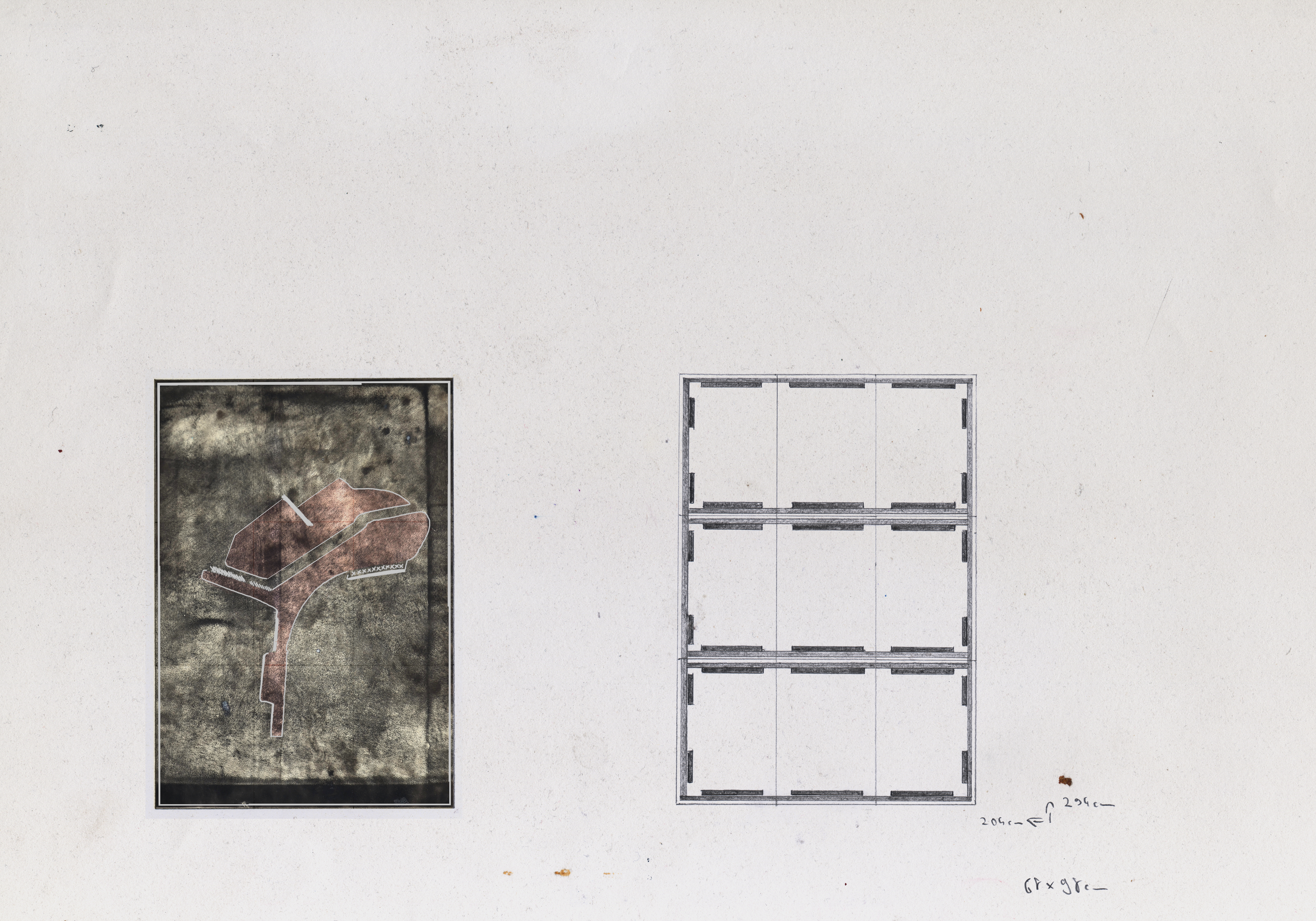
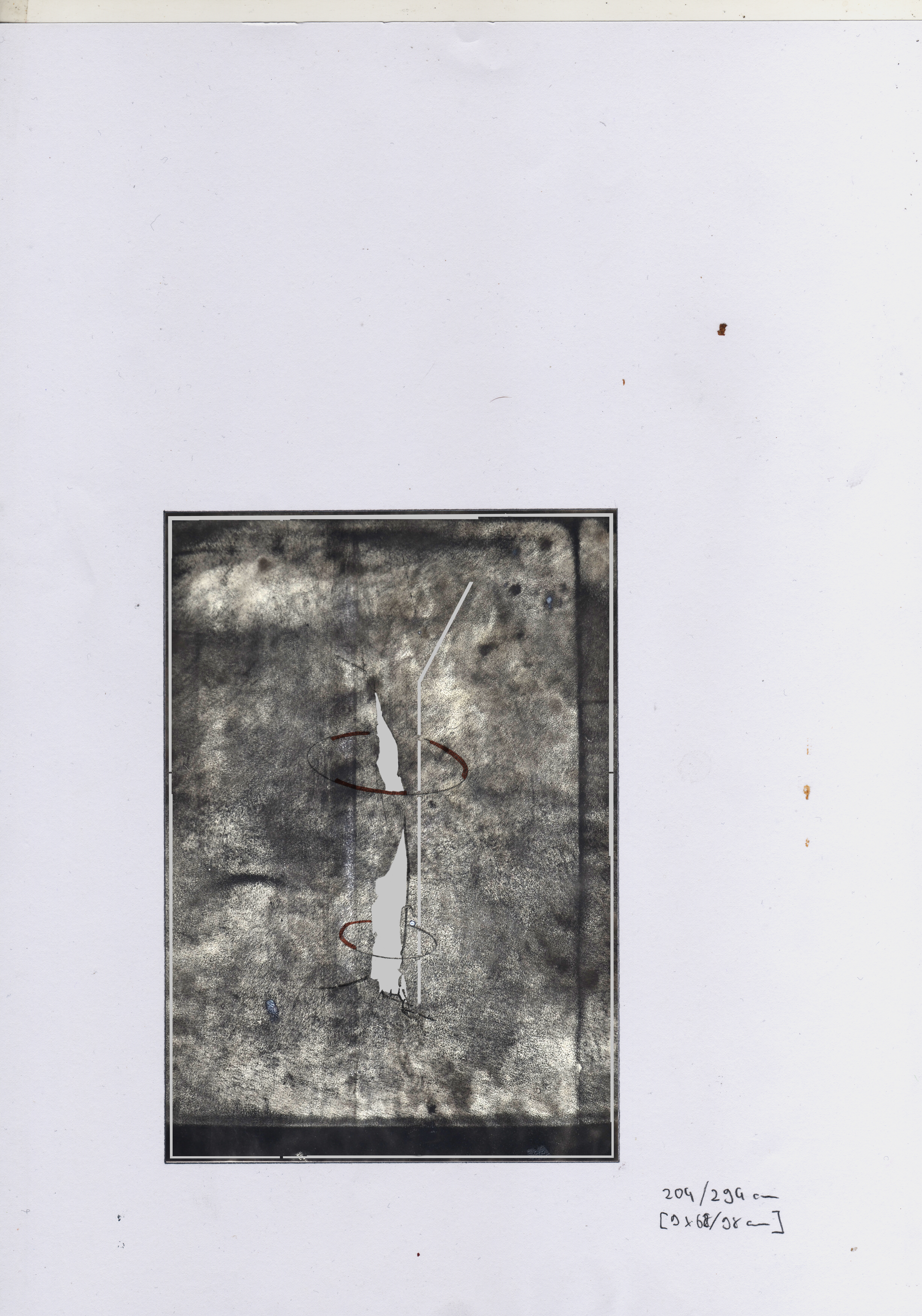
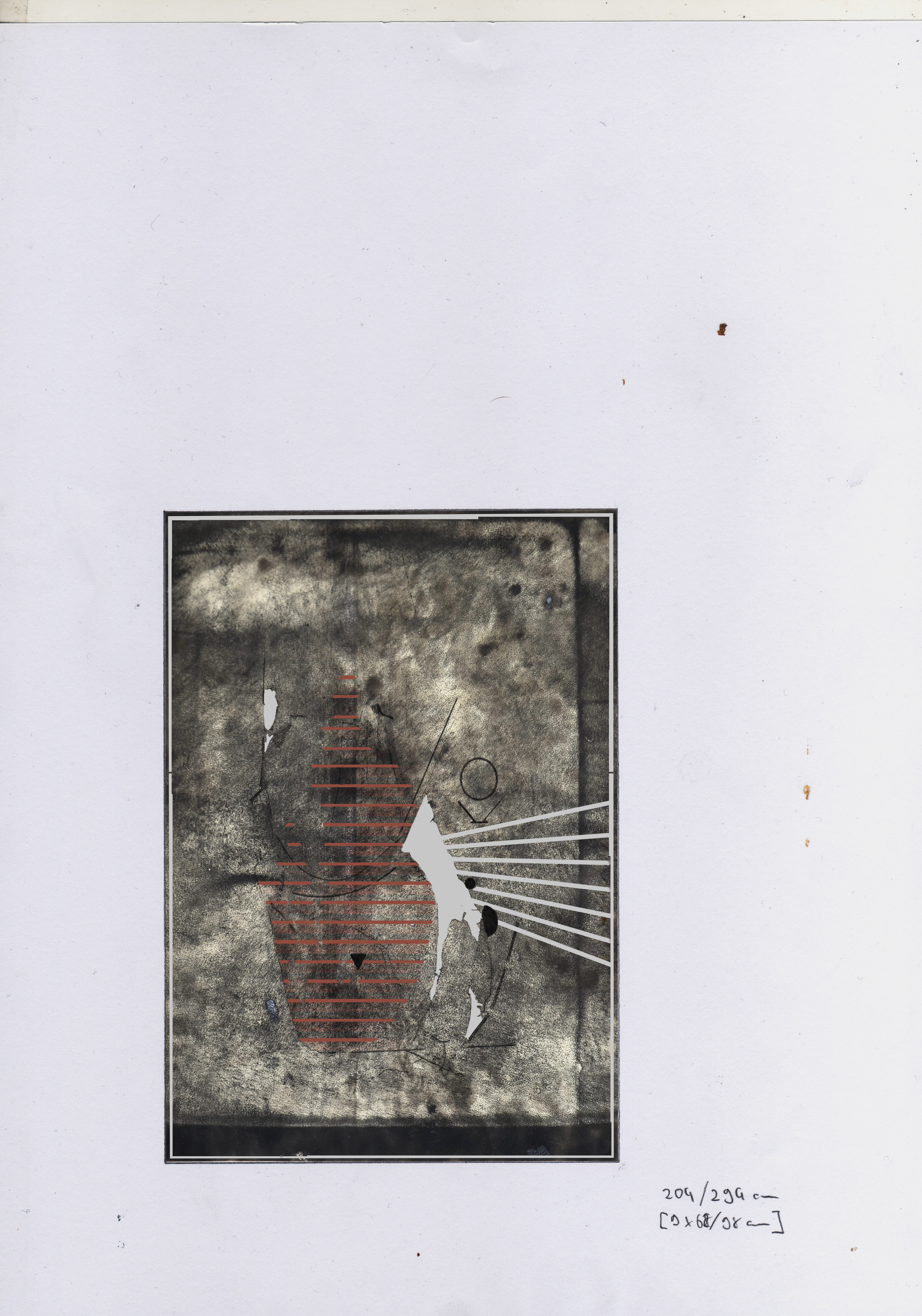
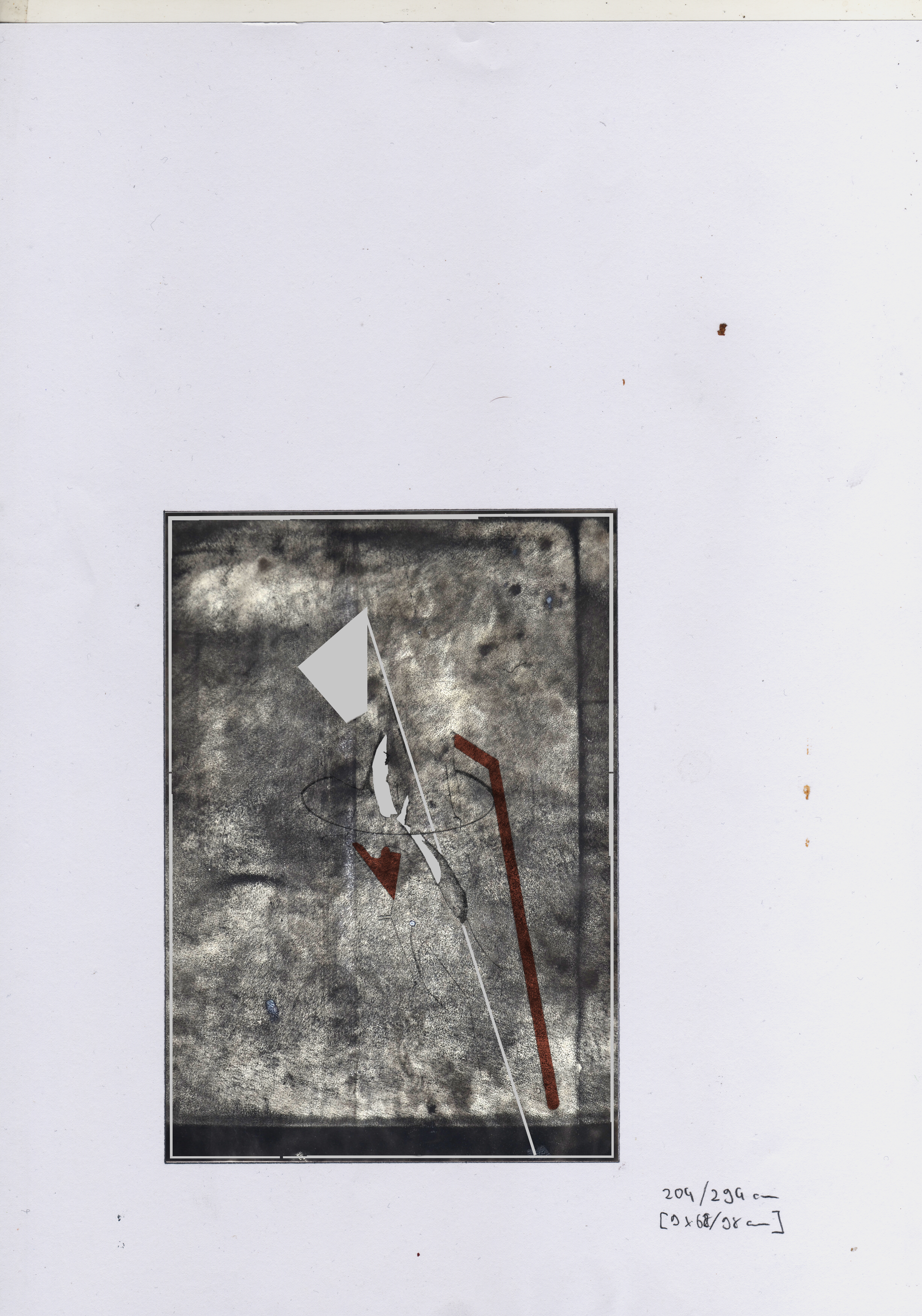
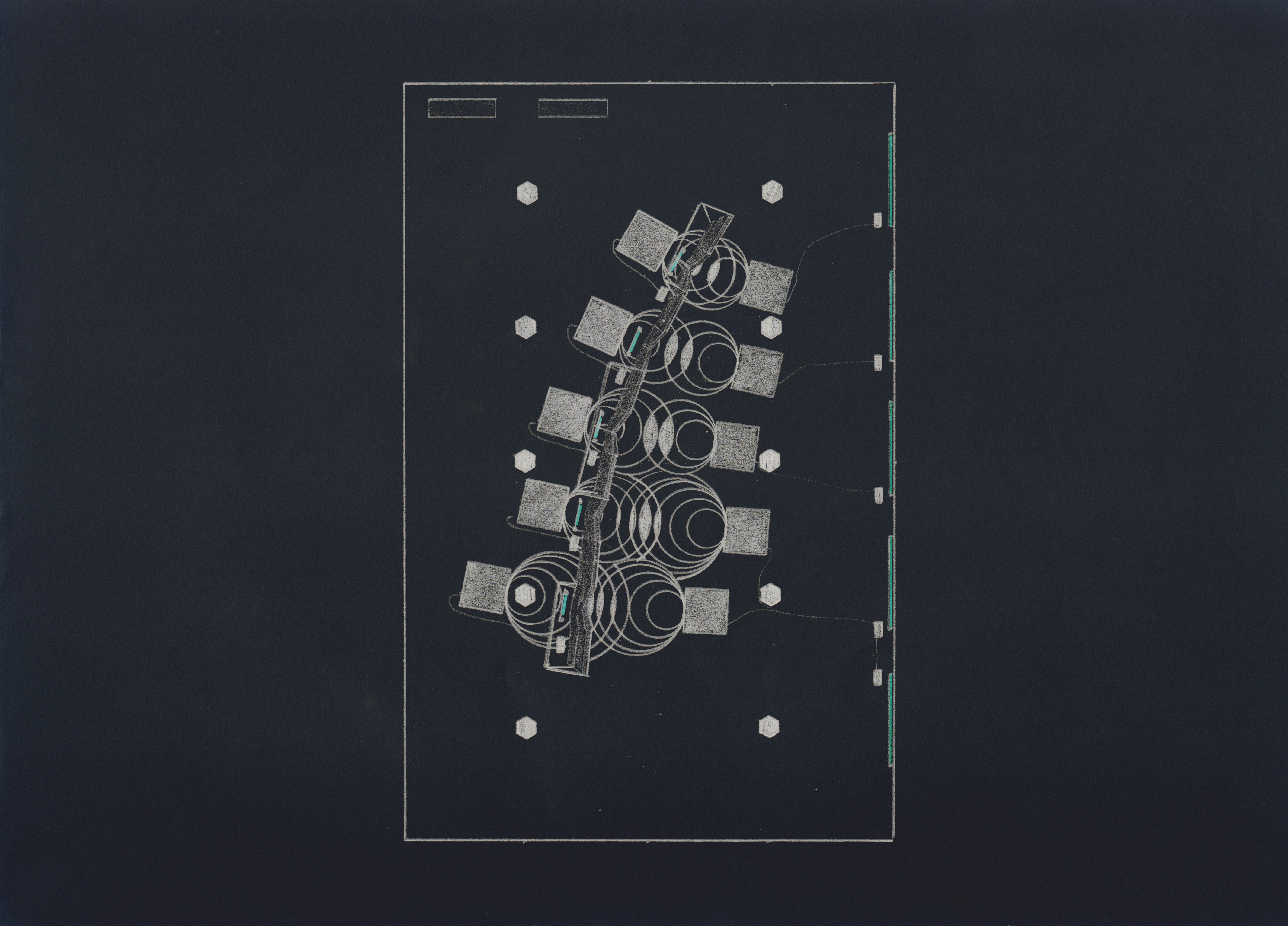
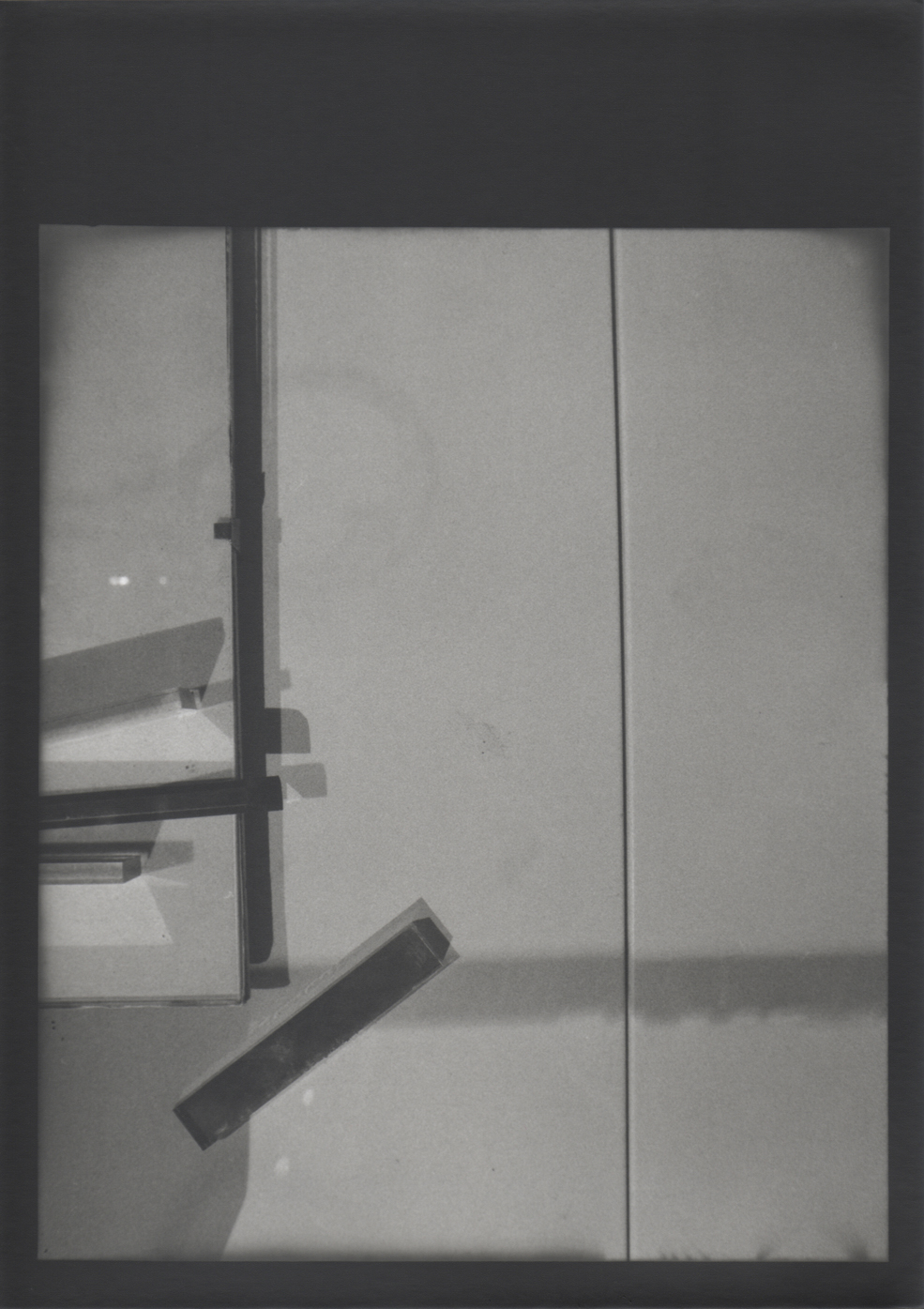
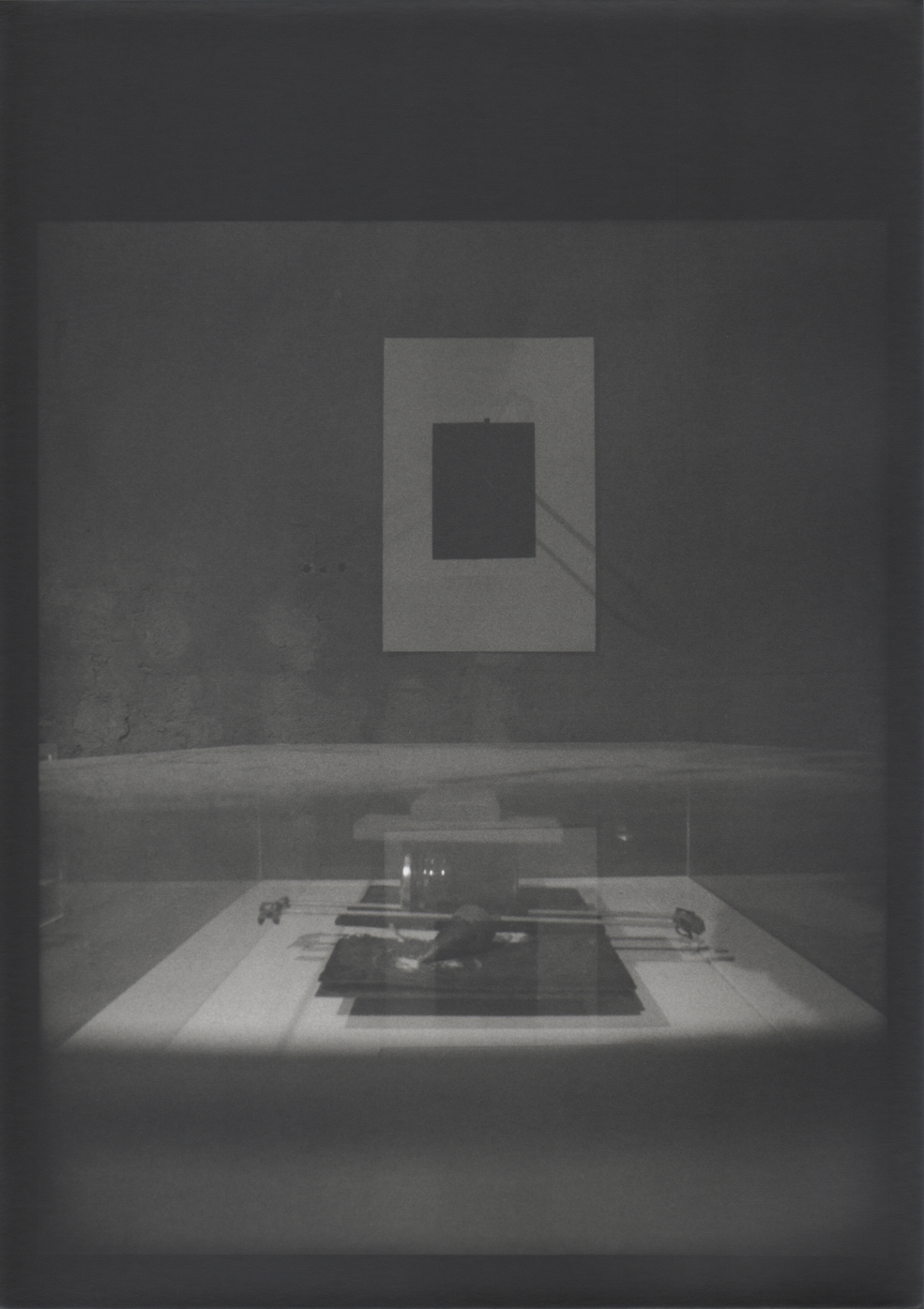
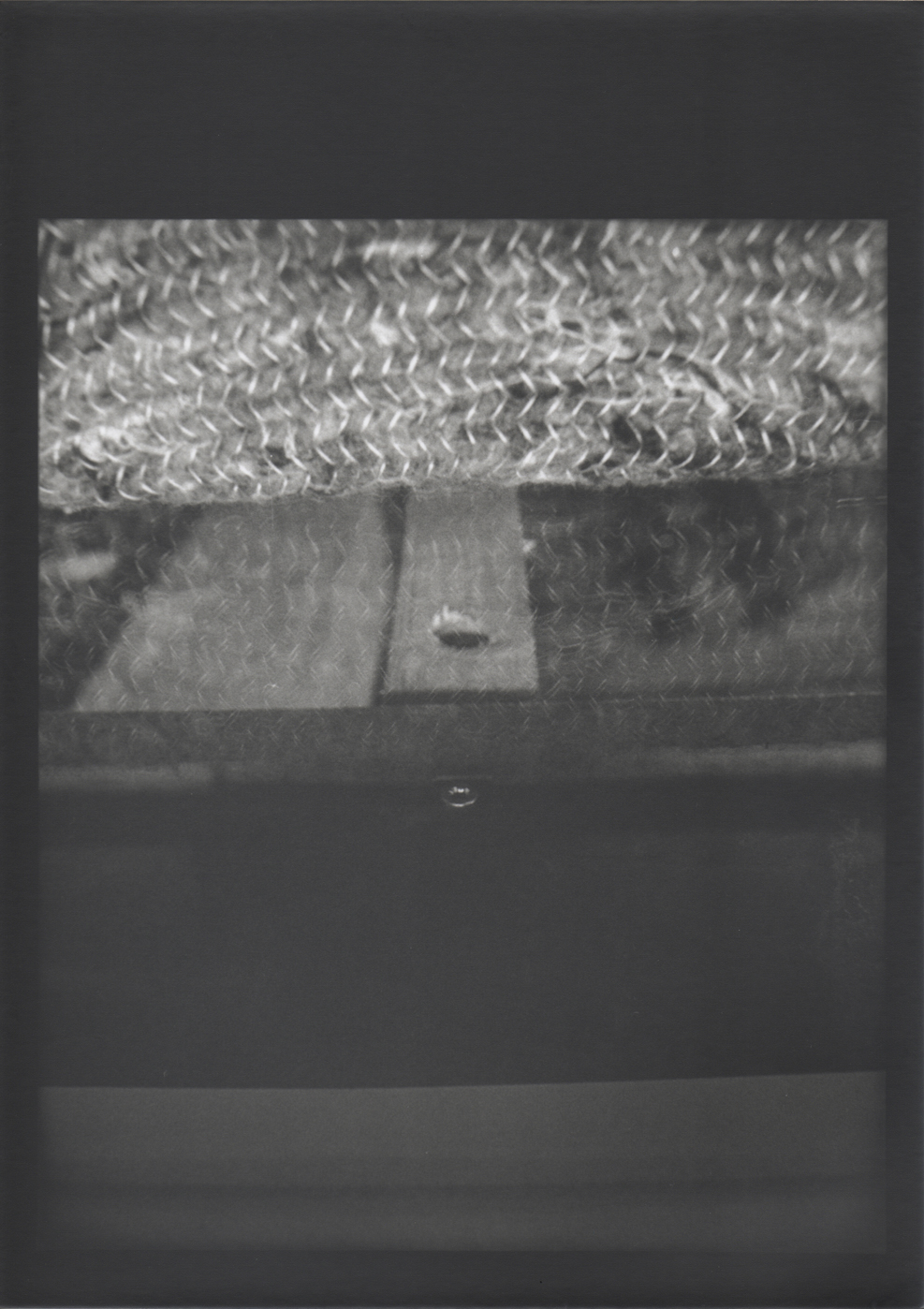
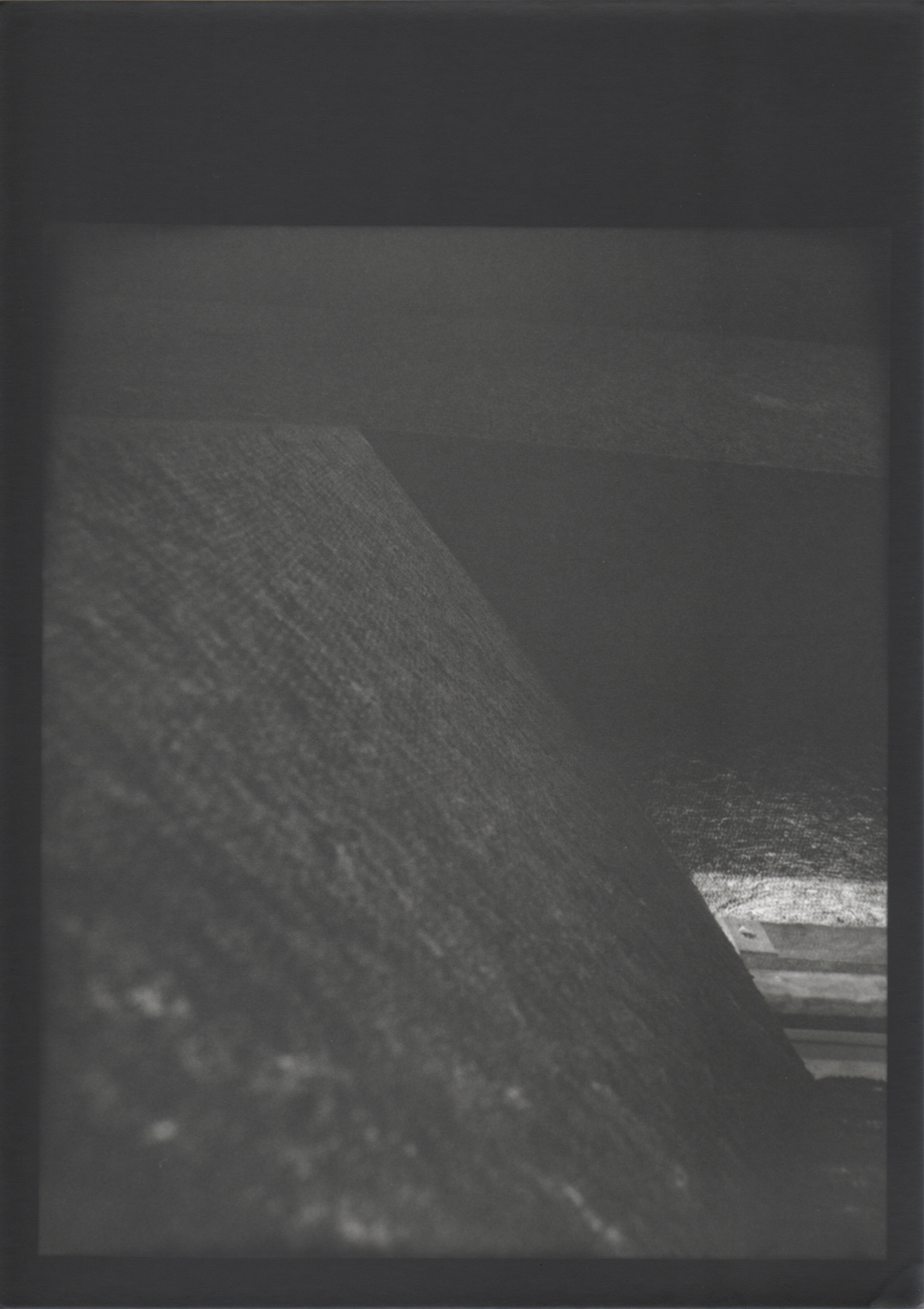
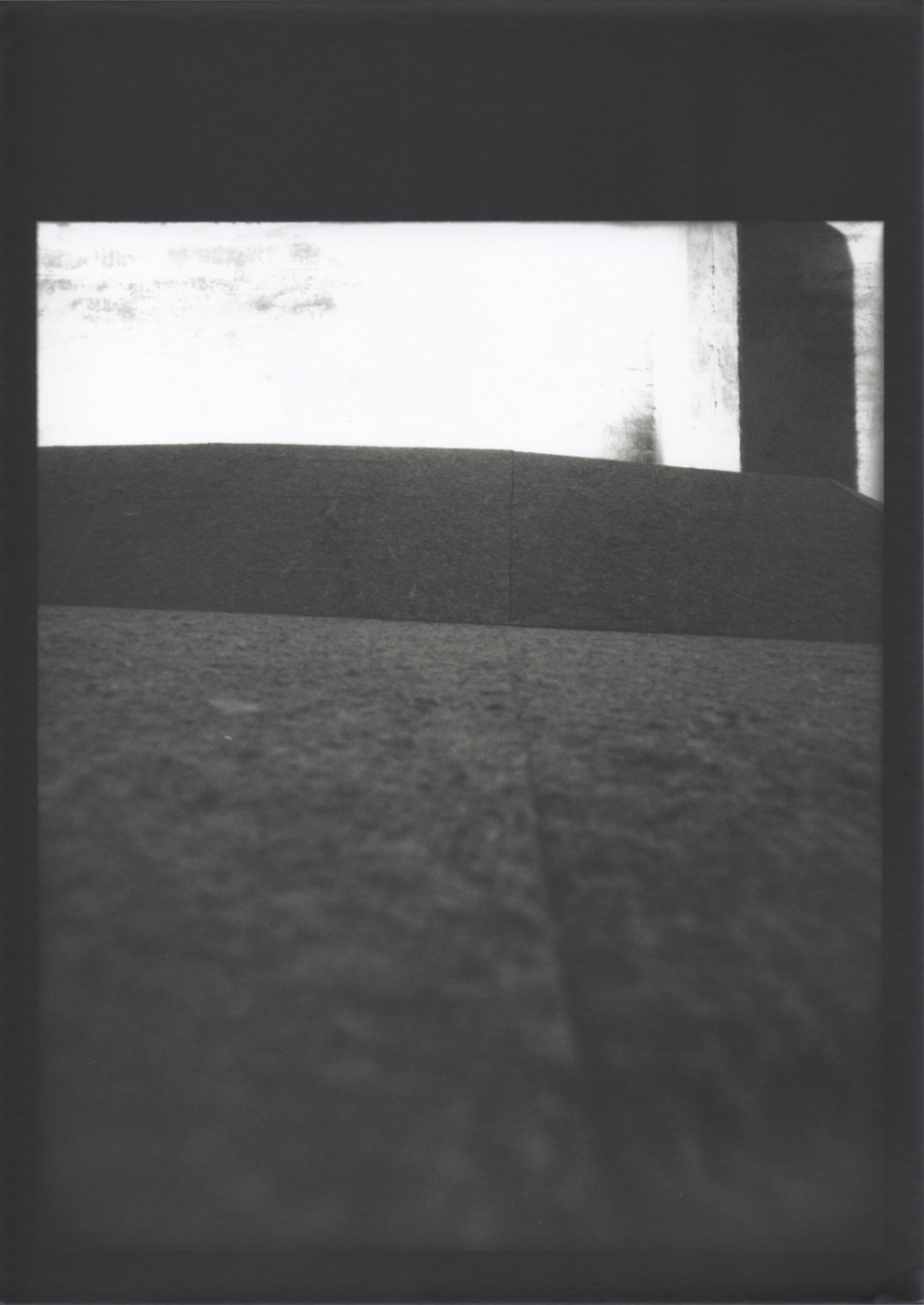
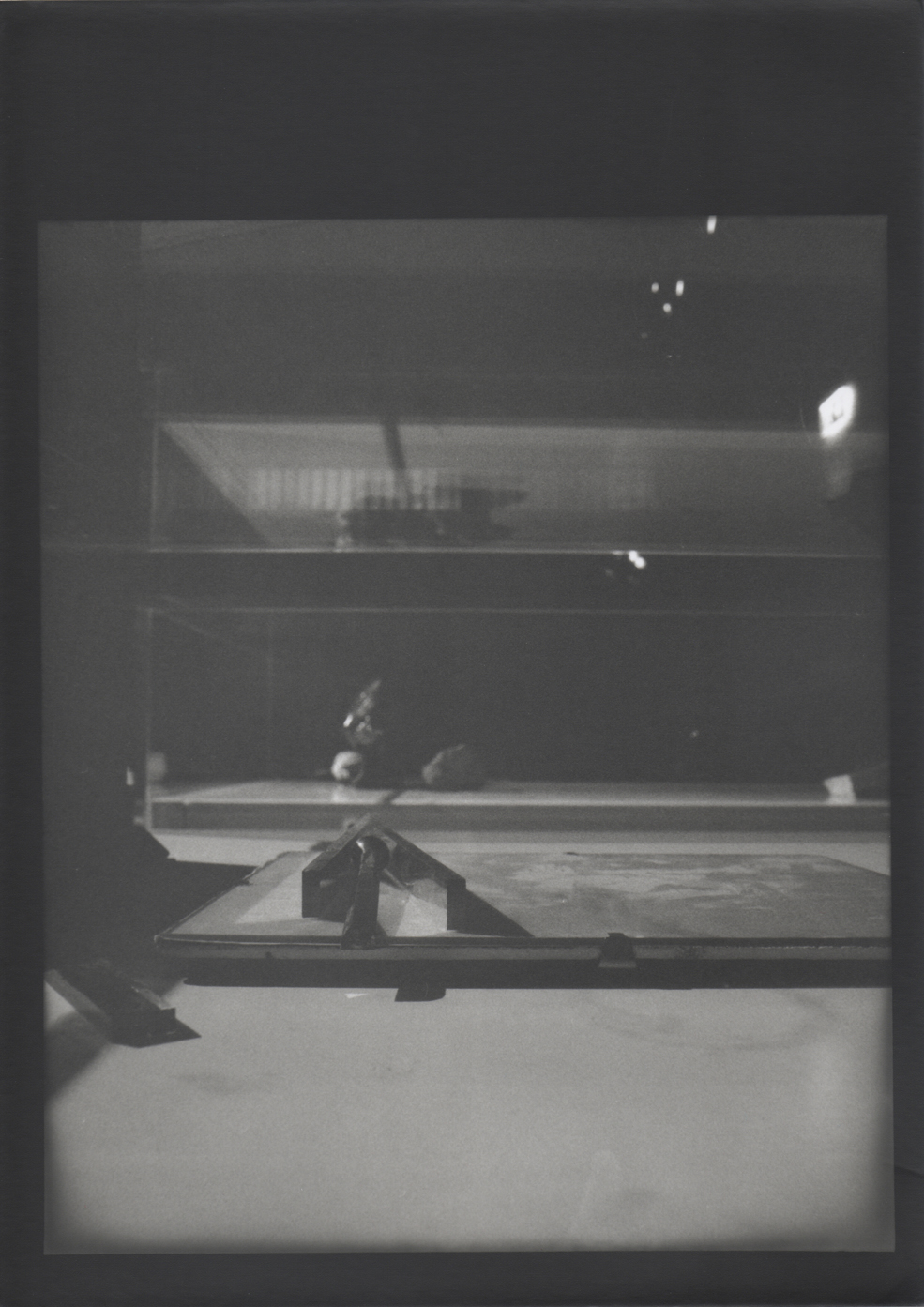
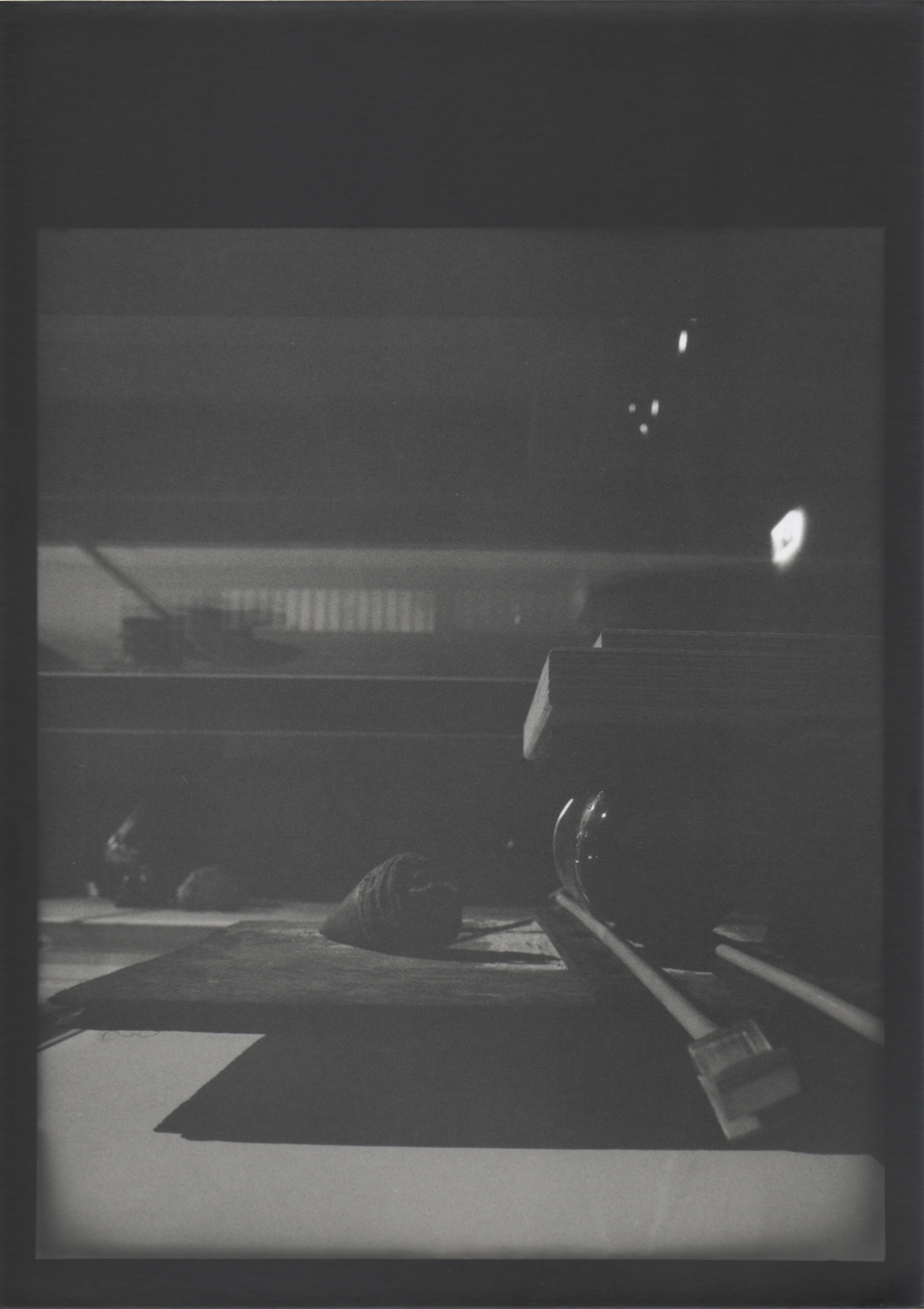
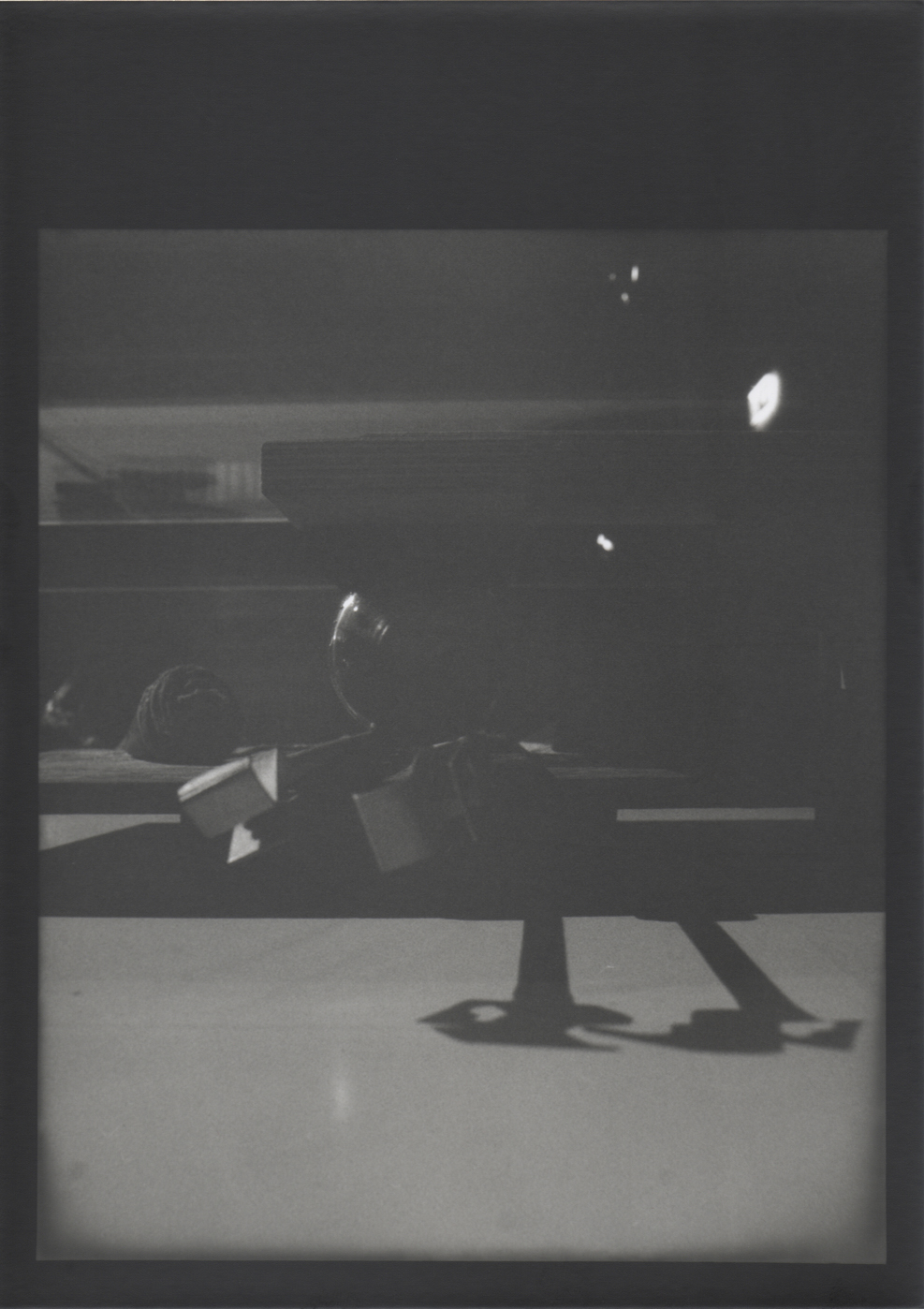
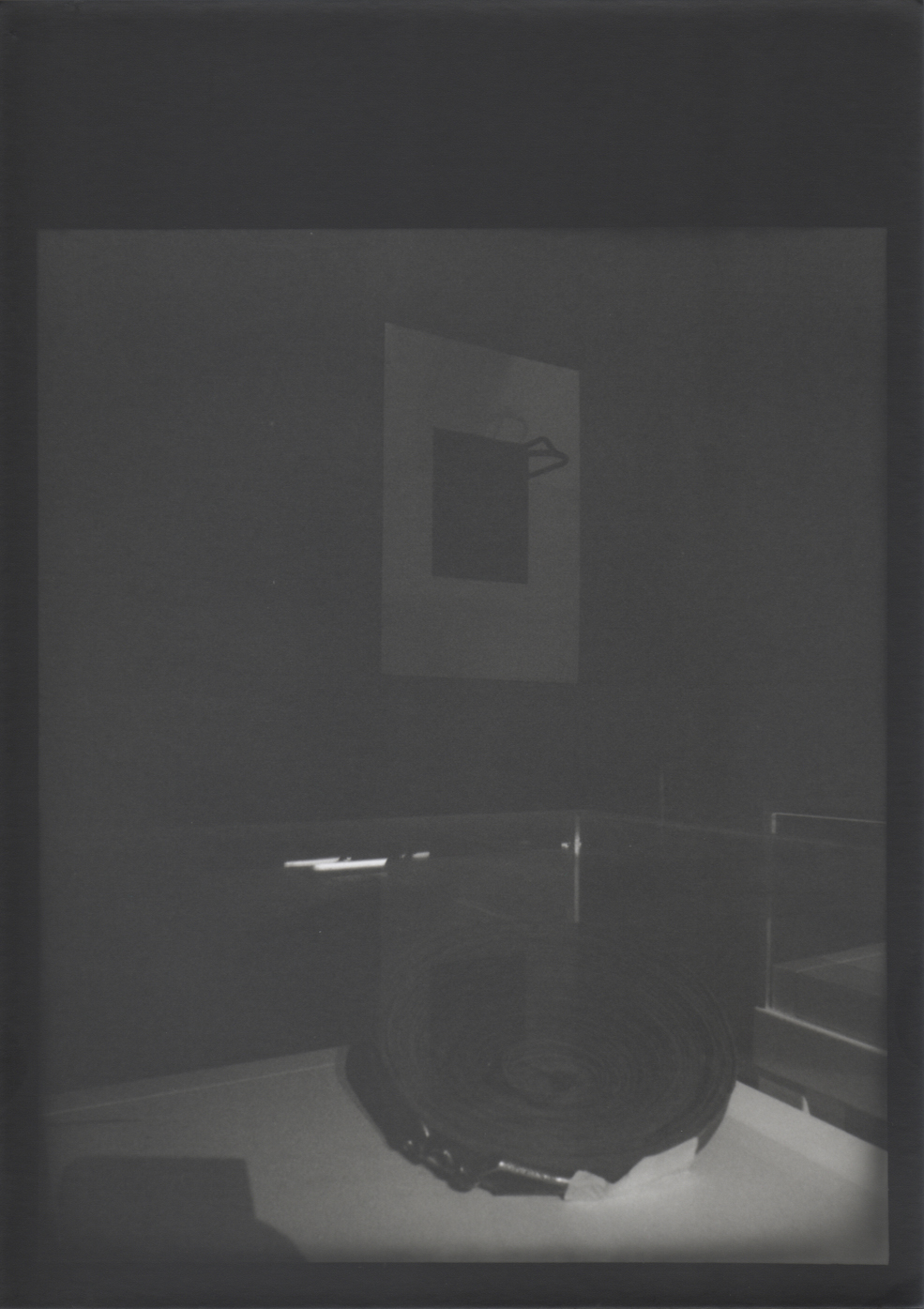
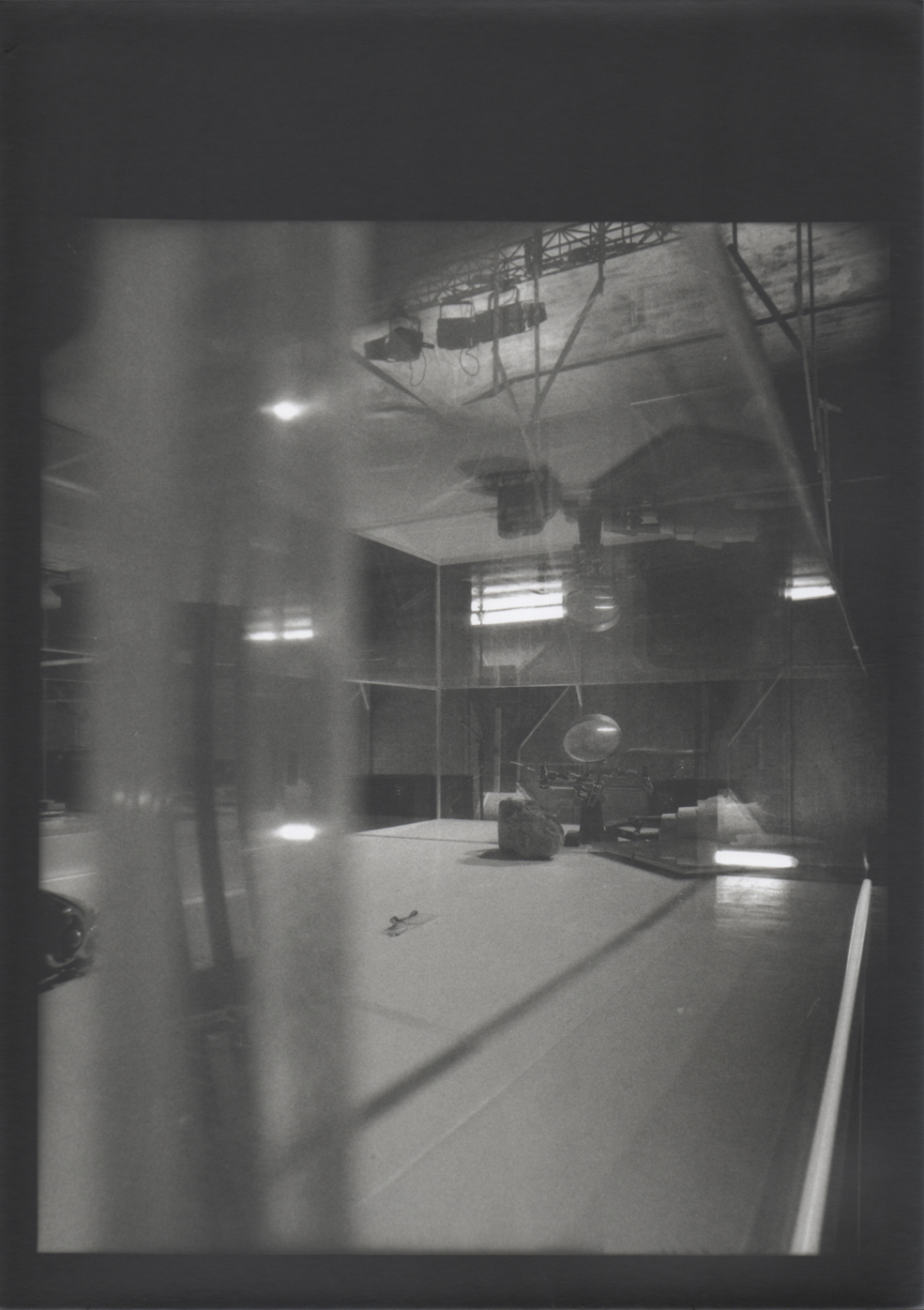
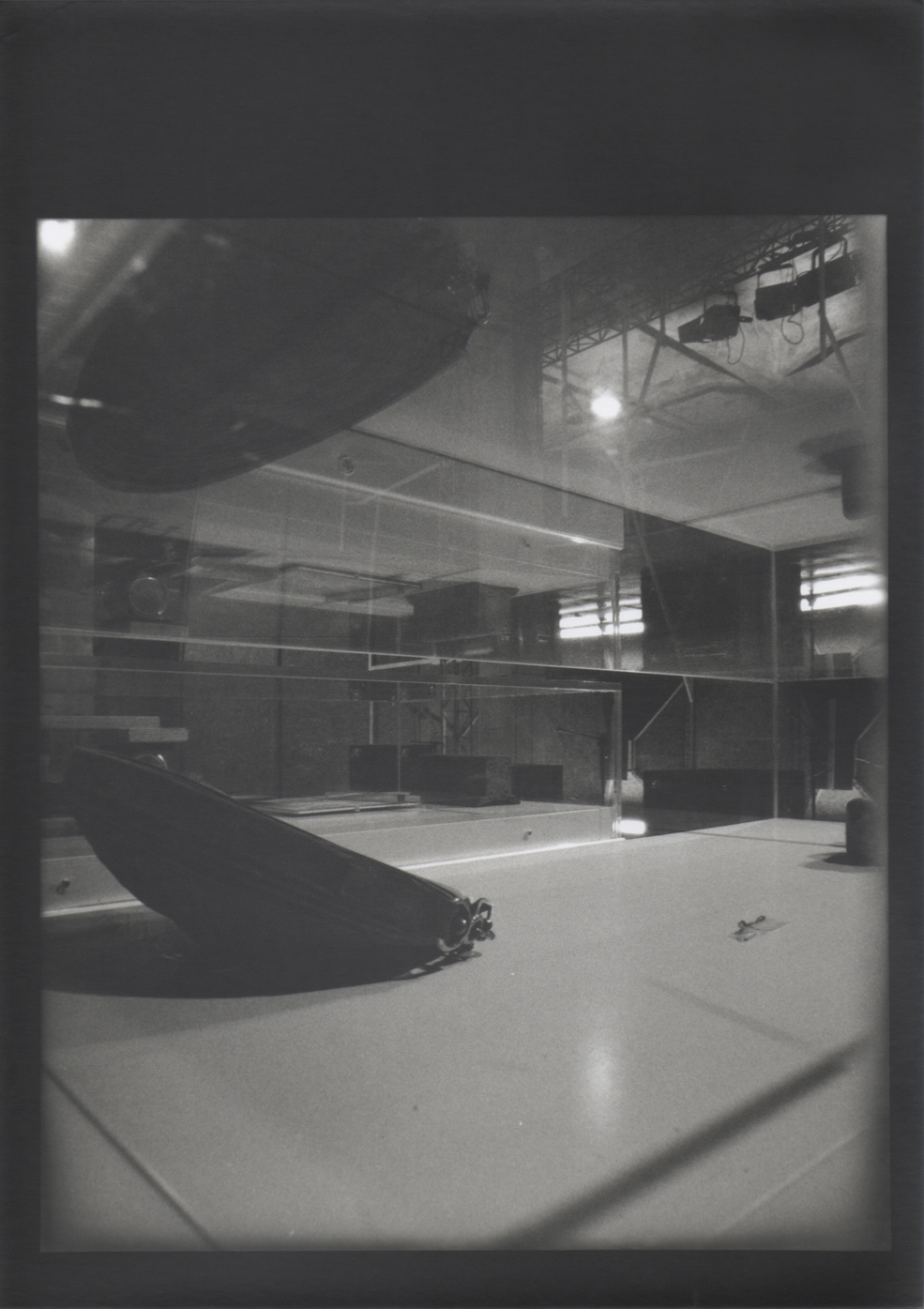
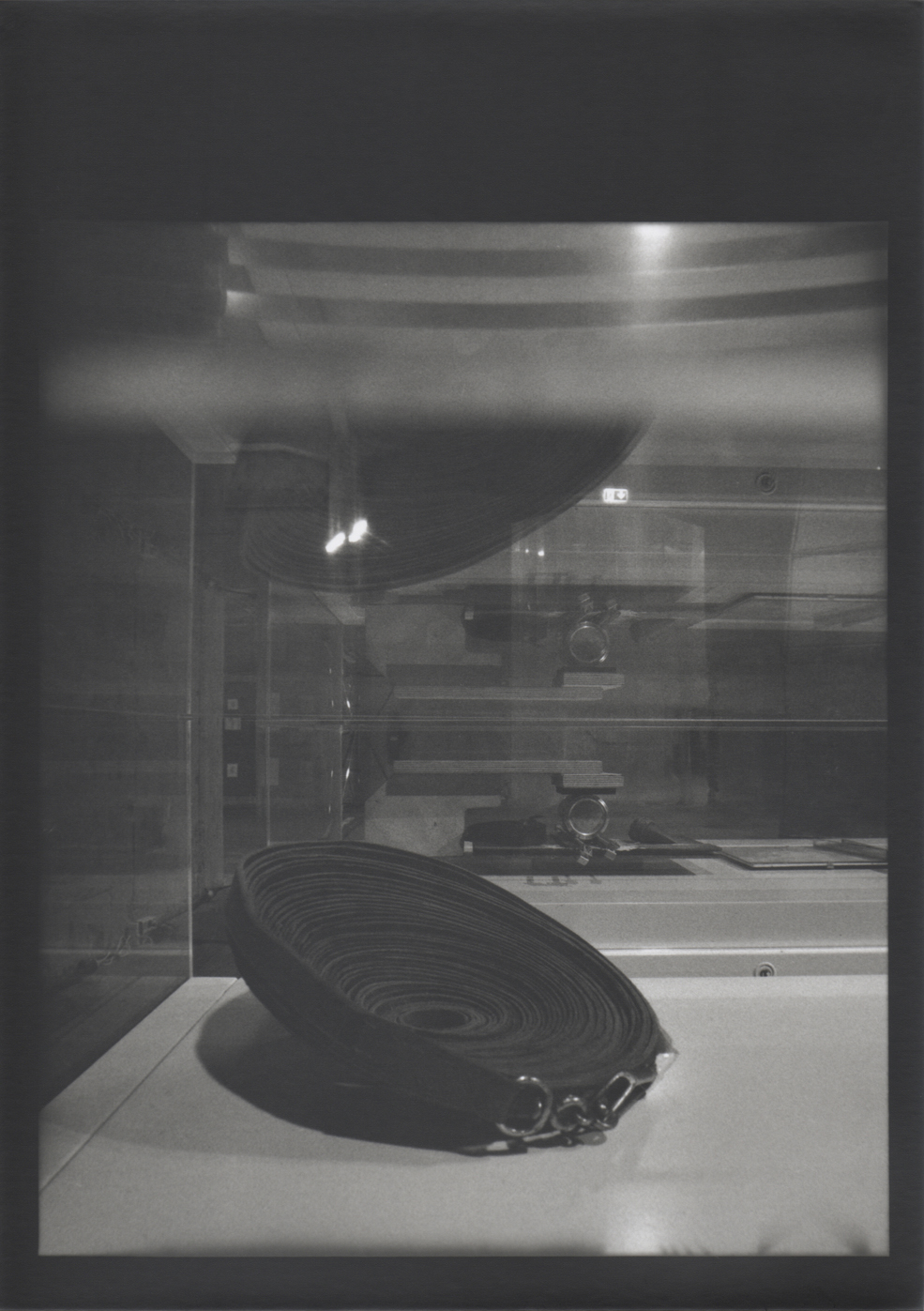
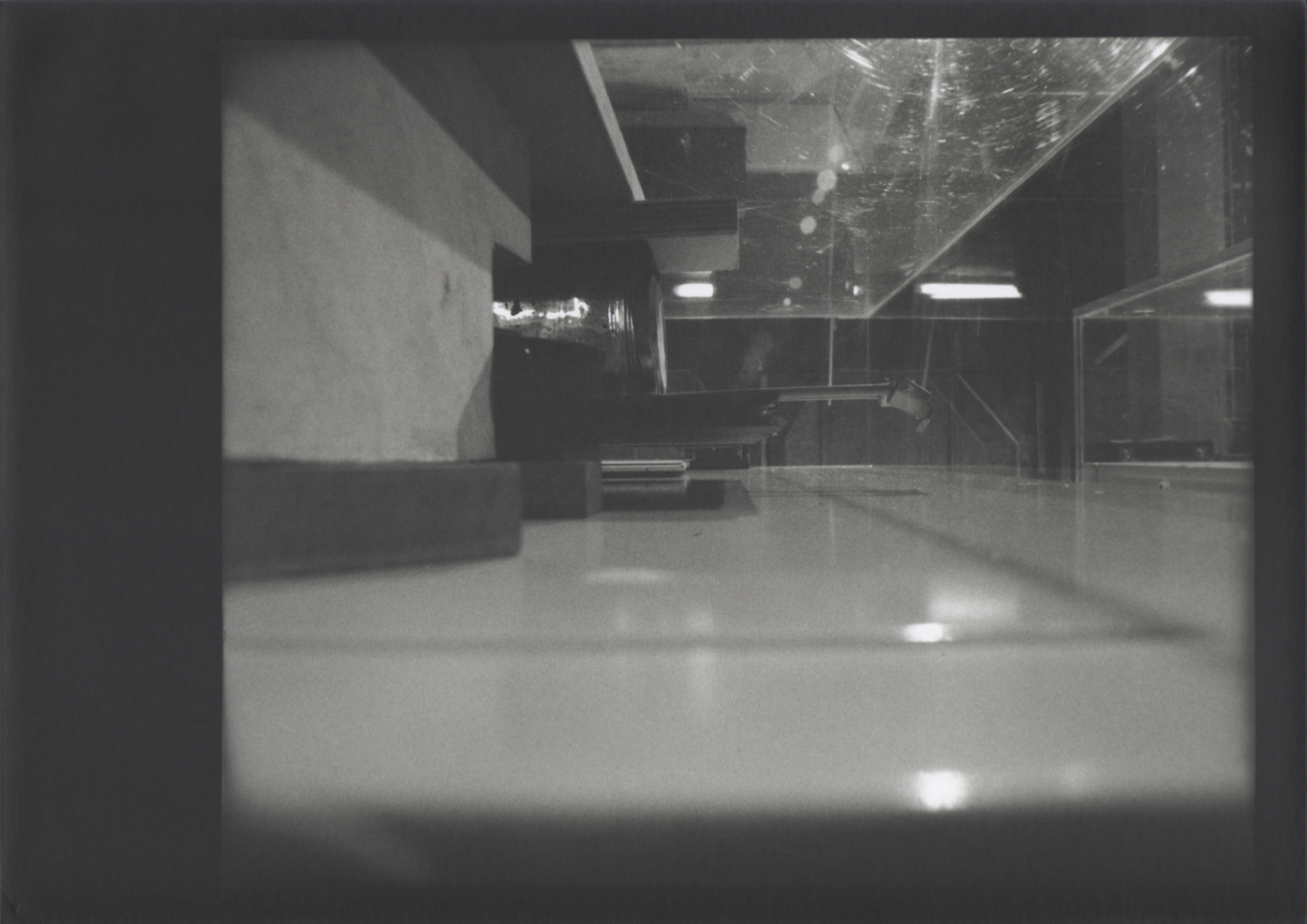
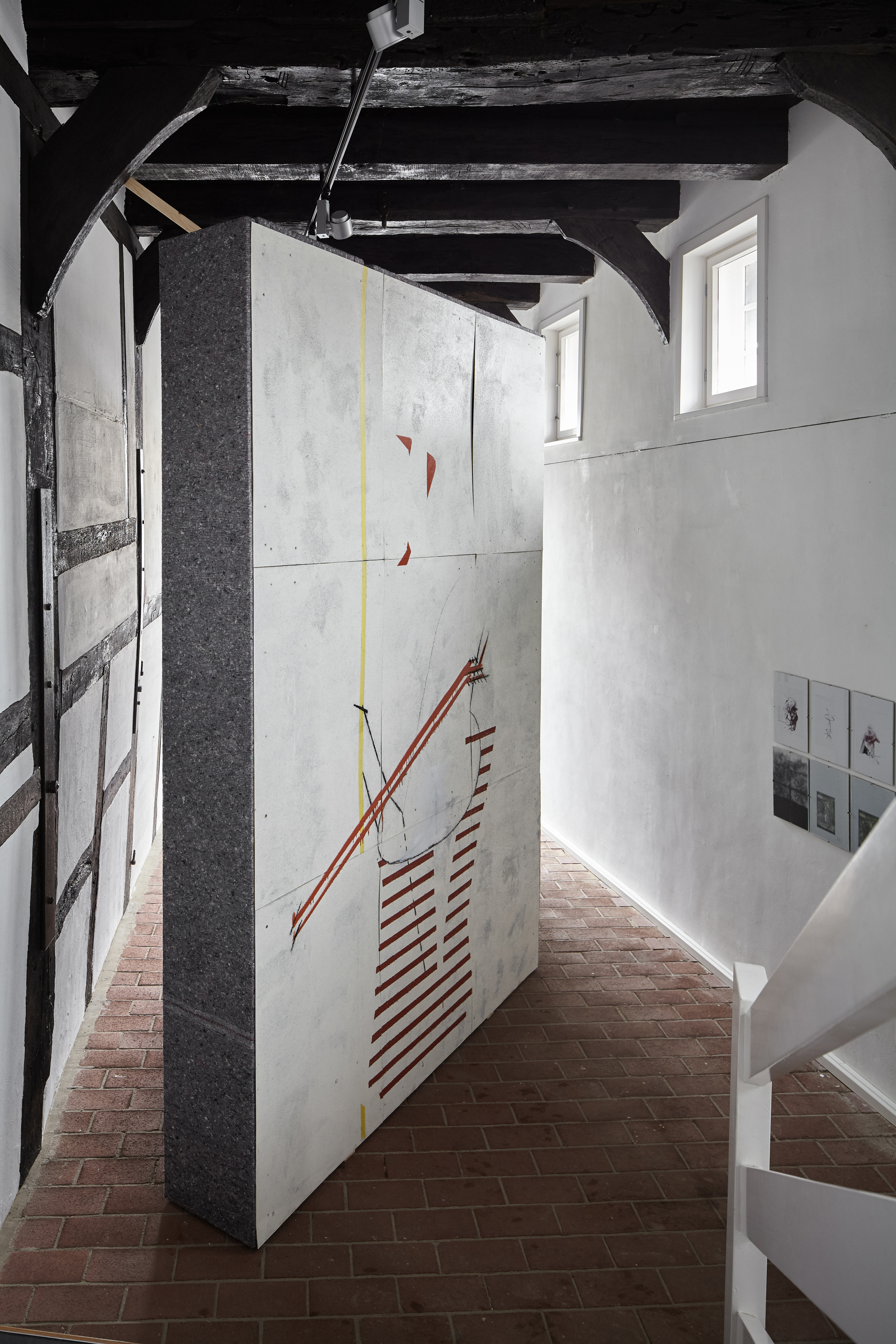
the central axis of the room is split by a slightly curved wall of felt covered frames. the wall is tilted to the front and rises up almost to the level of the ceiling. 5 small drawings are seen through windows in 5 niches or alcovens integrated in the lower part of the wall. so the wall in total works as an obstruction of view and (at the same time) as a framing of these drawings - the wall imposes a distinct distance to the drawings that the observer can't overcome, while it elevates the importance of the otherwise very small and almost negligible drawings in the big room. a buzzing sound fills the room with low to mid-low sine tones, emitted by 10 cubic sub-speakers: 5 of them positioned in the room in front of the niches and 5 behind the wall. the tones are seperated in pairs, ordered to the niches and drawings. the pairs are out of phase to each other, to a degree that when the observer gets close to the small windows to see the drawings he enters an area where the tones gets discretely quieter because of a destructive interference. the two sine waves coming from one pair of speakers creates an area of pressure, as their amplitude peaks at slightly shifted moments in time while the frequency, the pitch stays the same. different positions in the room, especially in front of the niches, create discrete roomsituations, reflecting on an abstract level of reception. the series of speakers and niches leads to the emergence of a passage between the speakers and the wall, flanked by 5 large paintings on the right outside wall of the room. under them, amps and the cable for the subspeakers are positioned to connect the main ensemble of the room, the wall, the drawings and the sub-speakers, with the 5 larger paintings on the right. when the visitor exits the "passage" on the remote side of the room 2 glas cabinets in the left corner of the room become visible. as there sight was previously covered by the large ensemble of the wall, the objects they contain, reflect on a private, hermetic side of the piece, or in general of the production of art. from there, turning back towards the room, the visitor sees the backside of the wall, its bearing structure, the other sub-speakers and the backside of the drawings. while he sees behind the 'surface' he doesn't come closer to see the drawings 'purely' or up-close. going back through this inverted passage returning to where the first entrance to the ensemble was, the view opens up towards the 5 large paintings on the right side a second time, reevaluating their appearance and meaning.
fotos sarah ambrosi:
You should also read:
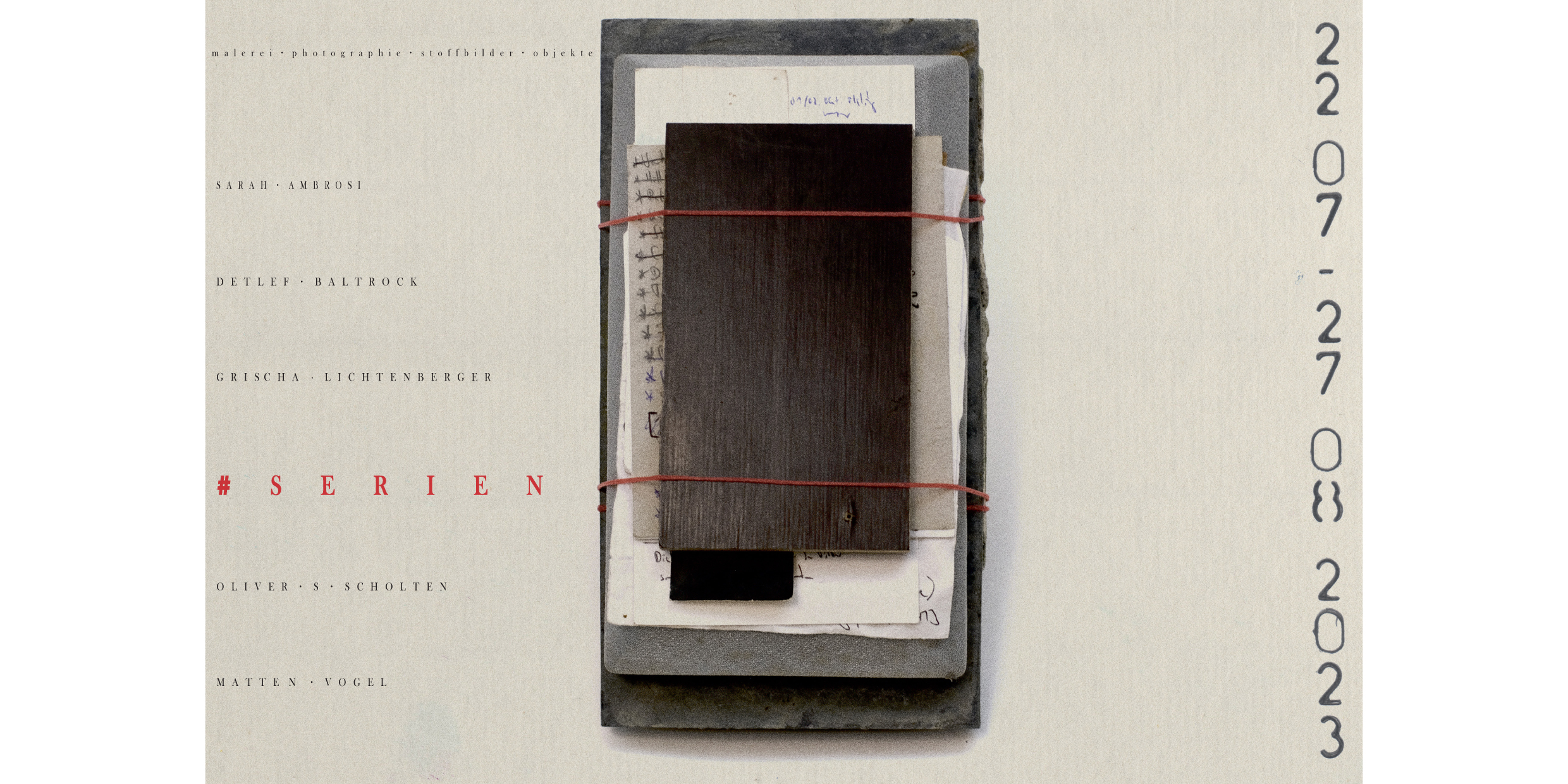
_inst: serien 2 x100 block (wuensdorf 2023)
_inst:serien 2x 100 block (and iv/demeure)(wuensdorf 2023)
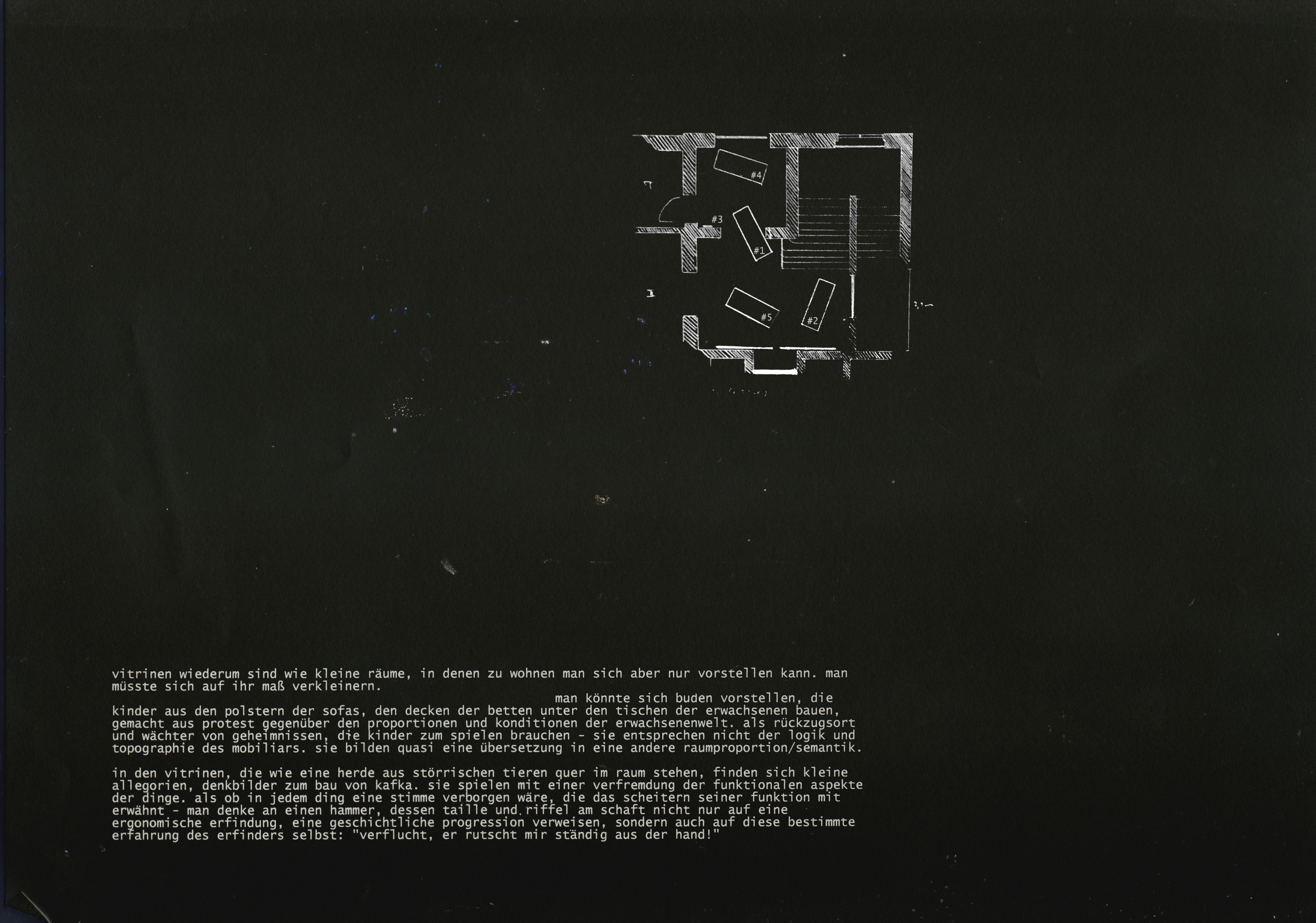
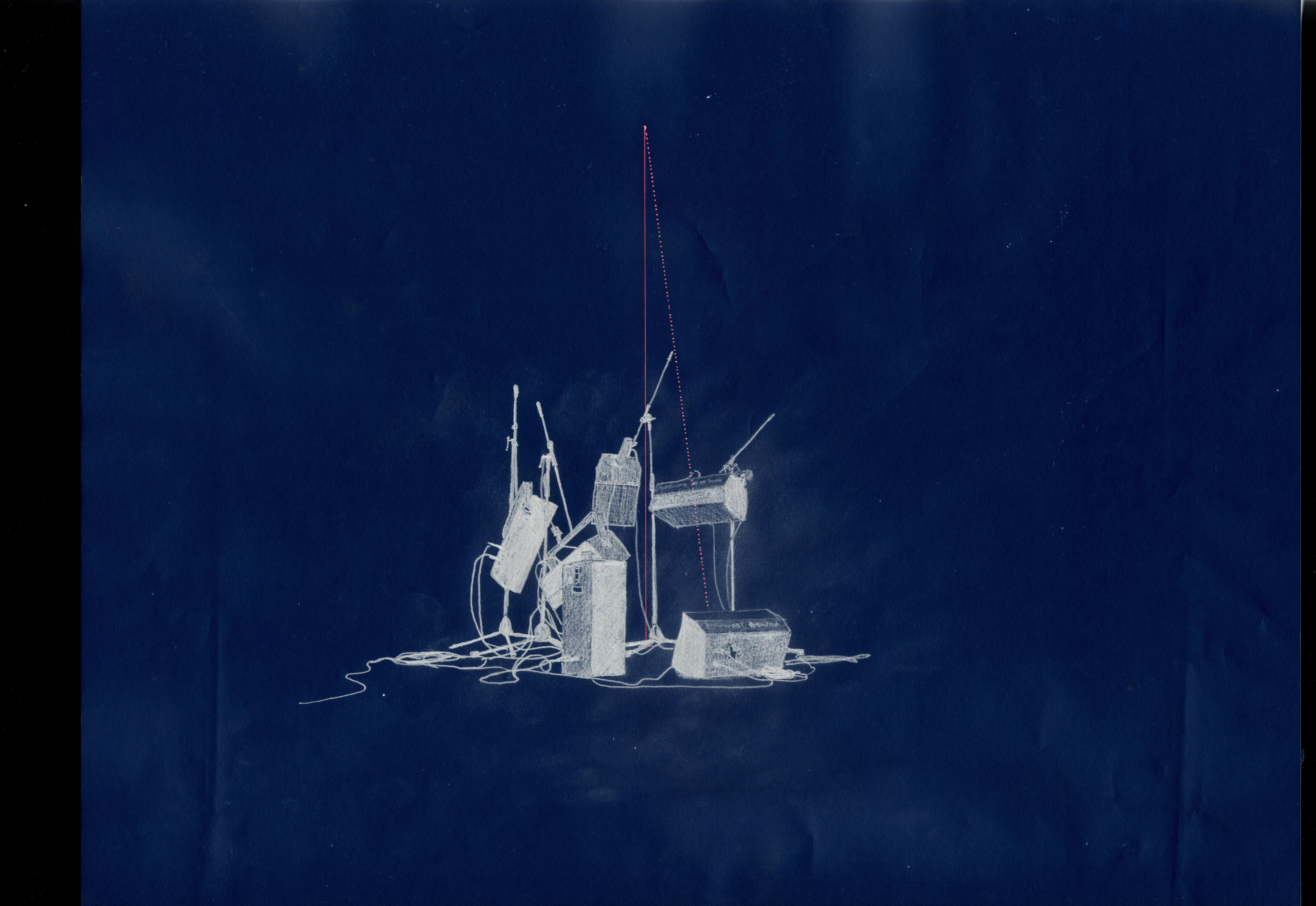
_inst: egres (manifeste ircam paris 2021)
installative performance manifeste IRCAM Paris 2021
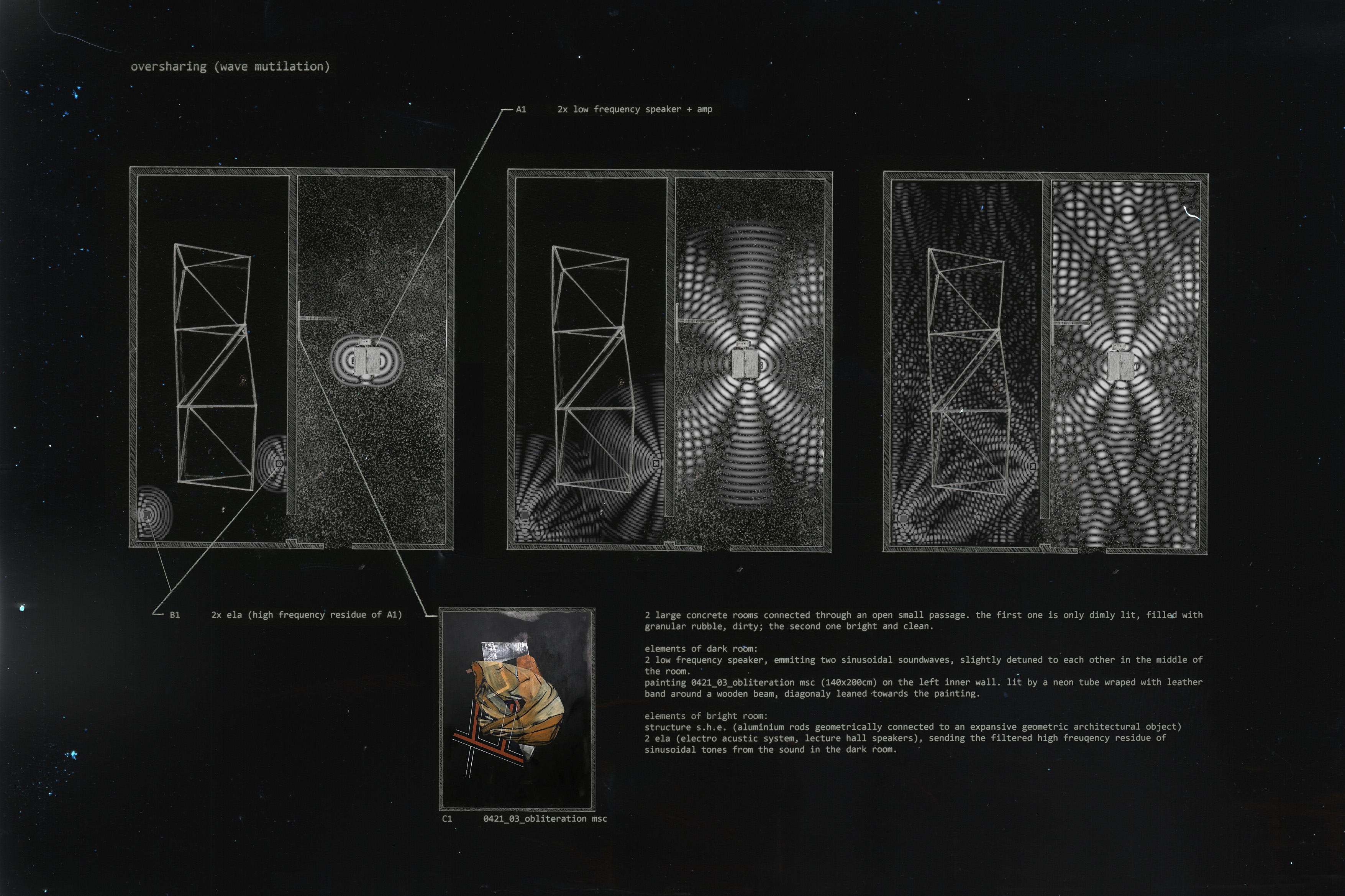
_inst: oversharing (wavemutilation) (koenigstadtbrauerei berlin, 2023)
...with the installative intervention "0423_10 she overshare," Grischa Lichtenberger responds to Stefan Ebner's action sculpture and confronts the inviting open structure with a contrasting spatial configuration. Alongside the brightly lit vault where the action sculpture unfolds, there exists a mirrored room of equal proportions but…
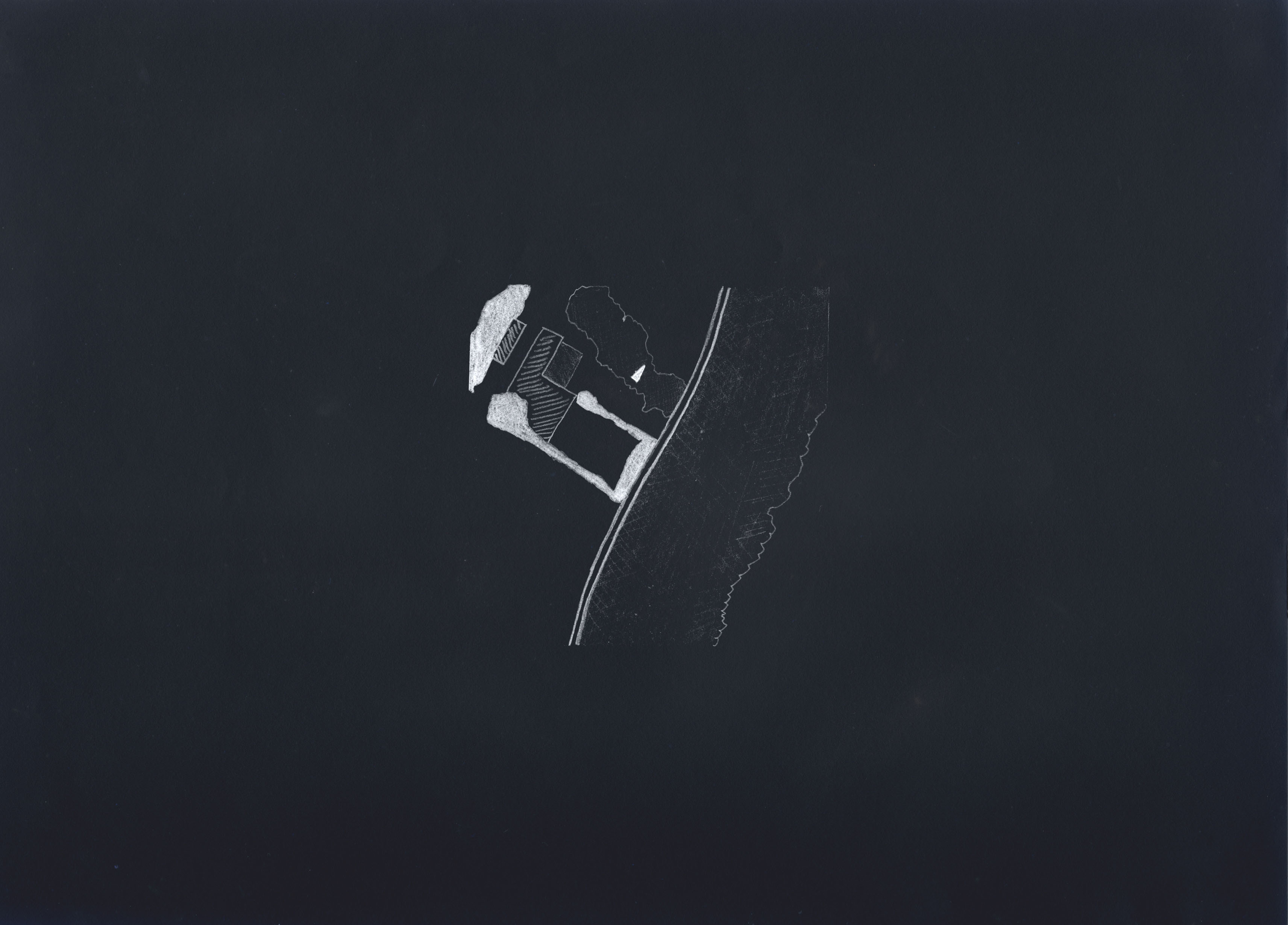
_inst: waldstelle/nordpol (butterweg steinhagen 2007)
Jaegerzaun//Verschlag aus Holz (Holz, Gartenplane)//Jaegersitz (bemalt) Ein auf dem Waldboden gelegter Jaegerzaun fuehrt zu einem verschlossenem Verschlag. Der kleine Bau ist vorne durch eine Fensterscheibe einsehbar. Die transparenten Seitenteile aus Folie werfen Licht auf das innen gehaengte gruene Metallstueck (die Sitzflaeche eines Jaegersitzes) auf dem…
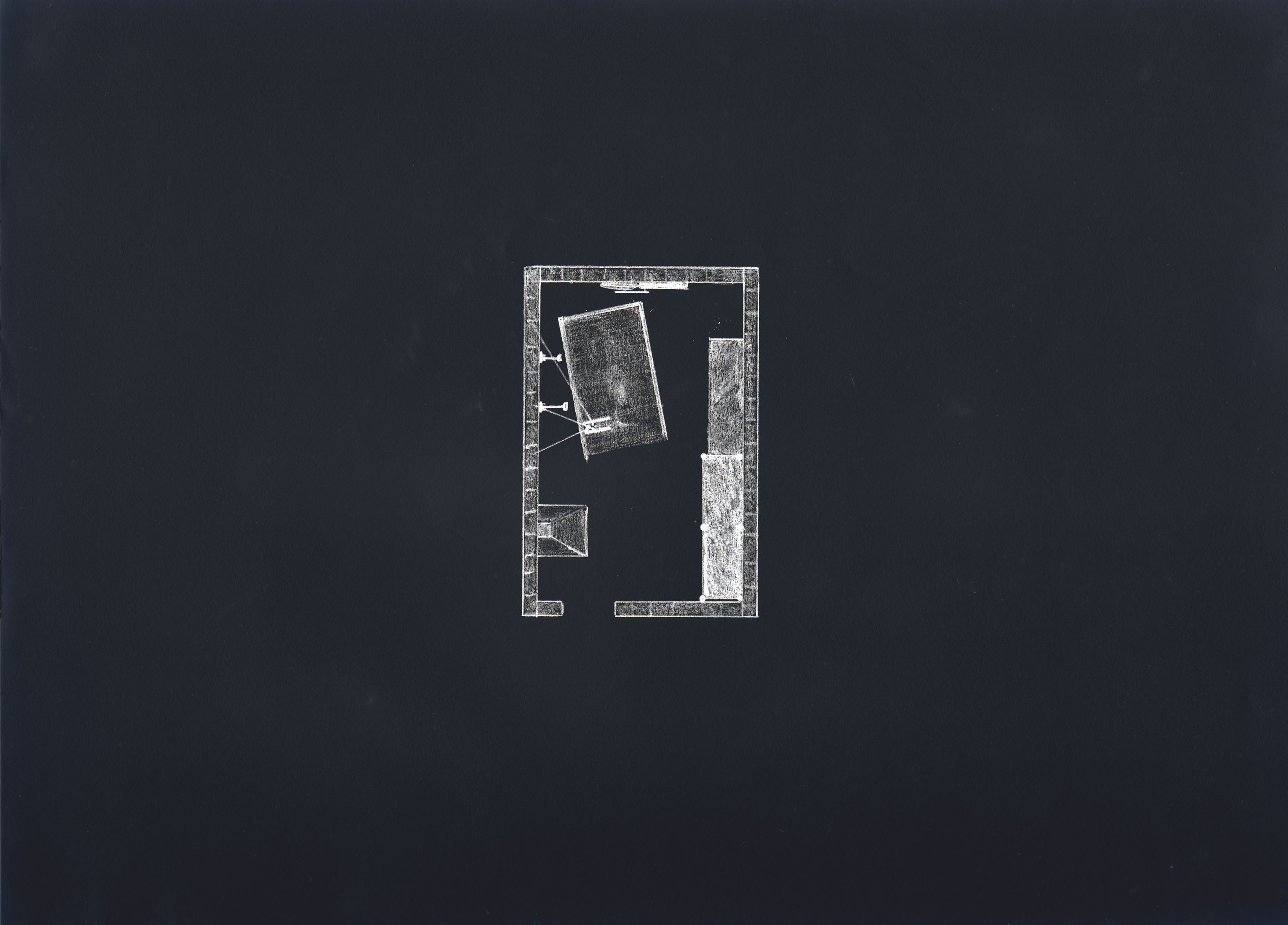
_inst: st vinzenz (verlassenes bahnwärterhaus, duesseldorf 2008)
Eisenwinkel, Maurerfaden, 2 Gelenkstangen, Tiefgrund, Farbe, Draht (nicht erhalten)
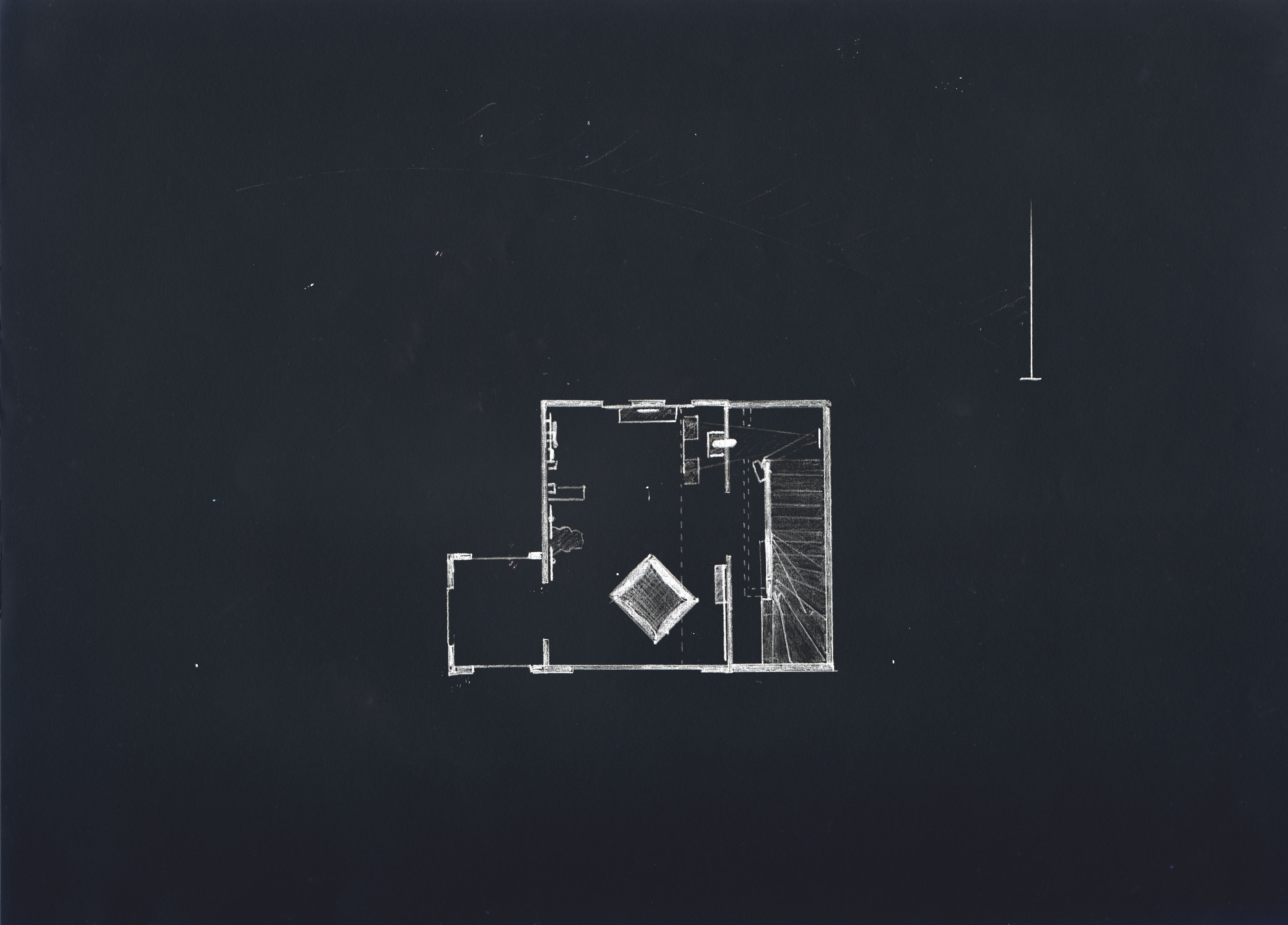
_inst: weser portfolio (haus regenbogen, minden 2008)
residency mit miriam eichner im haus regenbogen minden 2008
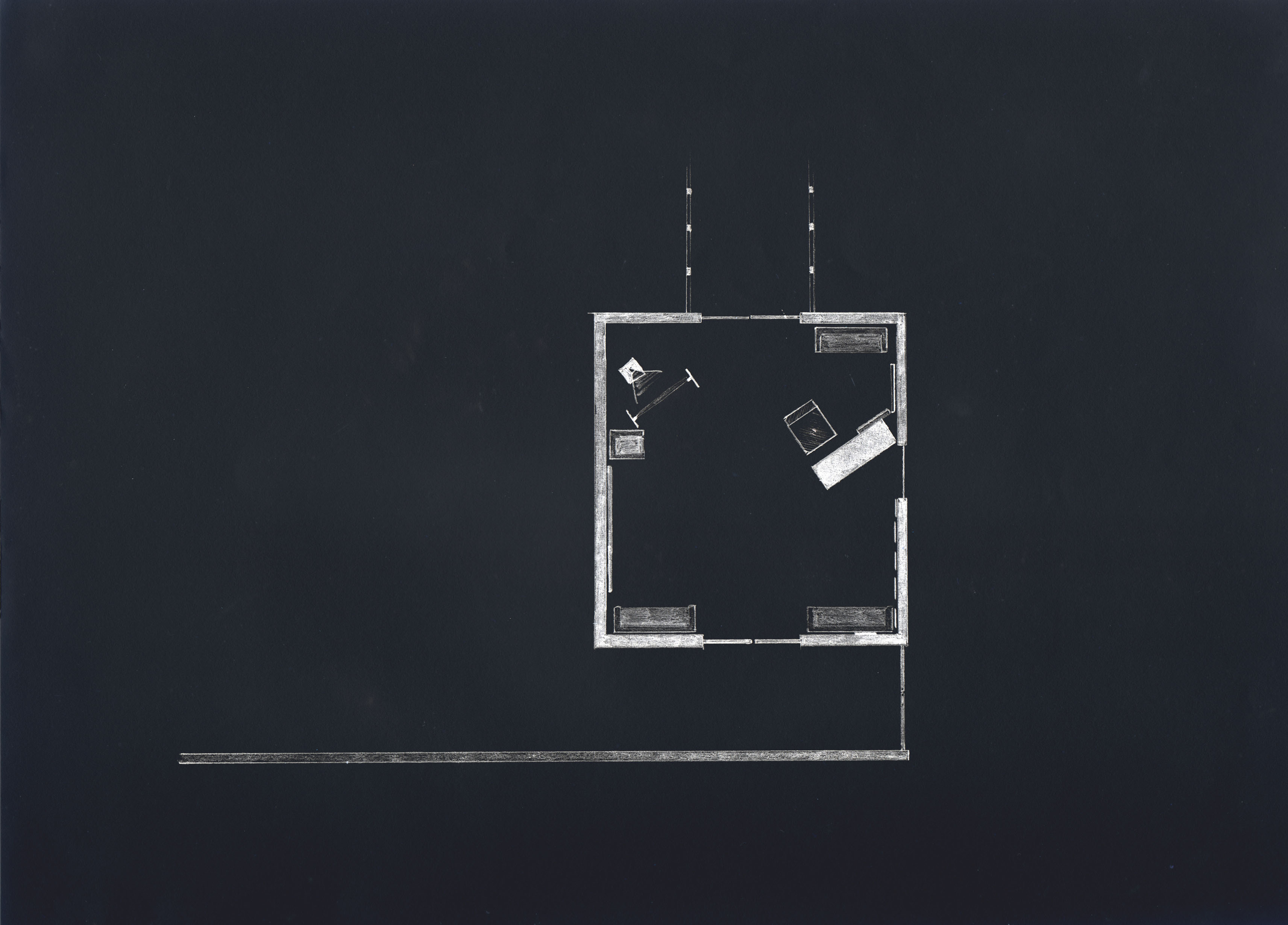
_inst: kaestchen narthex paradies / anagnorisis (margins paradiese am rand, theaterwissenschaftliche fakultät fu berlin, 2009)
Dem Wort Narthex liegt das altgriechische Wort νάρθηξ (narthex) zugrunde, hier in der Bedeutung „Kästchen“. Mit Narthex bezeichnet man einen in altchristlichen und byzantinischen Basiliken über die ganze Breitseite reichenden schmalen Vorraum in Form einer eingeschossigen Vorhalle, die mit dem Kirchenschiff durch Bogenstellungen verbunden ist.
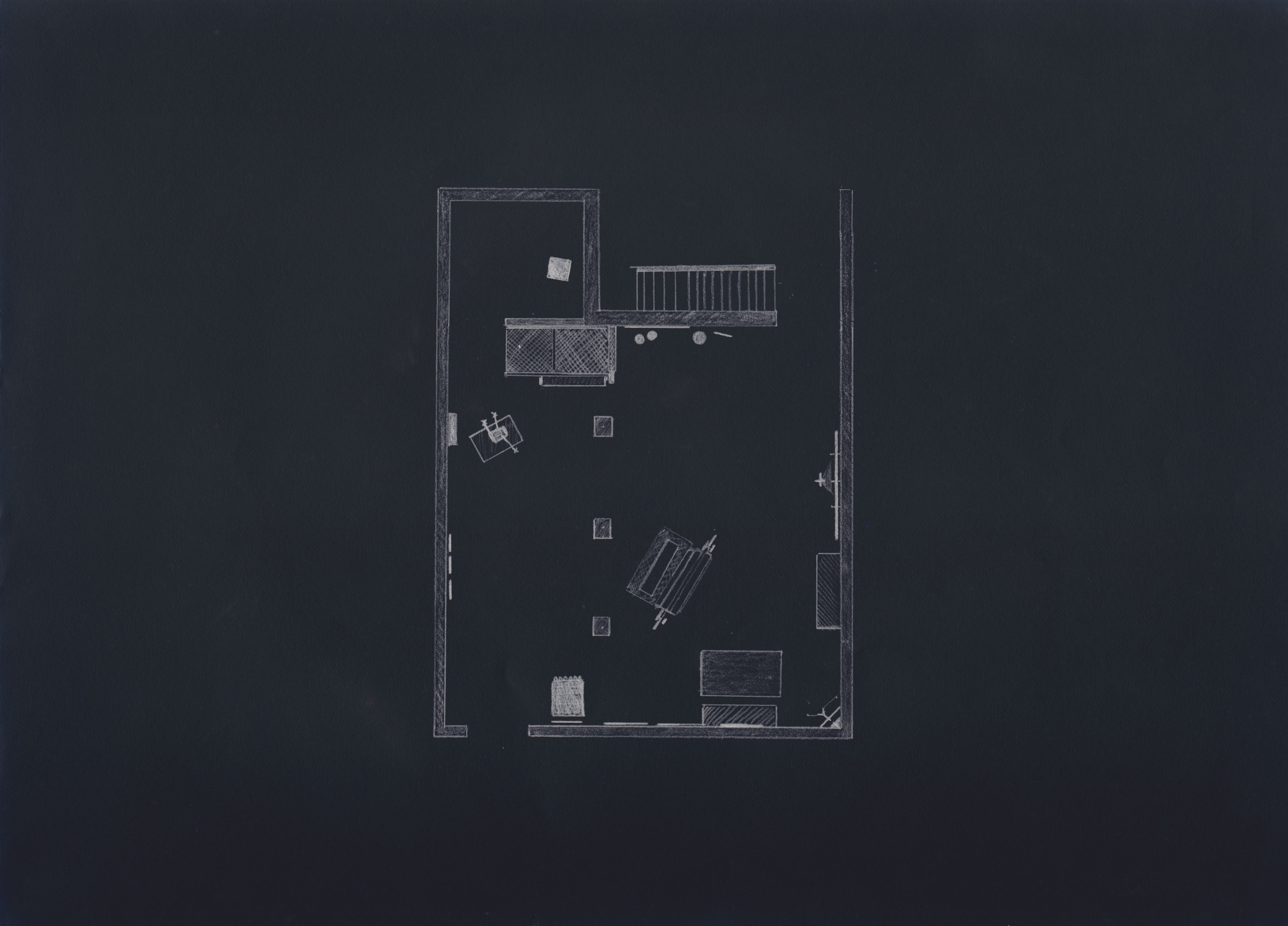
_inst: enjoy a bundle of measures (enjoy art space, leeds 2011)
residency at enjoy art space leeds 2011
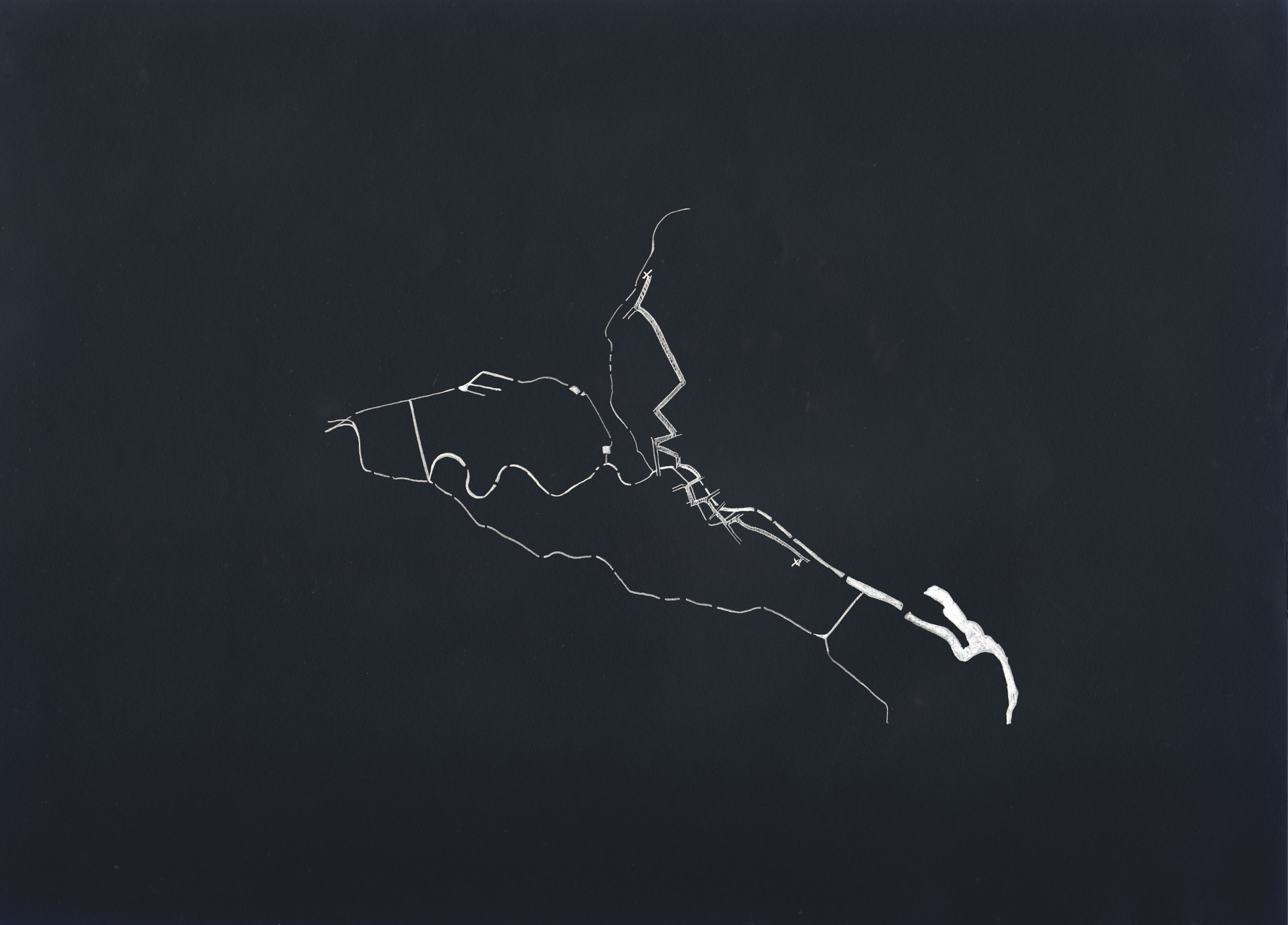
_inst: tragwerk (kamine und wein, berlin 2011)
ein großformatiges bild (auf einem verschalungsbrett, 42kg schwer) getragen zum ausstellungsort kamine und wein 8,7km
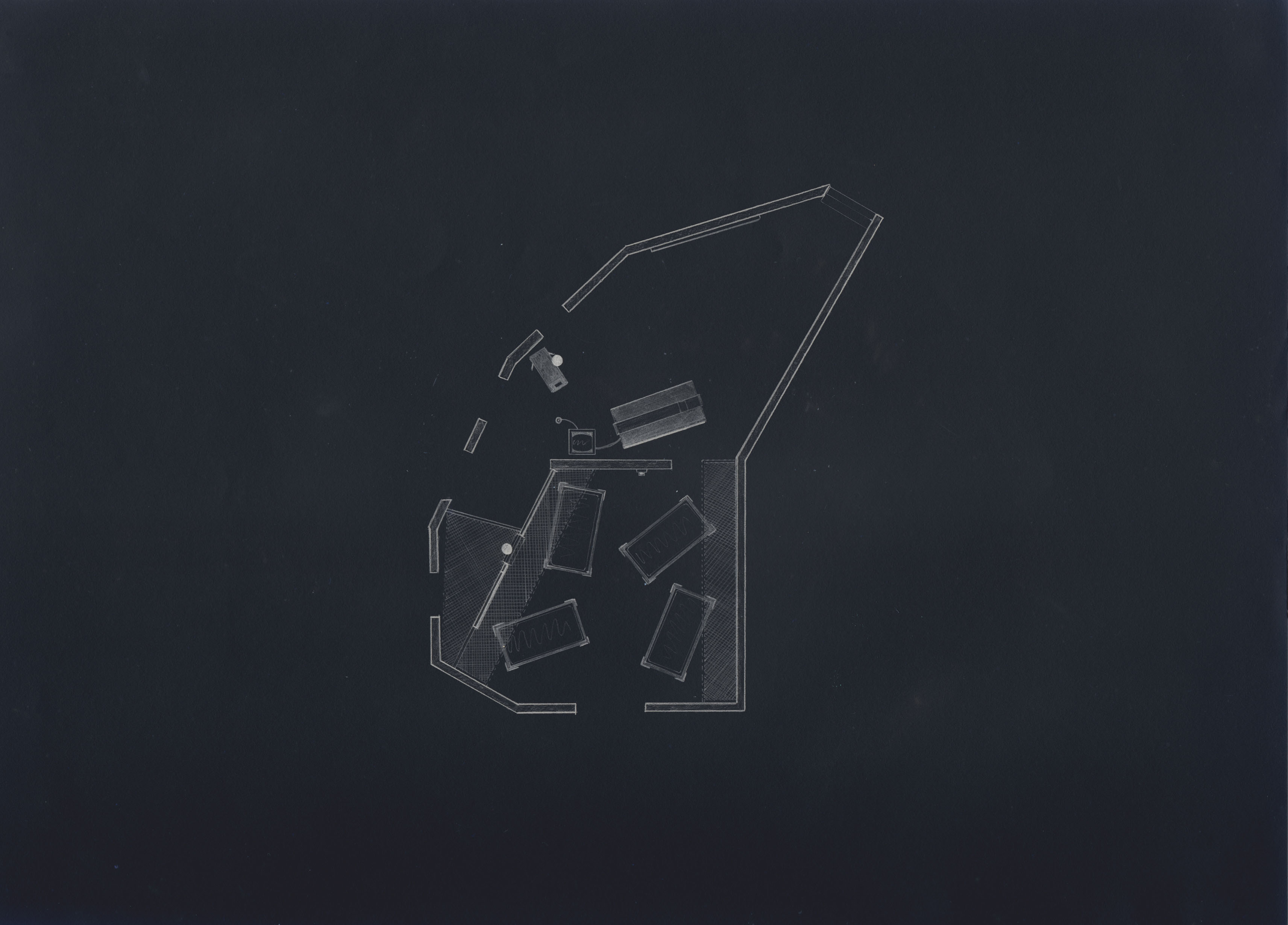
_inst: diorama (x o blindspot, grimmuseum 2012)
Diorama 2012 Schultafeln, Umzugsdecken, Pult-Vitrinen, AND IV BL 1 #195 (Zahnradnabe), Weißes Diorama AND IV BL 1 #197 (TV, IR-Sensor, Schwingschleifer, Videokamera, Holz) Schwarzes Diorama AND IV BL 1 #196 (siebdruckbeschichtetes Birkenmultiplex, Spiegel, UV-Lampe, Stroboskop, Schallüberträger, Objekt 1: ~Treibgut BL IV #017 0906_24_schuld_schulden_ufer_gravitativ, Objekt 2:…
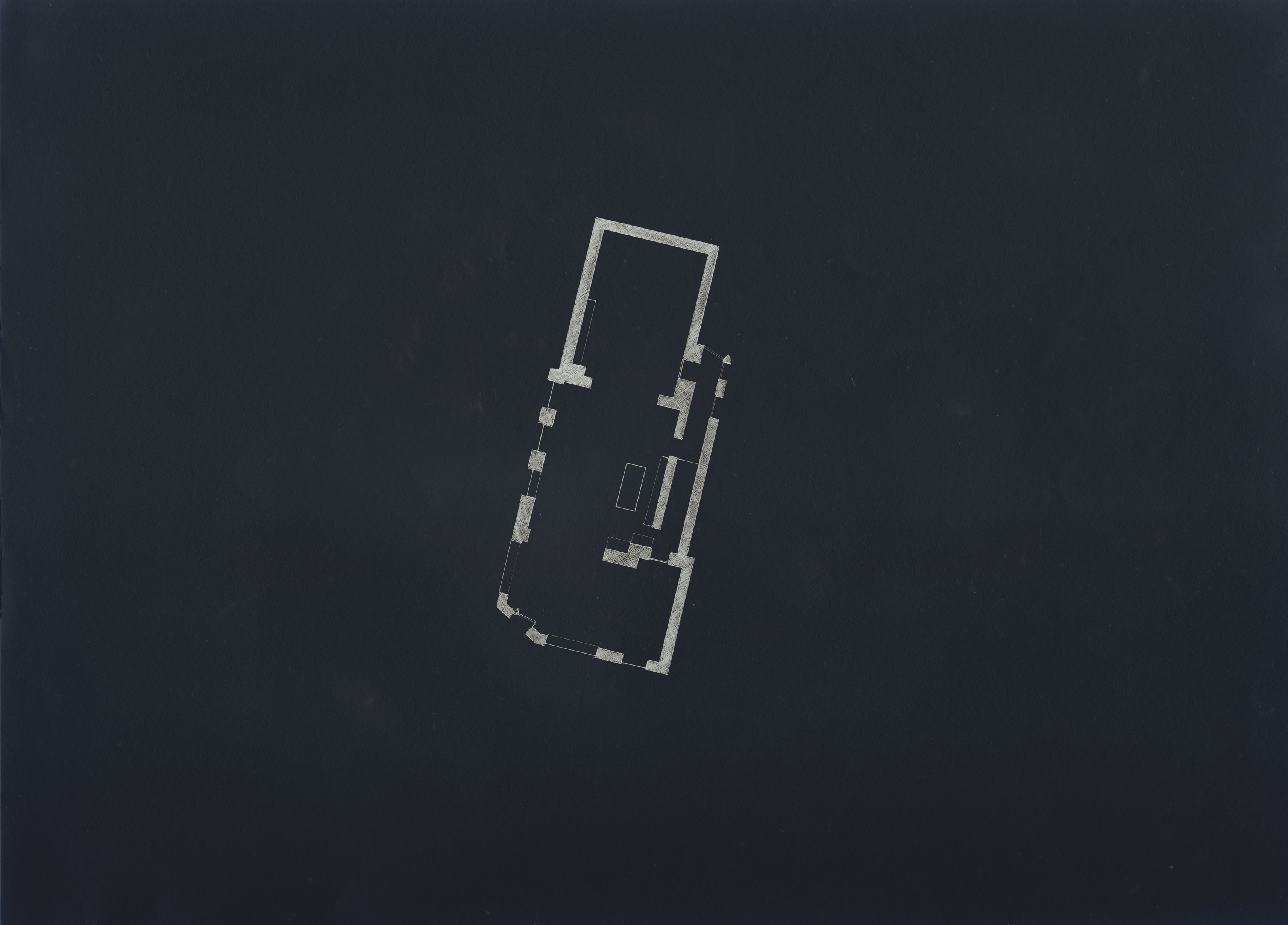
_inst: ((u+c+i) x (10-s)) 20 x aa x 1 (1-sin(f-10)) demotivierte photoitide (fruehperle berlin, 2011)
2 exhibitions (with sarah ambrosi, christian struck, alexander steffens)
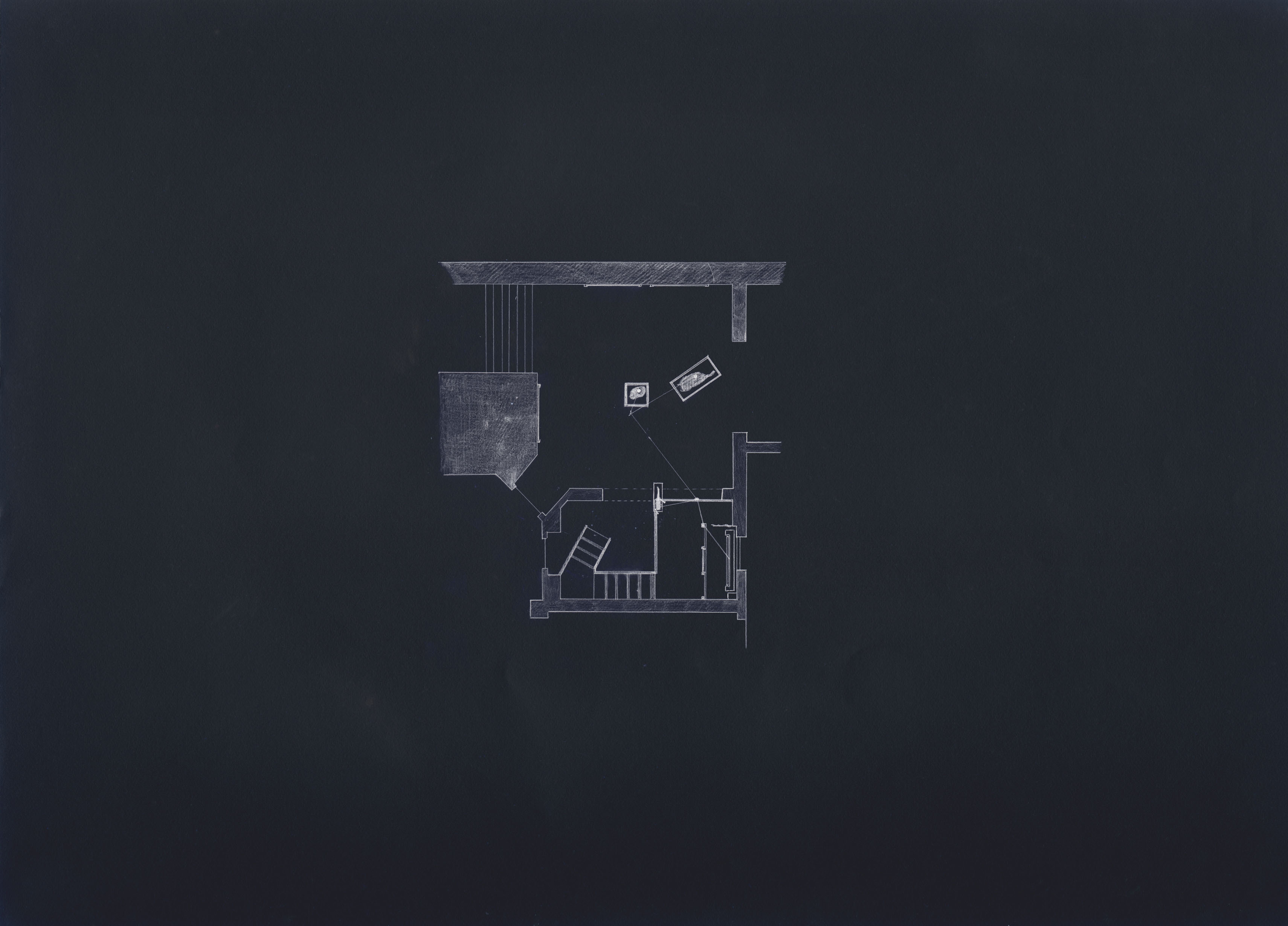
_inst: emitierende heimatlose teilchen im streiflicht (ppp, korme gallery 2012)
emitierende heimatlose teilchen im streiflicht. aber kein verrat, wo dein atem sich wie jahreszeiten in zeitraffer ausfährt und einzieht. möchte nicht stehlen von diesem phantasma, mich nicht bloß da hinein retten, vor dem lauten getümmel der vielstimmigen, schwindelnden fliehkräfte der anziehungen allenthalben/ von überall her…
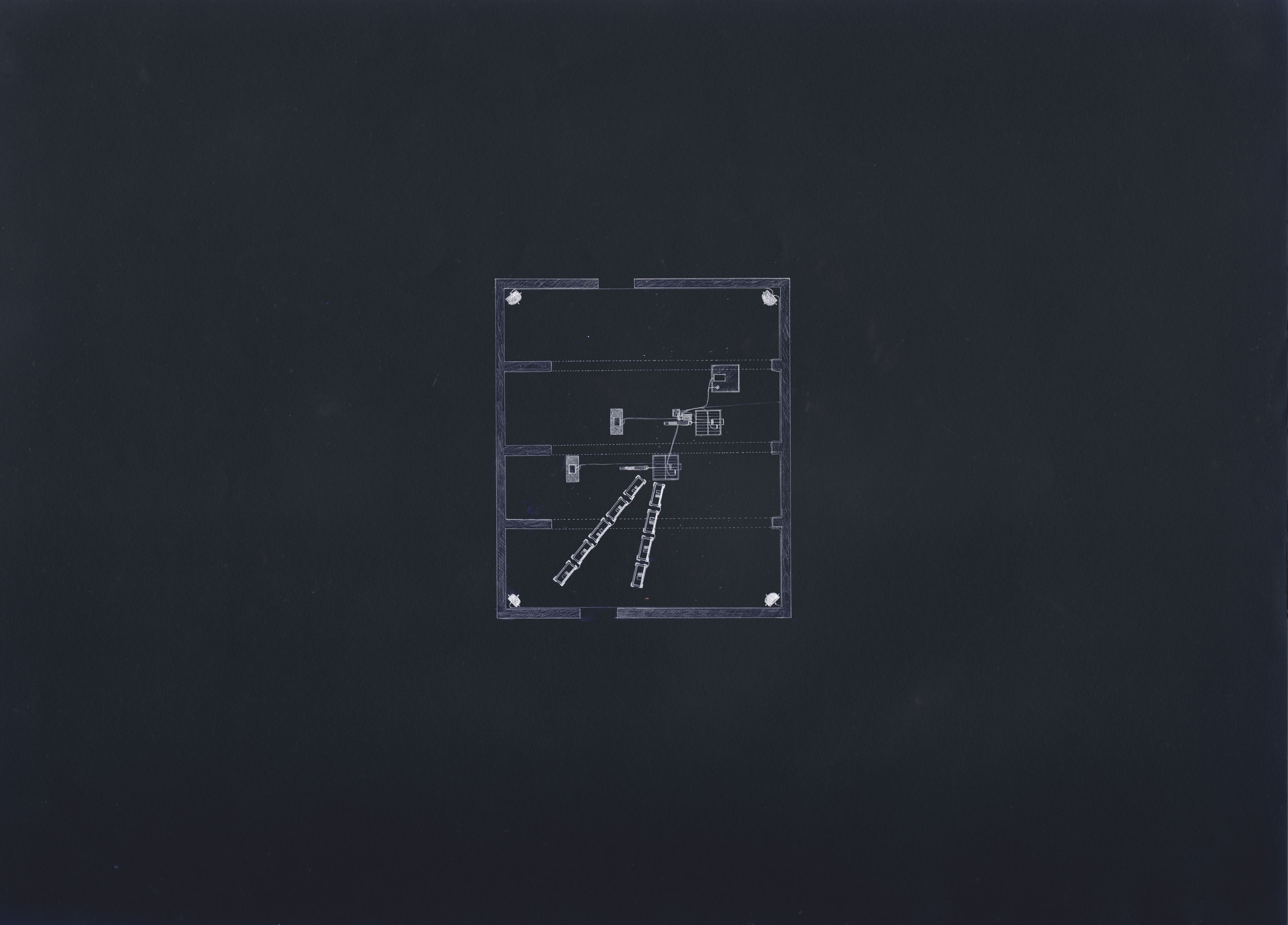
_inst: 3 steel plates scanner and sound (atonal kraftwerk, 2013)
installative ensemble of 2 scanner scanning continously upside downed steelplate images for the atonale festival 2013 in the kraftwerk berlin. the power supply of the scanners were intentionally underpowered and caused them to make a high pitched sound, that was picked up by 2 microphones…
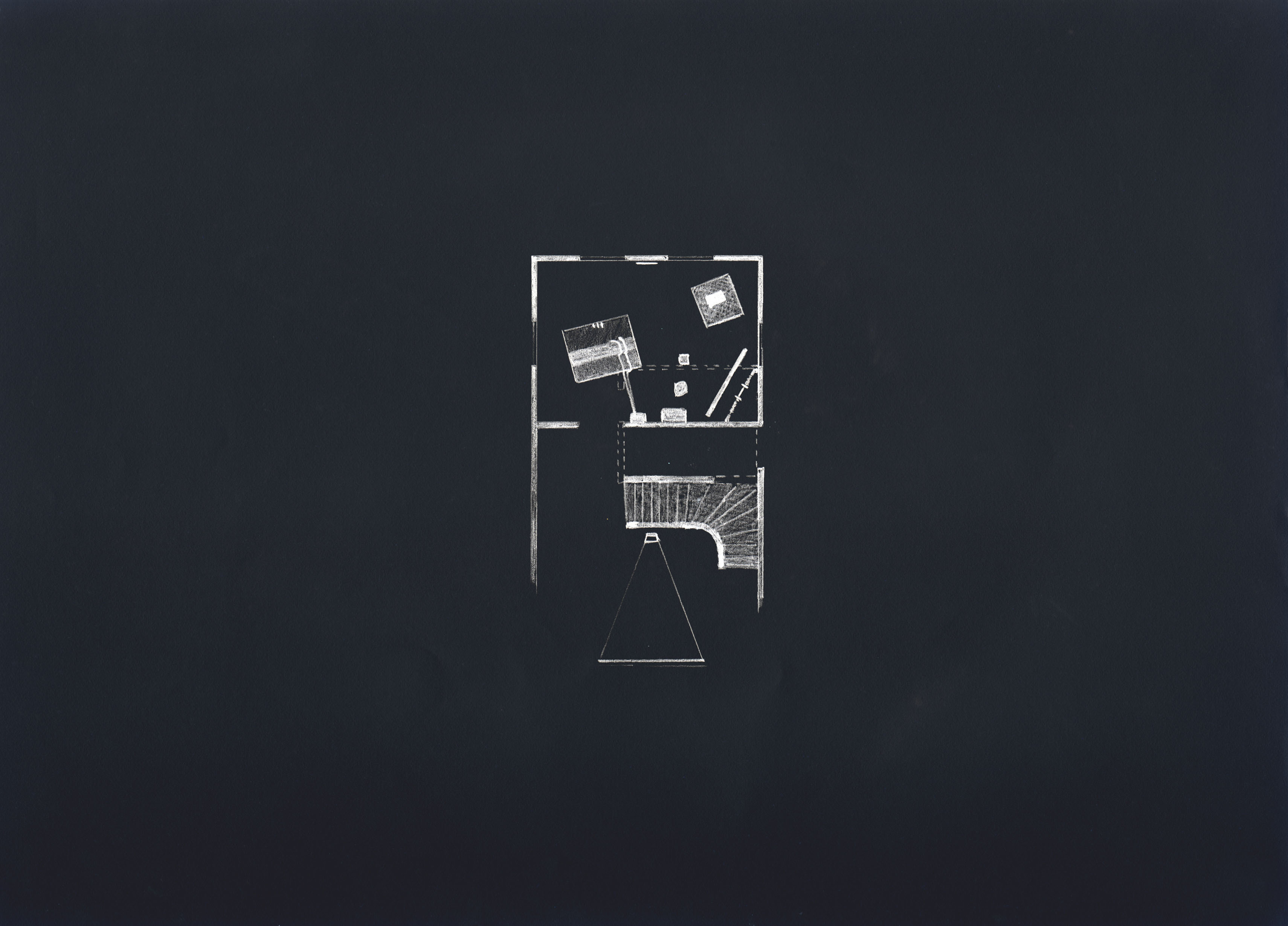
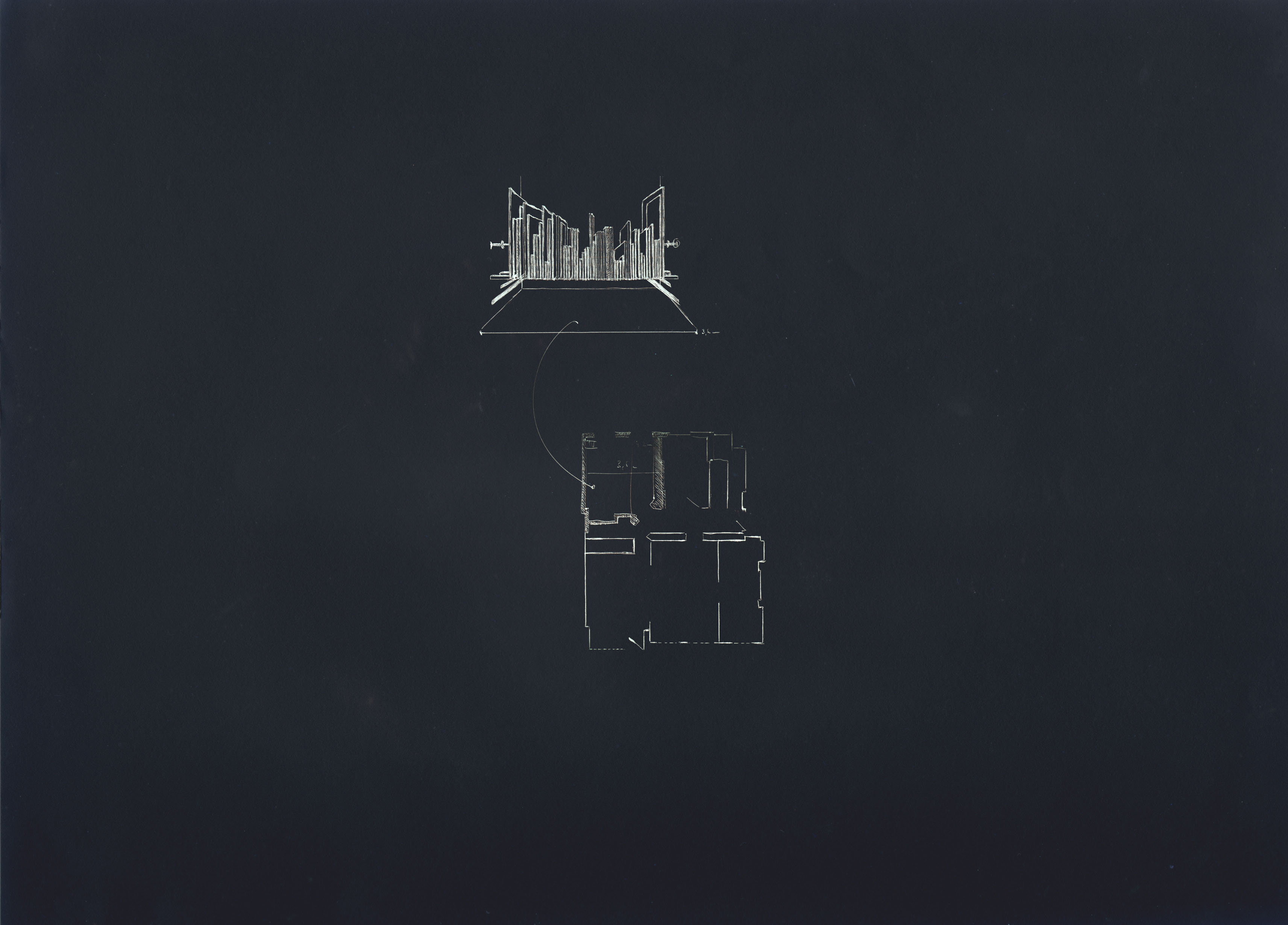
_inst: in|ven|tur (team titanic berlin, 2013)
[ɪnvɛnˈtuːɐ̯] An Exhibition Of Things That Remain After An Exhibition A painter brings ten works to an exhibition. For a couple of days they remain in the gallery. People roam in between the images: Enjoying them, maybe discussing their appearance or flirting in front of…
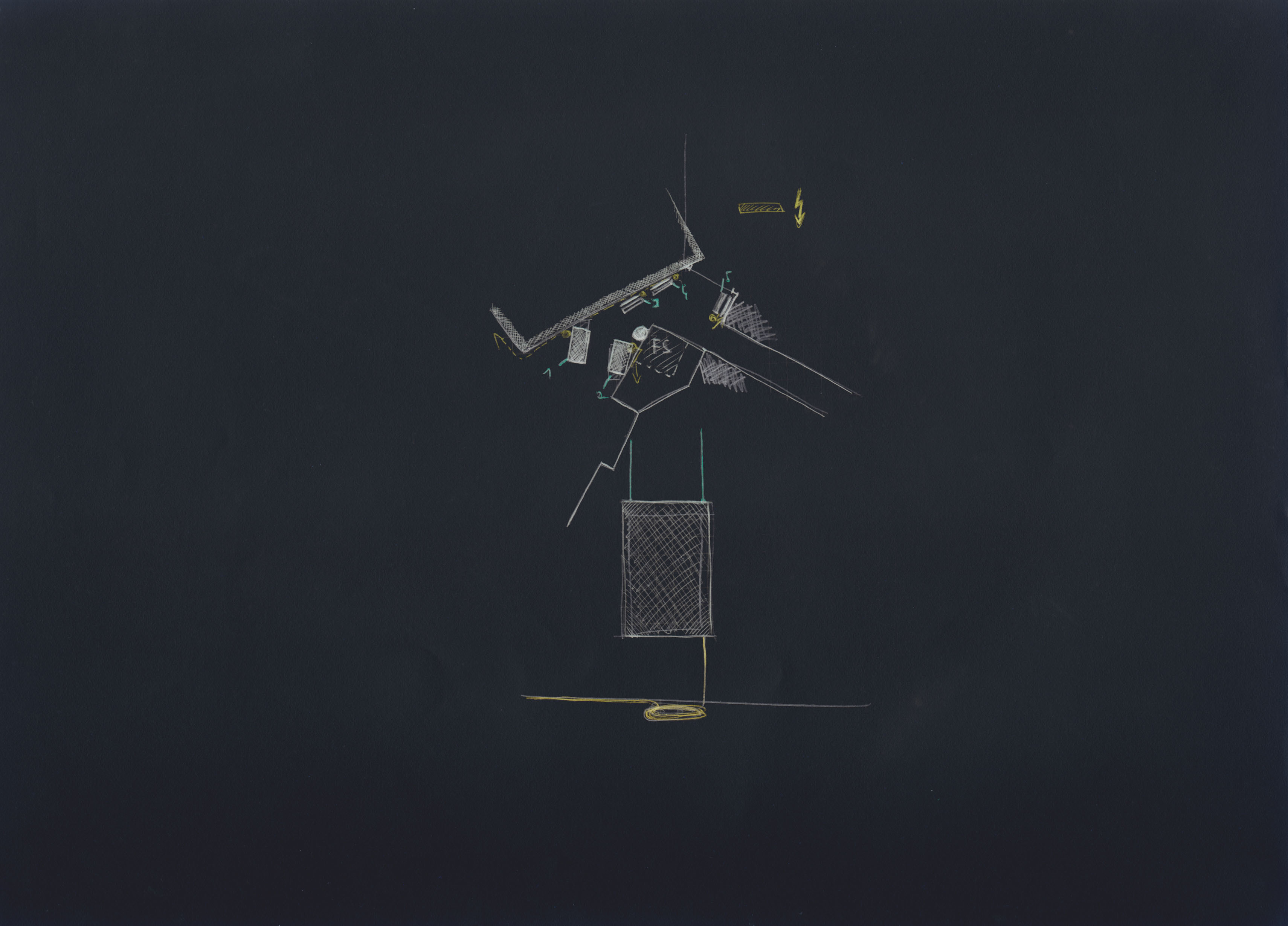
_inst: the sudden evolutionary changes in palearctic warblers (genographies zif bielefeld 2015)
warten, bis sich die sachen von selber auslösen. im traum dann kommen die bruchstücke wieder, vor denen man sich verstecken wollte. bilder als träger von beweisen. grundlage für die arbeit am zif waren dia's, die von der uni bielefeld entsorgt wurden und die ich vor…
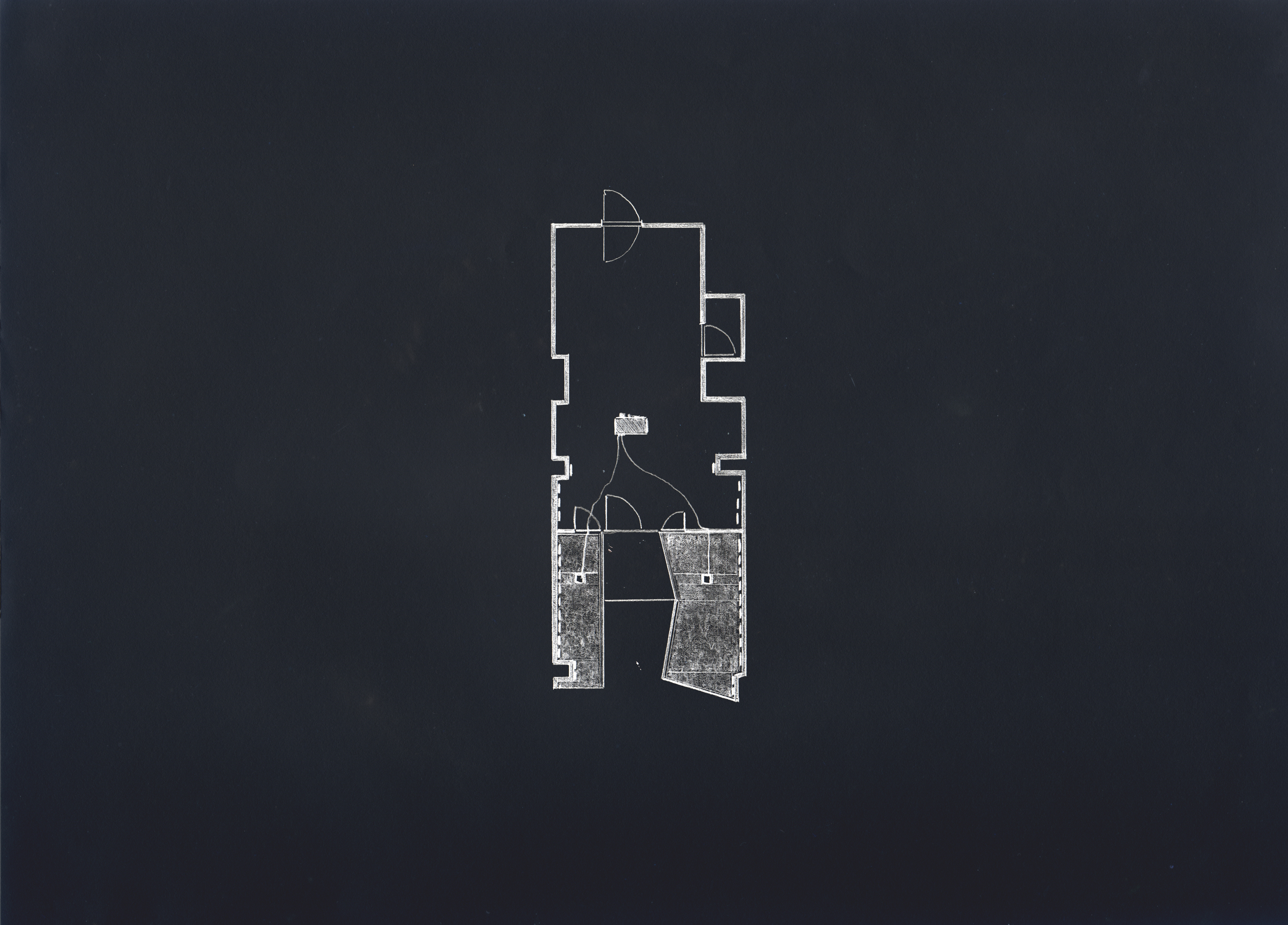
_inst: unterbrechung der waermezufuhr (tokonoma kassel 2015)
Lichtenberger konzentriert sich nicht nur auf seinen musikalischen Ausdruck, sondern auch den Schaffensprozess von Kunst im Allgemeinen. Immer in Bezug auf die Komplexität und die Schwierigkeiten der Kommunikation und Materialverweisbarkeit, versucht er, die Dominanz der funktionalen Interpretationen zu überwinden, ohne dabei den offenen Zugang zu…
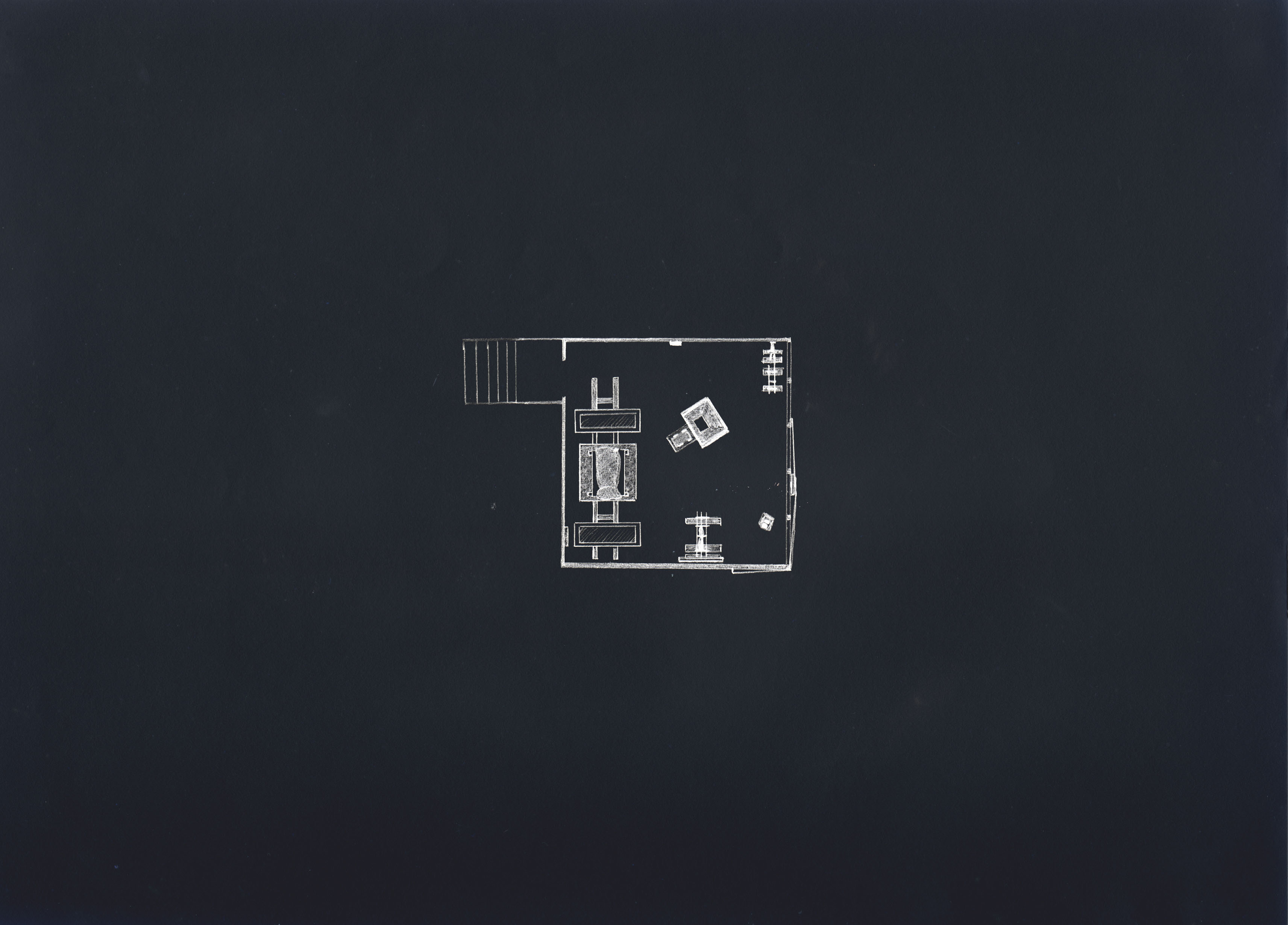
_inst: squeeze machine (plattenvereinigung, berlin 2016)
installation in der plattenvereinigung auf dem tempelhofer feld berlin 2016 (mit sarah ambrosi) The archetype of Temple Grandin's squeeze or hug machine is a cattle crush in which livestock could be calmed down. By fixating its head and pushing its body from the side with…
_inst: so wirklich gar nicht irgendein roter faden - can a shaman armortizise oins he collected from the ground (kunstverein guetersloh 2020)
Katalogtext by Christian Struck: Grischa Lichtenberger wurde am 16. Mai 1983 in Bielefeld geboren und ist in Steinhagen aufgewachsen. Dieser Umstand könnte unerheblich sein, für Lichtenbergers Werk ist die ihn umgebende Landschaft allerdings zentral. Landschaft ist dabei jedoch nicht nur konkrete Umgebung, deren topographische Beschaffenheit…
_inst: nightingale stack overflow (raster labor, ngbk berlin 2019)
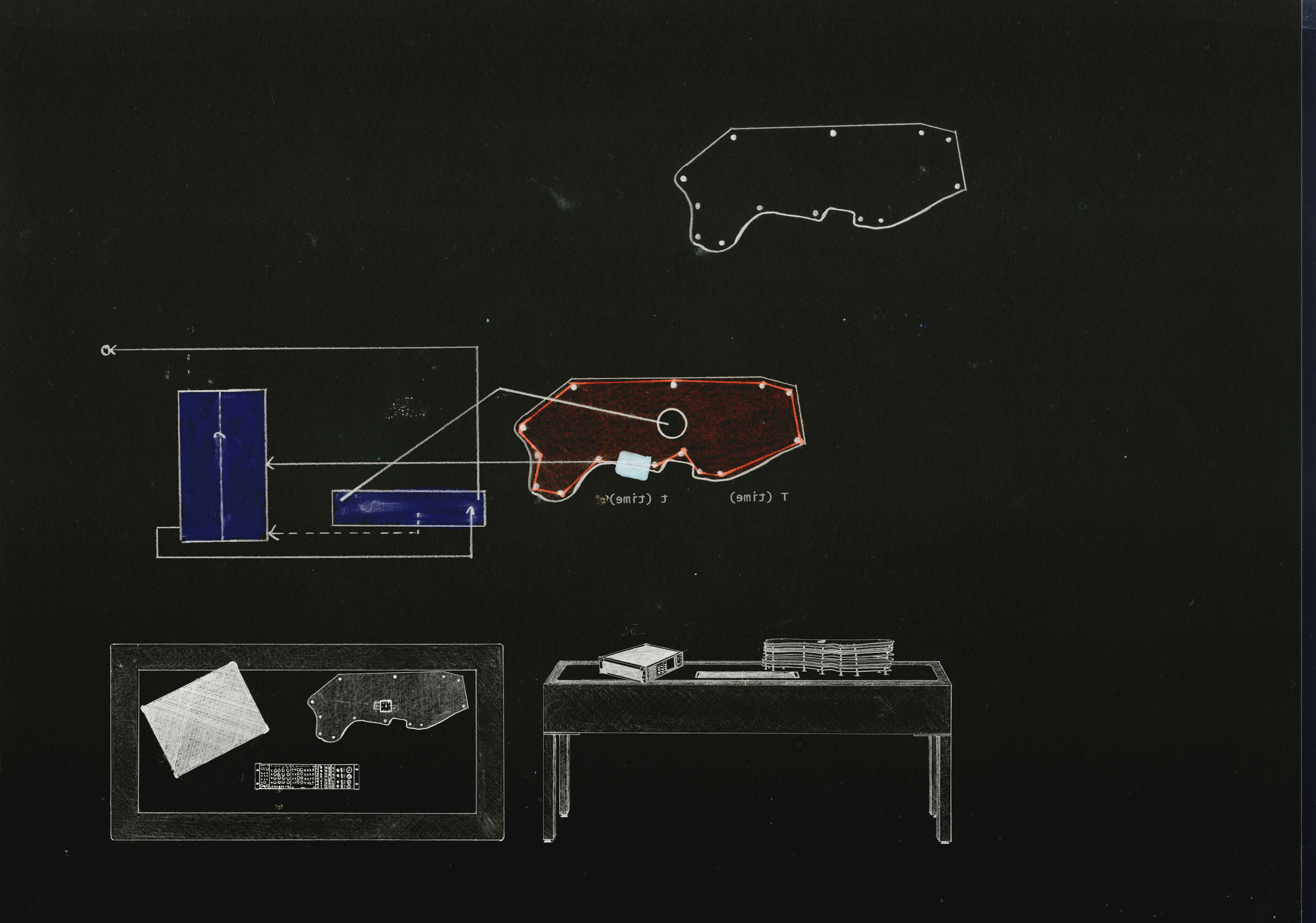
central to the ensemble is a tapeloop of a nightingale's song my father recorded in the early 90ies near the ratzeburger lake in northern germany. it is incorporated in an object that concists of different layers of material, stacked over each other. alternating layers of…
_inst: spem in alium (bahnhof kroepelin, 2019)
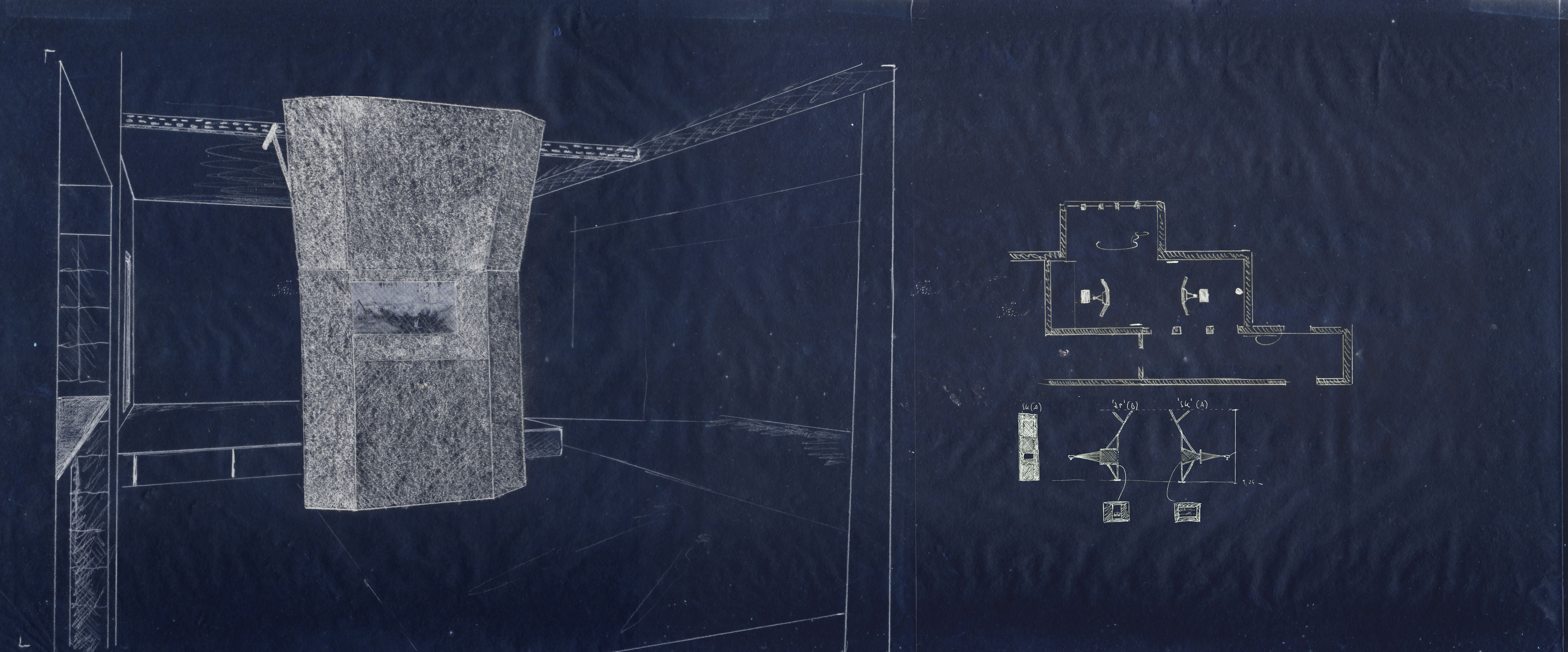
Spem in Alium (Hoffnung auf einen Anderen) Kunst braucht den Anderen. Den aufgeschlossenen Fremden, der mit seinem offenen Blick das Unsichtbare des Kunstwerks entgegenzunehmen versteht; den Freund, der das heimatlose Exil, die Suche nach der Sprache, dem richtigen Wort, als geteilte Freude empfindet; die Geliebten,…