mixtape podcast unidentified network
https://ekooooo.substack.com/p/unidentified-network-06-grischa-lichtenberger
Unidentified Network 06 - Grischa Lichtenberger
Grischa Lichtenberger’s music fractures, distorts and resists resolution, occupying a space between abstraction, memory and technological disintegration. Working across experimental electronic music, drawing, painting, video and installation, Lichtenberger has developed a practice that investigates the relationship between sound, image, landscape and the material conditions of contemporary experience.
Rather than treating technology as a vehicle for perfection or efficiency, he explores its imperfections, interruptions and possibilities for transformation. His compositions often resemble fragments recovered from a damaged archive: sounds stripped of their origins, reassembled and given new meanings. A similar sensibility runs through his visual work, where landscape, personal history and everyday materials become sites of observation and reconstruction.
There is a subtle hauntological quality to his practice, an awareness of the past as something that continues to inhabit the present. Yet his work is less concerned with nostalgia than with the relationship between memory, technology and perception. Across different mediums, Lichtenberger seems interested in making the familiar strange again, disrupting habitual ways of listening and looking.
Ultimately, his practice is an investigation into attention: an attempt to find meaning in fragments, errors and overlooked details, and to explore what it means to create and communicate within an increasingly saturated digital world.
Your music often seems to move between abstraction, fragmentation and moments of unexpected emotional intimacy. How do you approach sound as a material? Are you interested in communicating a particular emotion or idea, or in creating situations where listeners construct their own meanings?
I think in a way trying to communicate is still the basis of all the endeavours of art for me. But it isn’t really trying to communicate a specific meaning or a concept. When I organise different productions (tracks or drawings or whatever) I sort of try to understand what might bind them together, and I think I have no bigger insight into the things than anyone else (from the outside) would. So I think about the works with the same amount of distance and the materiality is somewhat the reason for that I think - it is at the same time the thing that connects the psychological reality, or the landscape you are in, with the physical reality, but it never condenses to some sort of truth or information. The materiality has this resistance in it so that it avoids the definition and by that can transfer the mystery, the trace that was laid in it by production to the other.
So I guess it is sort of between these things - I’d like to allure without manipulating, surprise without shocking, saying something serious, but as a joke / with an ironic smile. It is a sort of polarity between a shared intimacy and an abstraction that guides this intimacy towards a communication that is never fulfilled and thus wants to stay open for any entry point of an interpretation by another.
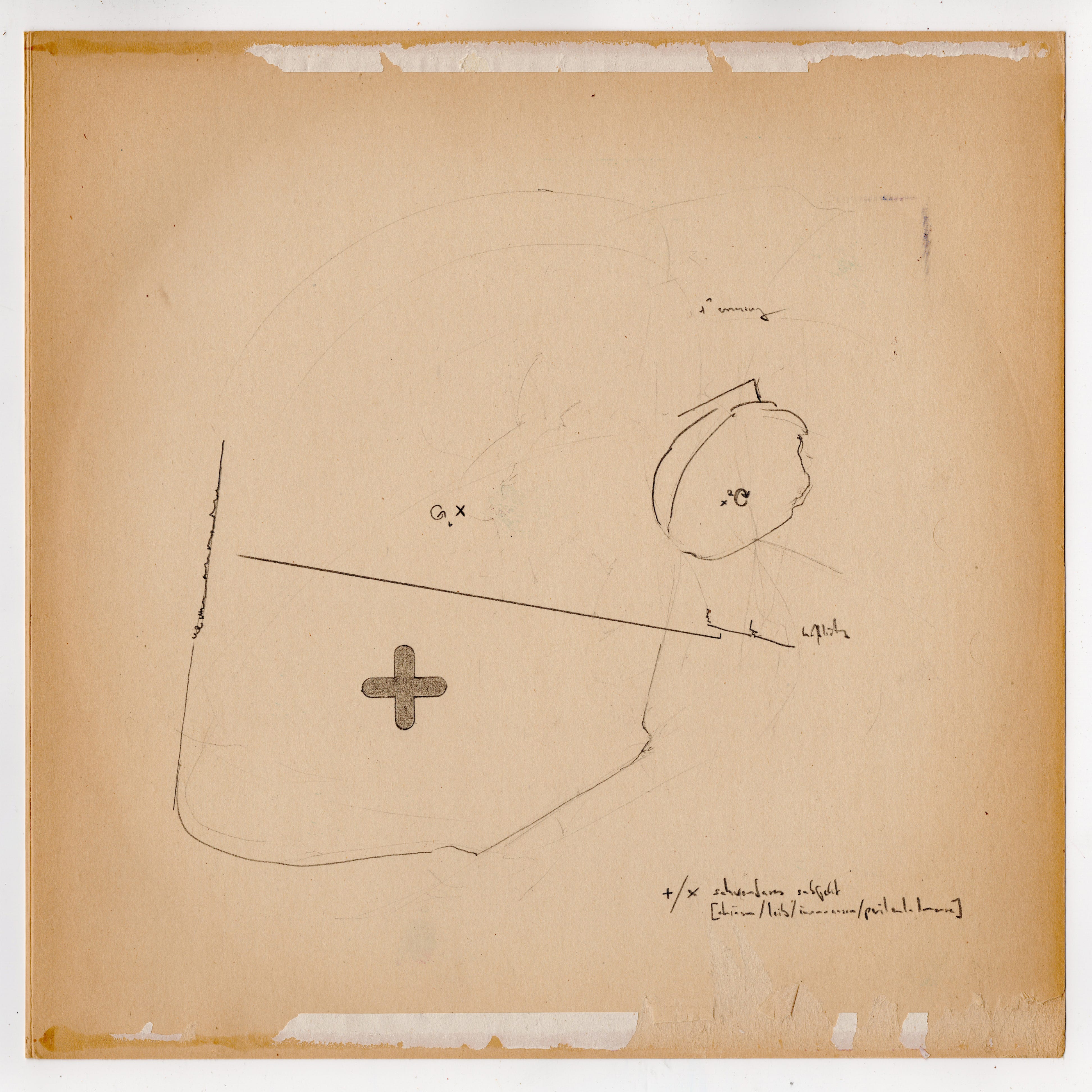
[0124_21_zn_4_web]
You work across experimental electronic music, drawing, painting, video and installation. Do these practices emerge from the same conceptual starting point, or do they offer you fundamentally different ways of thinking? How does an idea migrate from one medium into another?
I think there is often an experiment of sort in the beginning, just getting involved with some material (sound or colour or another media, or even an idea) and then by playing it out or seeing/hearing it, you start to think and relate to other circumstances. I’m not a huge fan of conceptual work as an execution of an idea... but I like reminiscing, thinking about what it means, relating to your life’s situation, the place, the times, your biography etc. I think through that constant reflection the translation between different media comes sort of natural.
[0122_24_zn 1]
There is a particular tension in your work between precision and instability, structure and disintegration, the digital and the physical. What attracts you to fragmentation, distortion, noise and imperfection? Do you see these qualities as a way of challenging the expectations of contemporary digital aesthetics?
I’m not so sure anymore if there is a fixed thing we could call “expectations of contemporary digital aesthetics” - but I would say it is more a critique (if at all) of the common life, or the common object, rather than a critique of some sort of aesthetics. More like a memento mori or a meditation about loss. I would try to express something, trying to find something out and the normality is in the way, it just blocks your senses and your questions. It’s also an ethical or even a political question (if you want) to somehow engage with the forgotten, the invisible, the disregarded. Fragmentation itself is a political message in that sense, stating to not just follow the allurement of a totality of construction....
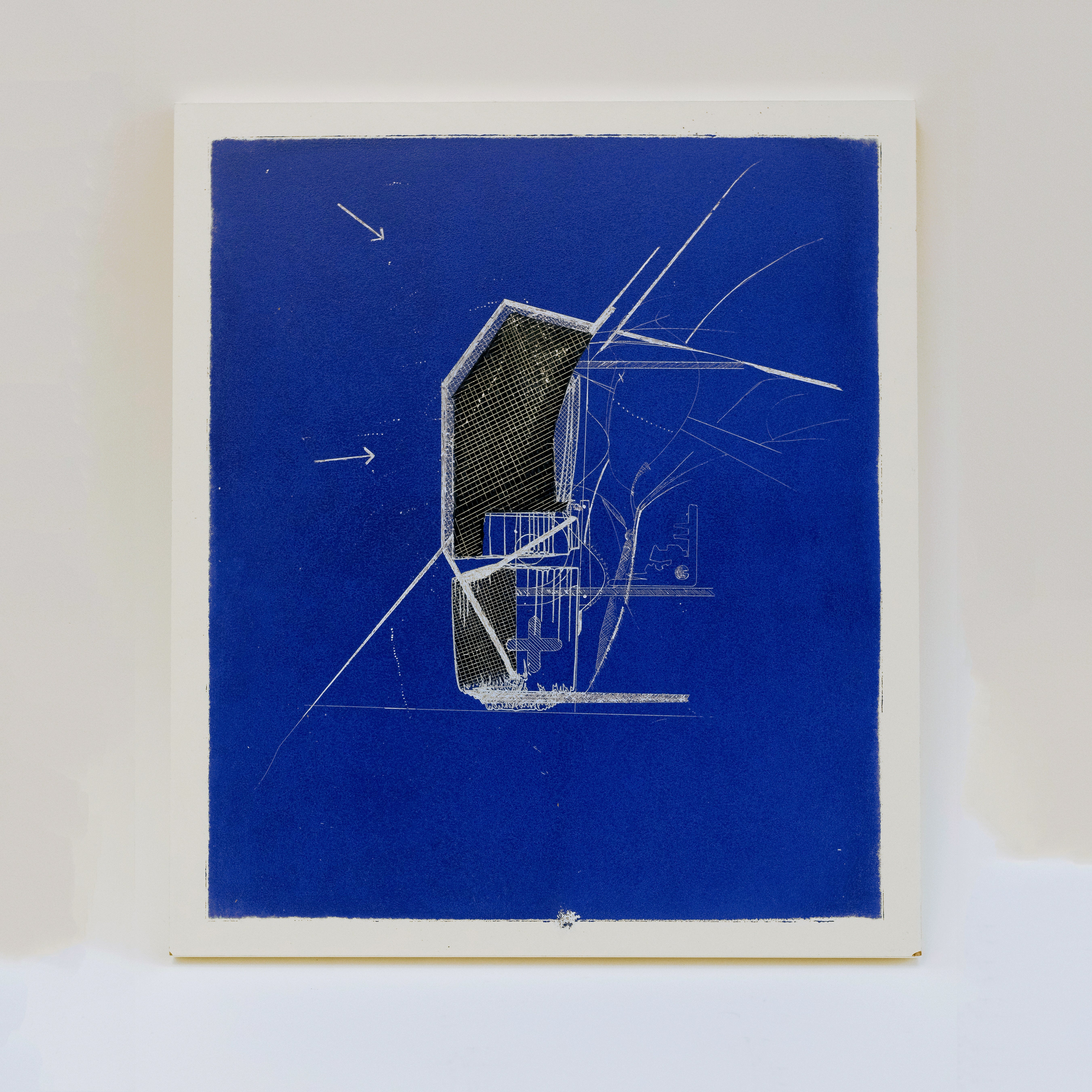
[0722_26_zn 1 konversion_apokalypse scham_b_2_inst]
When discussing influences, musicians and composers are often the obvious reference points. But are there particular writers, philosophers, visual artists, filmmakers, architects or scientific ideas that have profoundly shaped your way of working? Are there influences that might not be immediately audible or visible in your work?
Admiration was always a deep core of reassurance and inspiration in working for me - so there would be an endless number of things that influenced and shaped me. I sometimes call them my dead friends... I could name Walter Benjamin, Maurice Blanchot, Emmanuel Levinas, Döblin, Arno Schmidt, Sigmar Polke, Joseph Beuys... I wouldn’t know where to stop. But I think in these last years Maurice Blanchot really stood out for me. The Space of Literature is one of the books I return to constantly.
[1025_26_juli_28x28]
Technology is deeply embedded in your musical practice, but your work doesn’t necessarily celebrate technological perfection or efficiency. How do you negotiate the relationship between technological tools and artistic intuition? Do you sometimes deliberately work against the logic or intended function of the tools you use?
For me a tool is not the most sufficient way to achieve a goal, but a thing that holds a story in itself. I had once this epiphany when I looked at a hammer. I mean logically or technically it is a pretty simple thing - a weight on top you use to hit a nail into a piece of wood. But if you look at the handle of any normal hammer there is so much more to it. The handle is ergonomically formed, has ribs to avoid it sliding out of your hand, etc. and any invention on the long evolution of the hammer is of course an optimisation, but at the same time in the background of this optimisation you could imagine the past craftsman being totally annoyed at one point by having the hammer slide out of their hands, getting blisters from the rigid wood and so on. So in a way appreciating mistakes, misusing technology is not only a sign of opposition against the logic, the fantasy of perfection, but even more a way to remember these ghosts of failure inside everything and by trying to give them a voice, you give yourself the leeway to communicate something in yourself beyond conceptions of identity or idealisms towards the other.
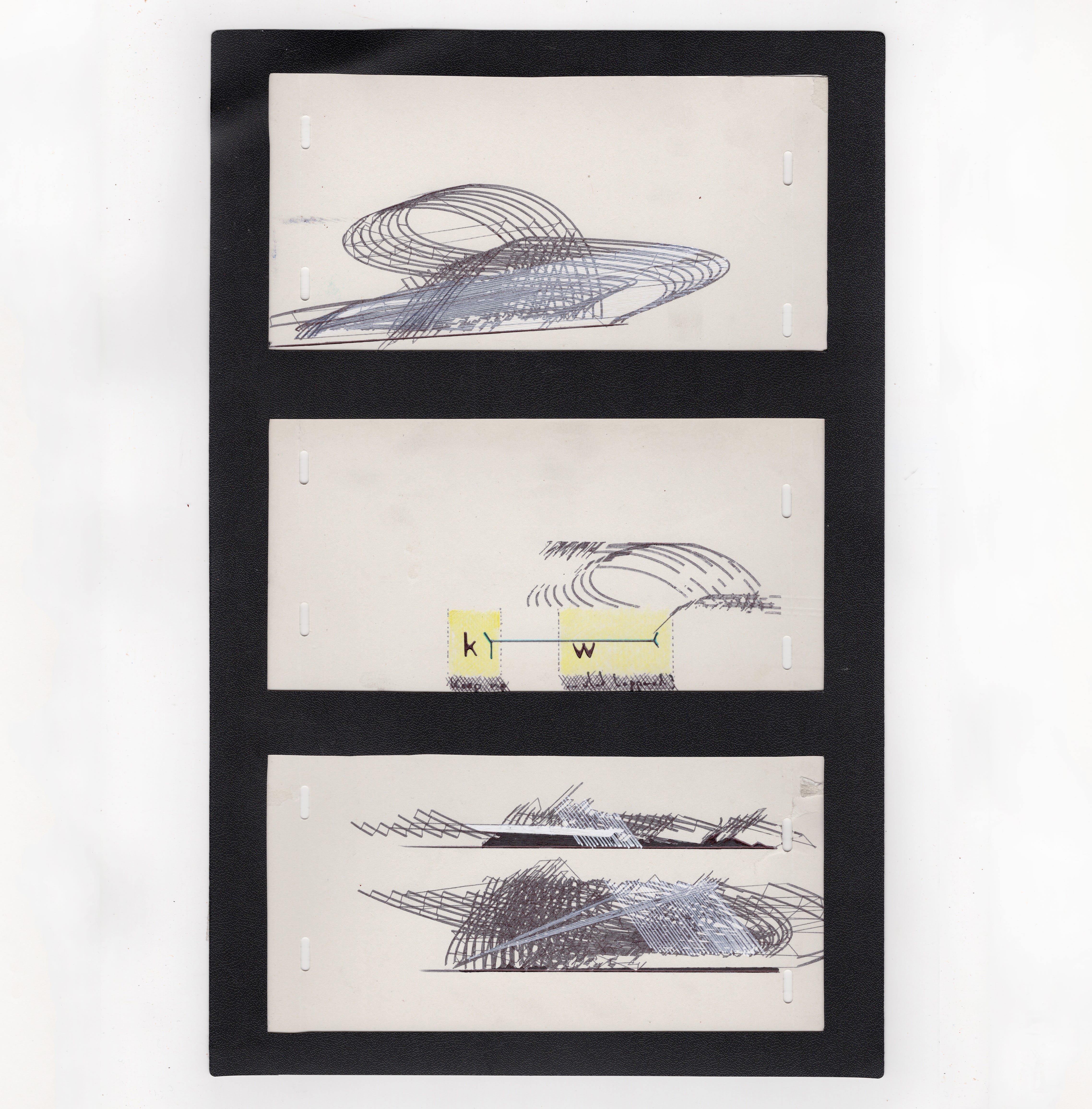
[001_0324_14_keep up...what happened_web]
Elements of landscape, geography, memory and documentation seem to occupy an important place in your visual practice. What is your relationship with the idea of place? Do landscapes function as personal archives, psychological spaces or repositories of collective memory in your work?
Yes, all of the above. But what is interesting for me in the metaphor of the landscape isn’t really the content (what it implies, what it is made of), but more the weird relation towards it. You could say I’m looking at a landscape, but you are standing in it. If you are on a mountain and you see in the valley you have a view of the landscape of the valley, but you are on a mountain. And this handle somehow impressed me - it seemed to be a translation of what the relation to a work one does entails: having a painting in front of you, or listening to a song is as distant as the valley in some way... as you are standing on that mountain trying to see it. But this is only the translation for the mountains. But there are similar functions for the river, the woodlands, the desert and so on. I just like these mechanics as translational operators you could say.
[0926_16_ladinische stelle]
When composing, how much of the final piece is determined by an initial conceptual framework, and how much emerges through experimentation, accidents and unexpected discoveries? Do you prefer to maintain control over a composition or allow the material to lead you somewhere you hadn’t anticipated?
There is not really a rule or a common method - even in that regard that I couldn’t say that it is totally not about having control. Sometimes the joke or the strategy for me is exactly to pretend to have control, sometimes it is about destruction and giving up. Sometimes it’s just an archival curation, a care to re-relate, sometimes it is a stubbornness to not let go and sculpturally define it - but usually I stop when it becomes just a fight - I think there is not really a point in communicating the fight for perfection.
In your audiovisual and installation work, how do you think about the relationship between what we hear and what we see? Are sound and image intended to reinforce one another, contradict each other or exist as independent elements that create a third, more ambiguous experience?
Also no grand general scheme I could present I’m afraid. Sometimes images are just notations of the music and sometimes in installations the music just is a function of how I want a space to work, leading to a drawing for instance. In an installation where they all come together, I think it is mostly so, that they all are just an instrument on how to approach a visitor, even the elements that might be biographically intimate in that sense, all of the elements are then only metaphoric vehicles to organize space. But of course by organizing, I don’t necessarily mean an order - it’s a soft betrayal in a way, where one would think ah, I have to go there now to find it out, only to find another superficiality or the opposite a denseness that is not saturated.
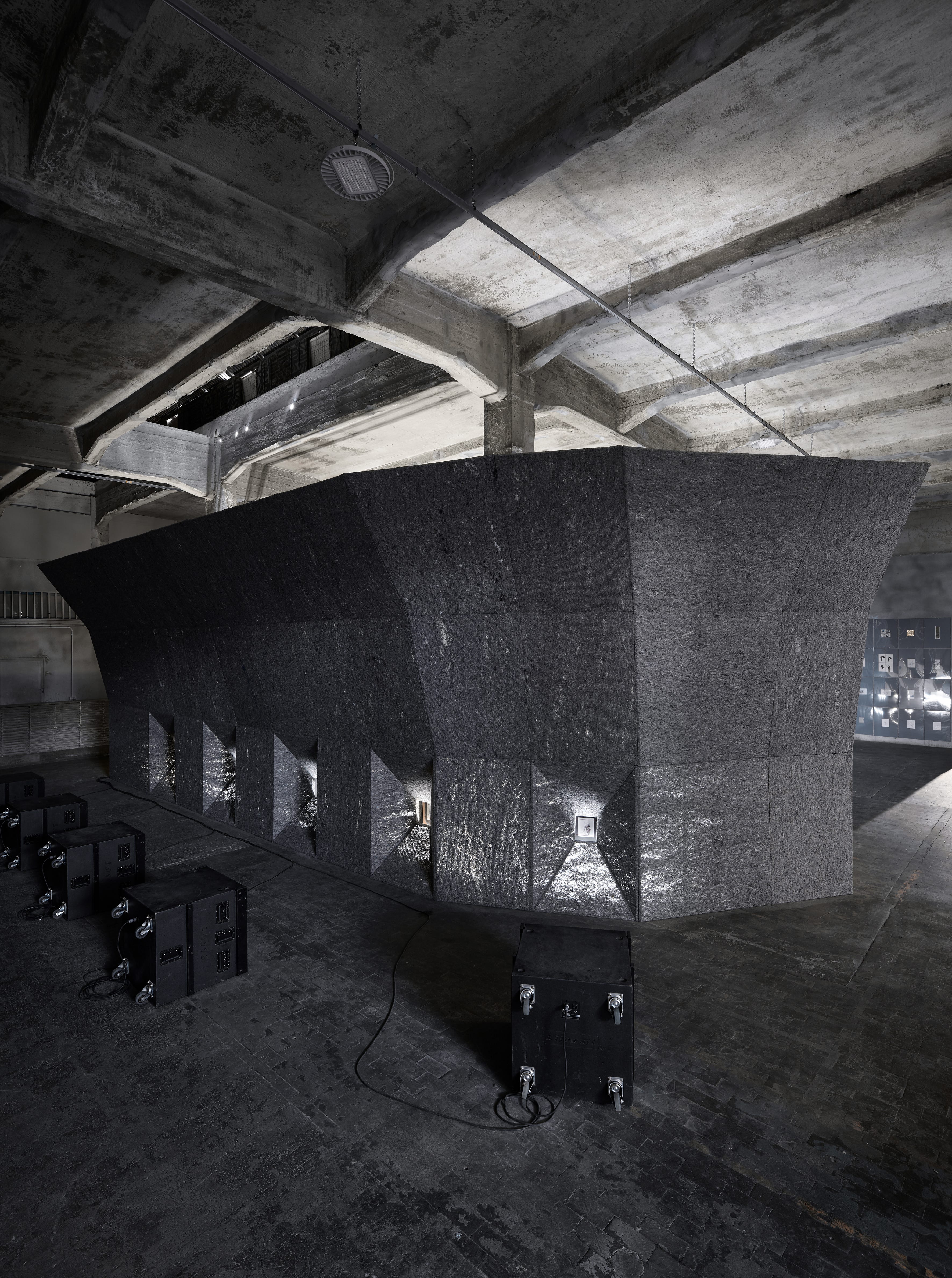
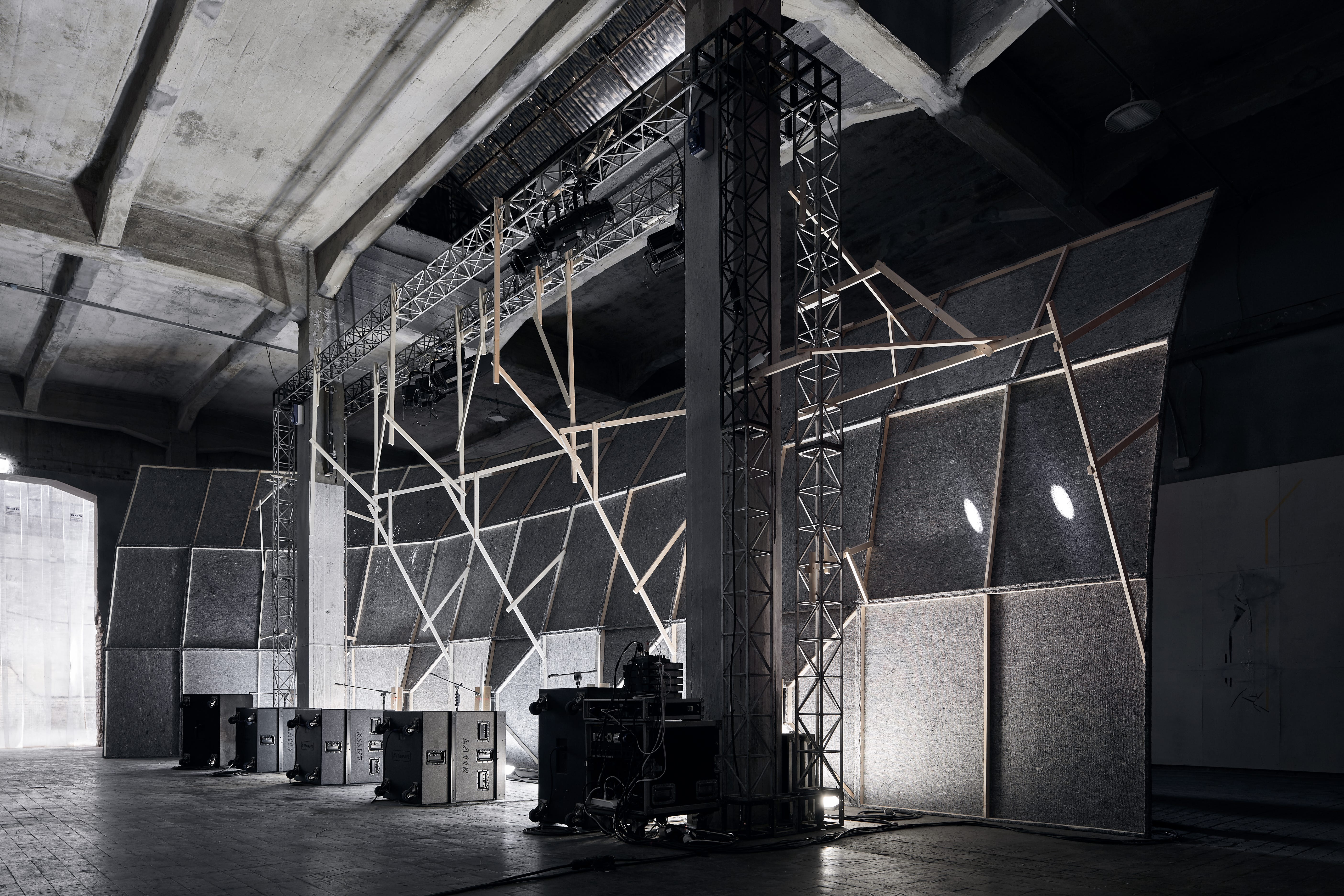
[180511_fen_fires_001_100p_srgb_web / 180511_fen_fires_006_100p_srgb (Foto by Stefan Färber)]
Experimental electronic music has changed considerably over the last two decades, particularly with the rise of digital production, online distribution and increasingly accessible creative technologies. How do you perceive the evolution of experimental music and its relationship with contemporary art? Has this changing environment influenced your own artistic priorities?
Not really the priorities (I hope), but of course the means, the possibilities, the methods develop in close encounter with the development of technology and the narrative of course also changes with time - sometimes I don’t know if me or the world or both are getting older...
No, I mean in all seriousness I think that basically the potentiality of the future and the integrity of human expression is very underrated at the moment. I feel that the development of electronic music for instance is still one where it potentially reveals more and more the possibility of an unprecedented individualism, while of course it is in a constant battle with consumerism, statistical symbolism (like AI), a gear fetishism etc... simply with a market that wants to flatten the spikes to finally be able to deal with it (us). I think at the same time where we are surrounded by algorithmically predefined content (and its creators) we also see a rise in both the need and the production of authentic, very personal and individual expression.
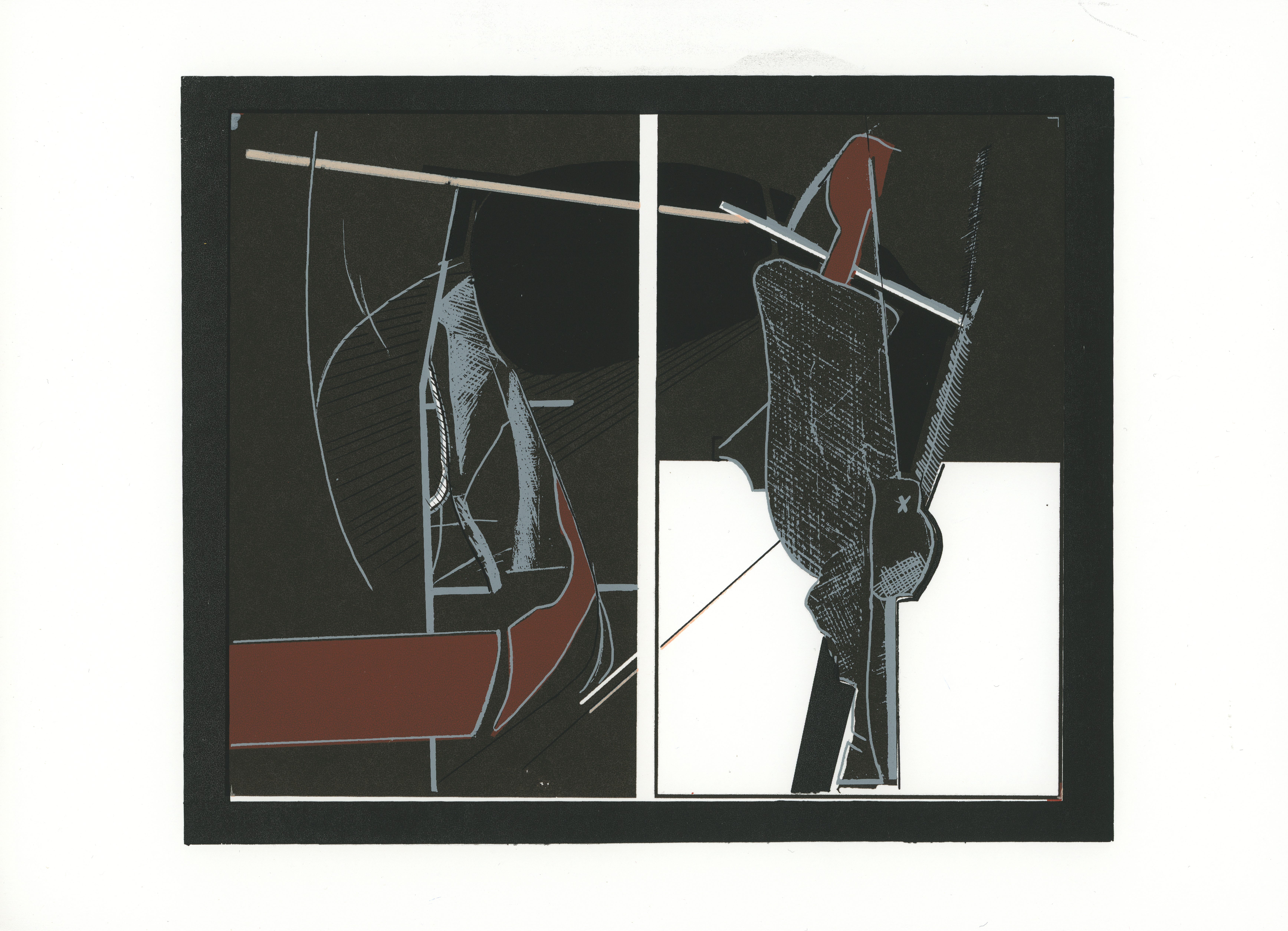
[0522_07 icon for unforseeable futures_re 1]
Looking back at your earlier work and comparing it with your more recent projects, what has fundamentally changed in your understanding of what it means to make art? Are there questions or contradictions that continue to follow you throughout your practice, regardless of the medium or context?
This is maybe too broad of a question for me to answer simply. There are for sure discontinuations and continuations both. I can’t really pinpoint a single outstanding epiphany through the years - but maybe I’m a bit more aware nowadays that art isn’t a thing you do for yourself or alone, but something you do in relation to your surrounding, both to your lost ones and the ones you are trying to find.
TL :
0 - 1.45 grischa lichtenberger - 0626_22_lv 2
1 - 3.40 grischa lichtenberger - 0726_13_ss strings rsd
1.30 - 6.00 maki ishii - thirteen drums for solo percussionist op77 (1985)
3 - 5.30 andrea belfi - anticline
3.17 - 4 charles dodge - speech songs: the days are ahead
4.20 - 6.20 grischa lichtenberger - 1225_04 pysmdl crsh 1
5.10 - 6.05 unesco auvidis - canada inuit games and songs - katajjait sung by a single voice
6.22 - 8.40 grischa lichtenberger - 0626_30_re_0526 sslvrm
7.10 - 9.25 hildur gudnadottir sam slater - irreversible (battlefield 2042 ost)
8.35 - 10.40 avraham kober - tored gu res set
10.10 - 13.50 grischa lichtenberger 0724_31_lv 1 tommyjz
10.10 - 13.50 tommy richman - million dollar babdy
13.30 - 16.50 ||||||||| [barcode] - she said
14.30 - 20.20 grischa lichtenberger - 1022_21 yuya death cut
17 - 19.10 poulenc - le chemins de l'amour
19.20 - 21.20 sad noise - fluckpulseg_d
21.10 - 26 grischa lichtenberger - 0220_28_re 0419_cl ostr sylvia 5 cut 1
21.20 - 23.45 grischa lichtenberger - 1126_17_lv 1 pn rust 2 no arp
22.30 - 25.50 marko prsa - grs mxt
25 - 27 grischa lichtenberger - 0826_15_re_0526_12 lv0 b
25.50 - 27.30 escfromf5 - grischa3
26.50 - 29.30 grischa lichtenberger - ru B rm (0724_28)
26.50 - 29.30 rubii - nightdrive
27.30 - 28.45 grischa lichtenberger - 0826_04_re_0721_07_lv 1 mod recs
29.15 - 31.05 sockethead - weights chains & forgetful rememberance
31 - 34.30 zoe mc pherson - potentials
34.25 - 38.20 rian treanor & cara tolmie - incongruous diva
38.20 - 41.15 grischa lichtenberger - 0225_13_ctbs 2 b
40.30 - 41.45 grischa lichtenberger - 0225_16_zbr cleaning game vid cut
41.20 - 44.45 eliza - zombie like
44.45 - 49.30 grischa lichtenberger - 0424_02_git 1 erb ab sch mini arg
49.30 - 53.30 daniella ljungsberg - other plans
52.30 - 61.50 grischa lichtenberger - don't (1120_13)