_rel: wavepropagation (raster media ext021)
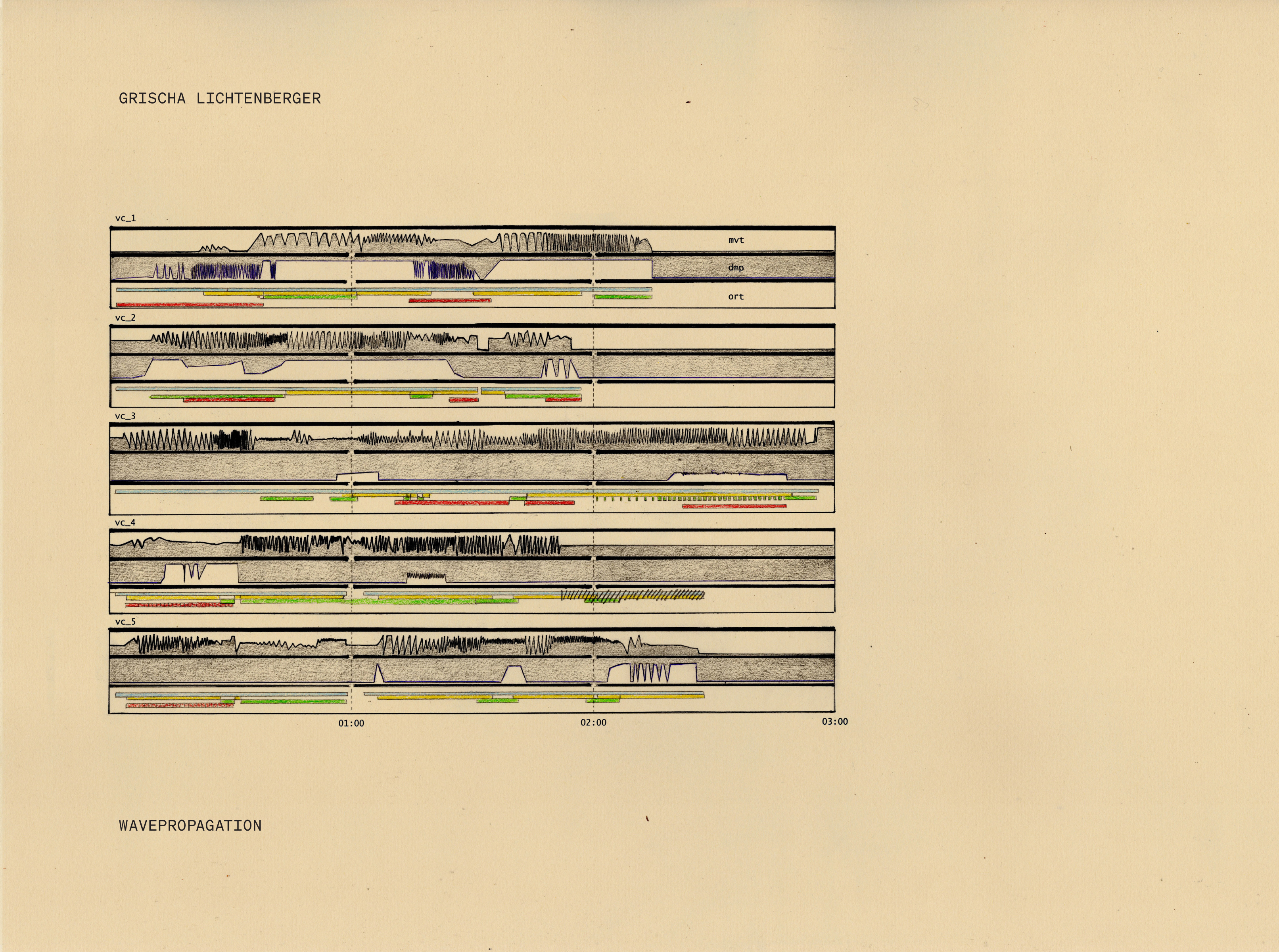
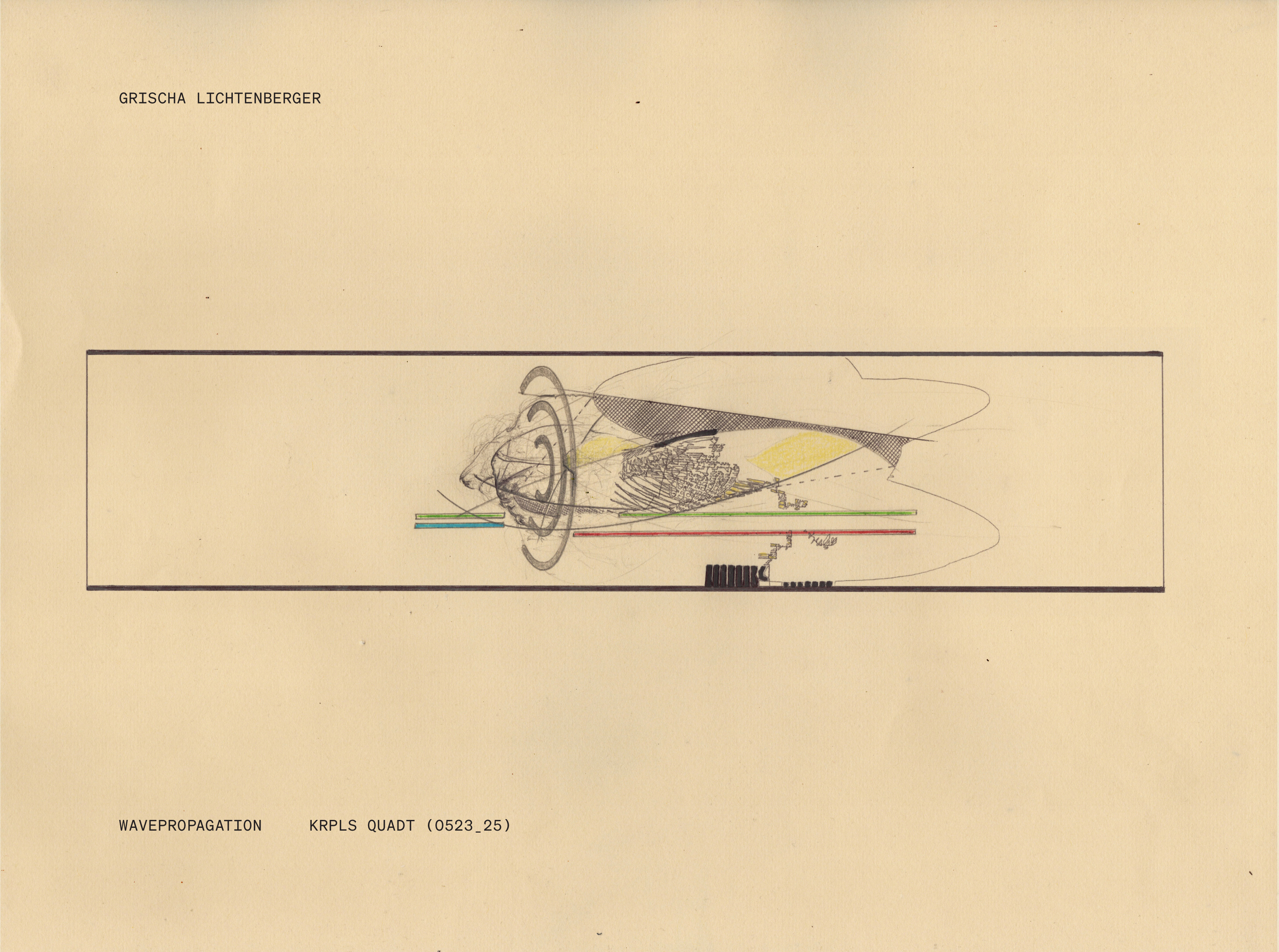
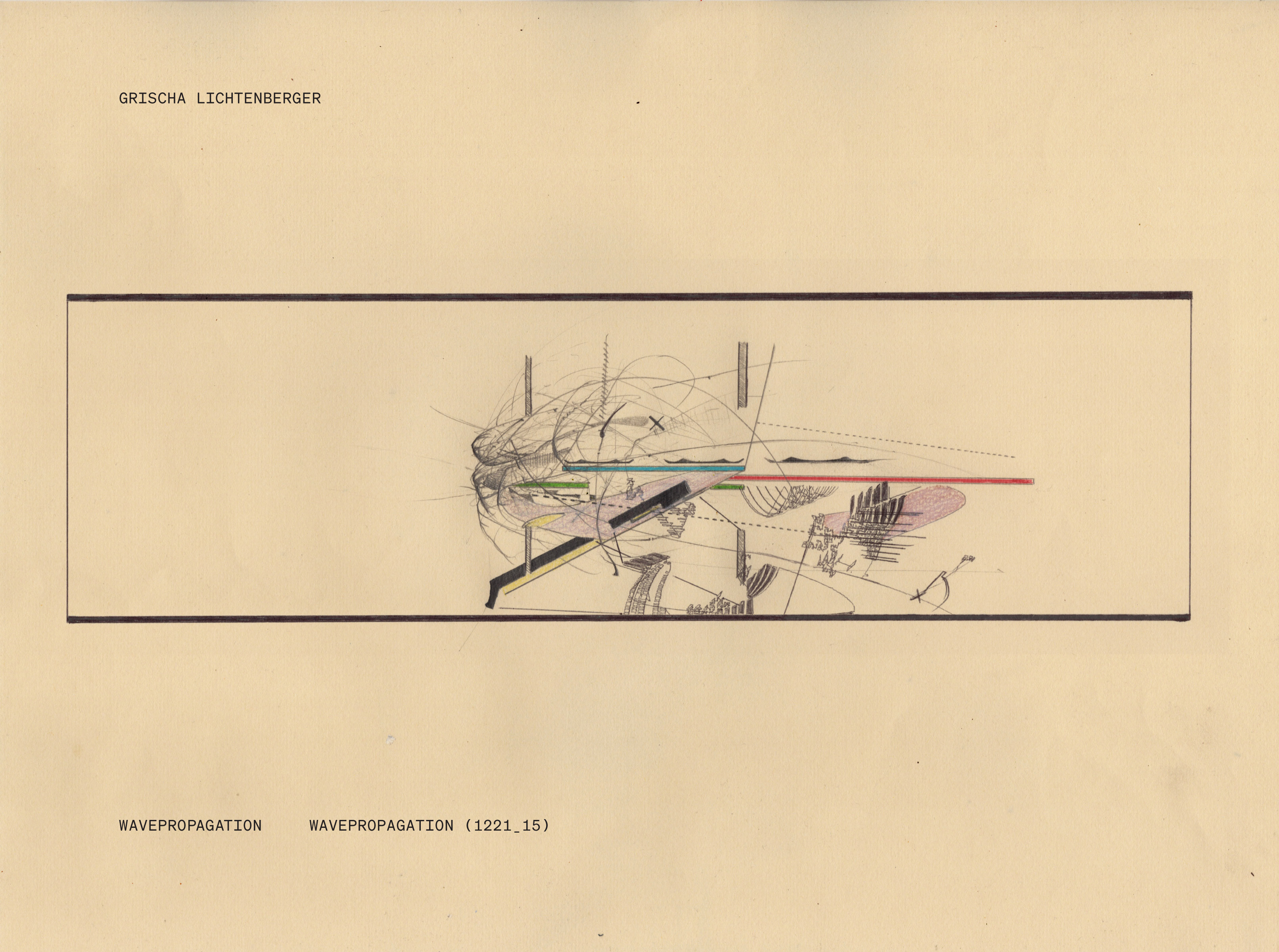
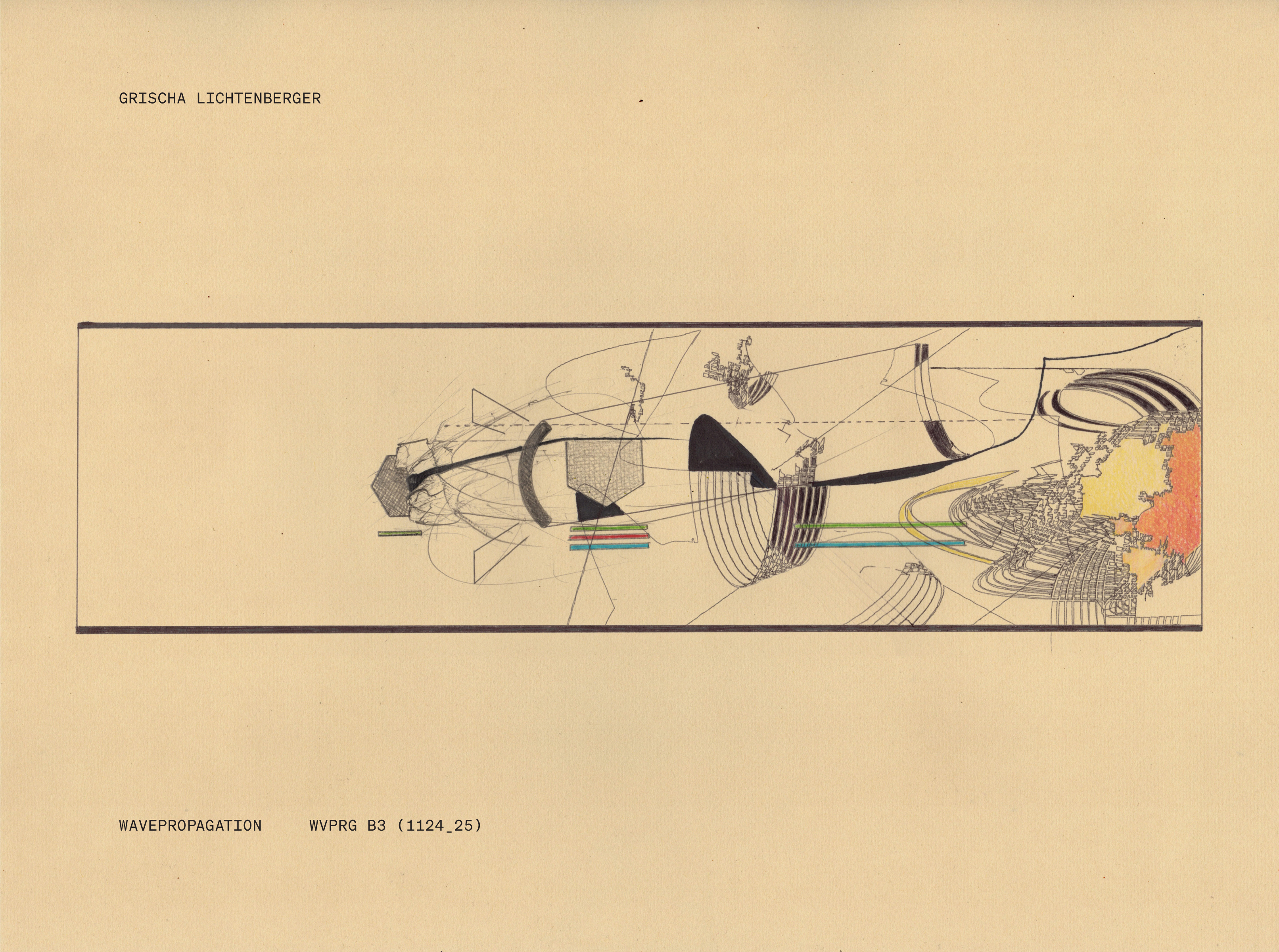
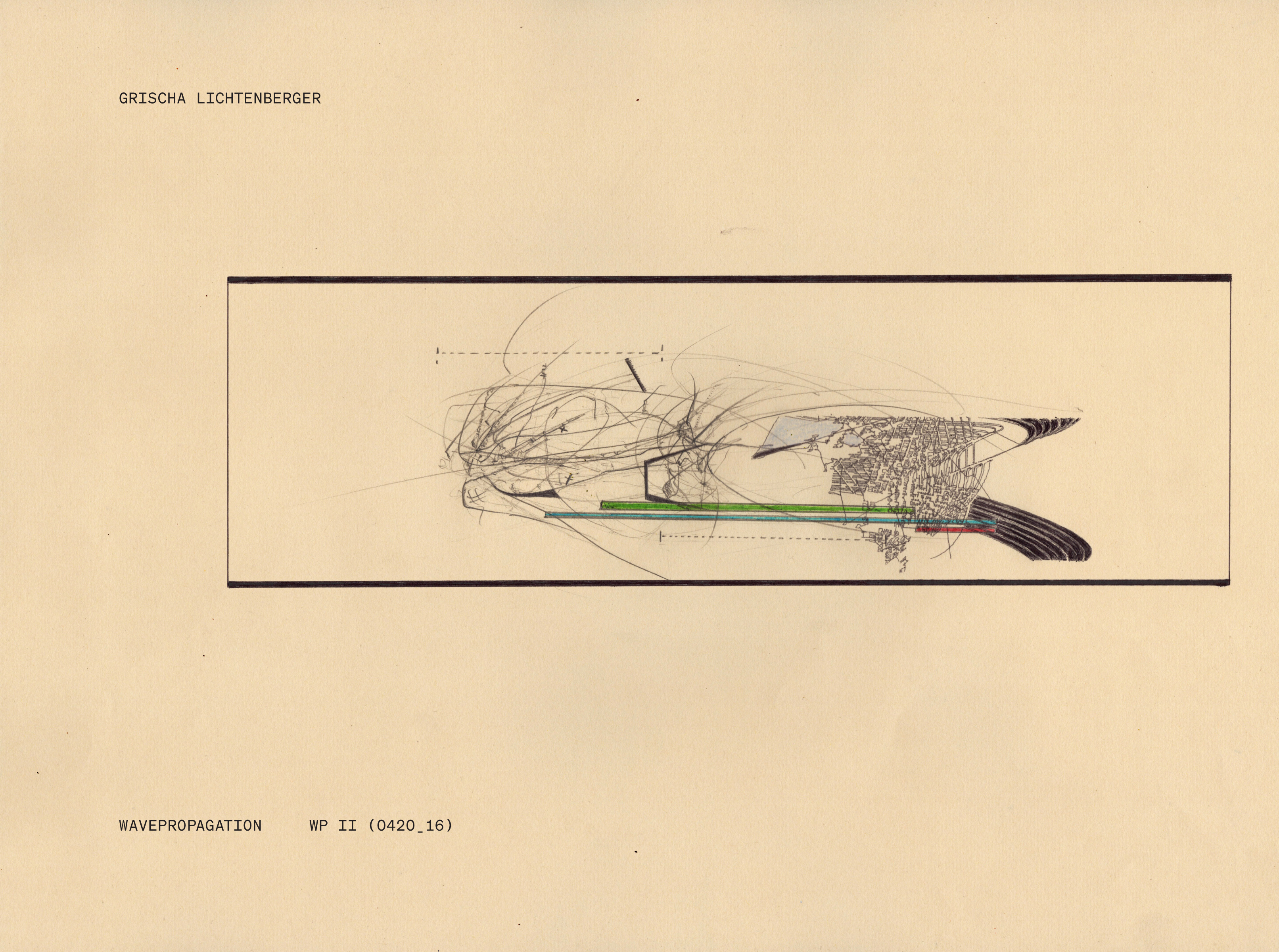
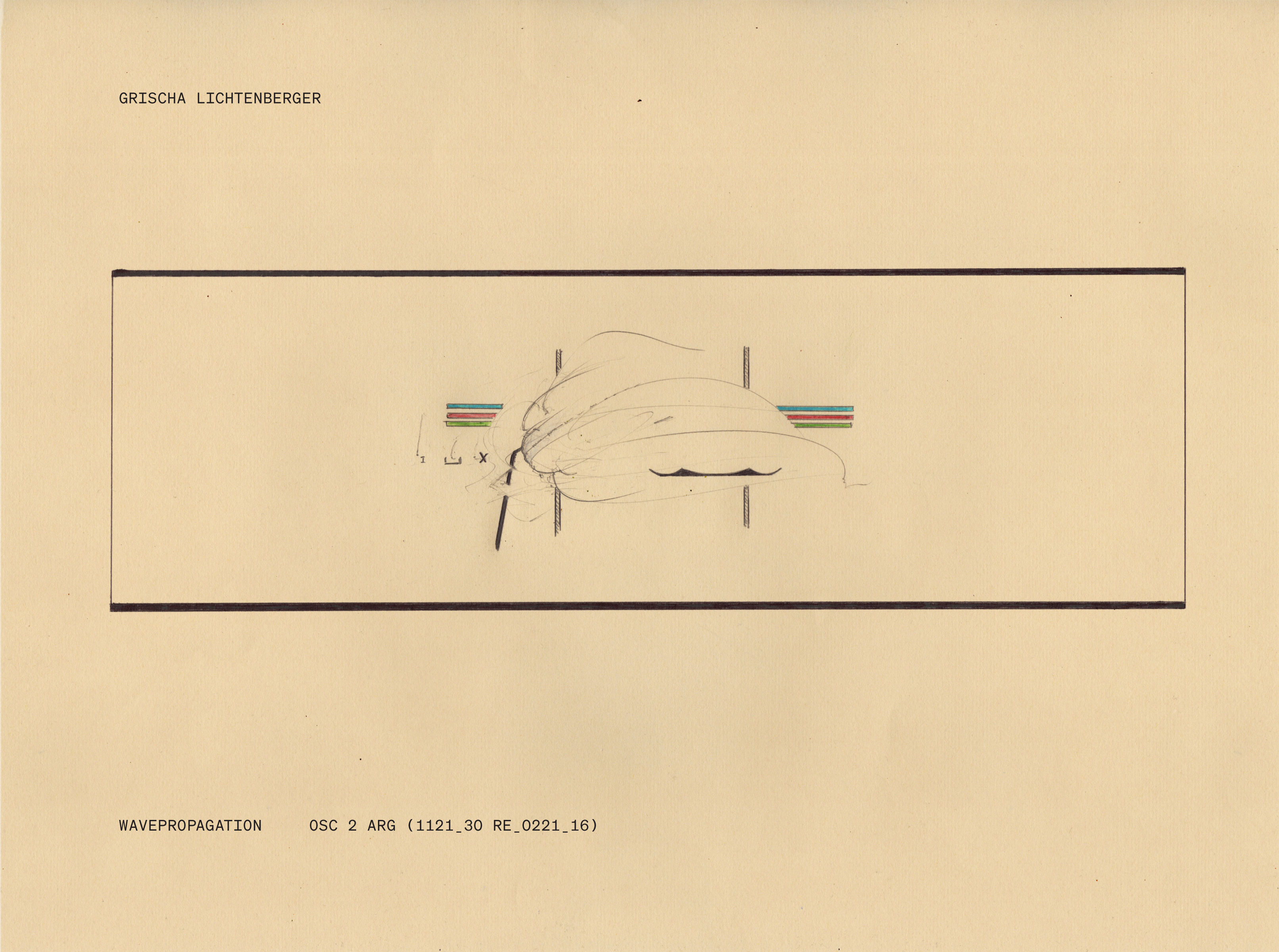
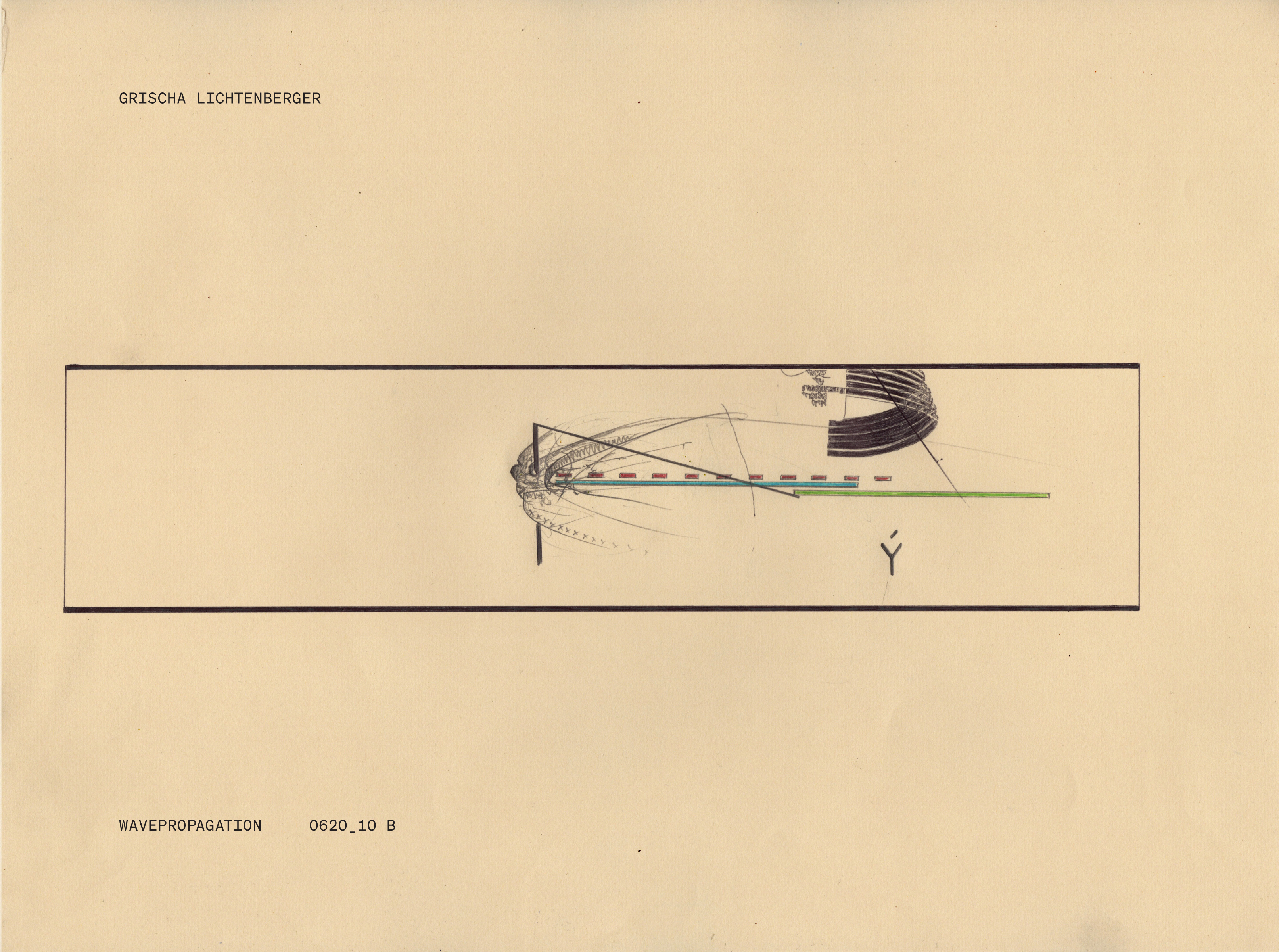
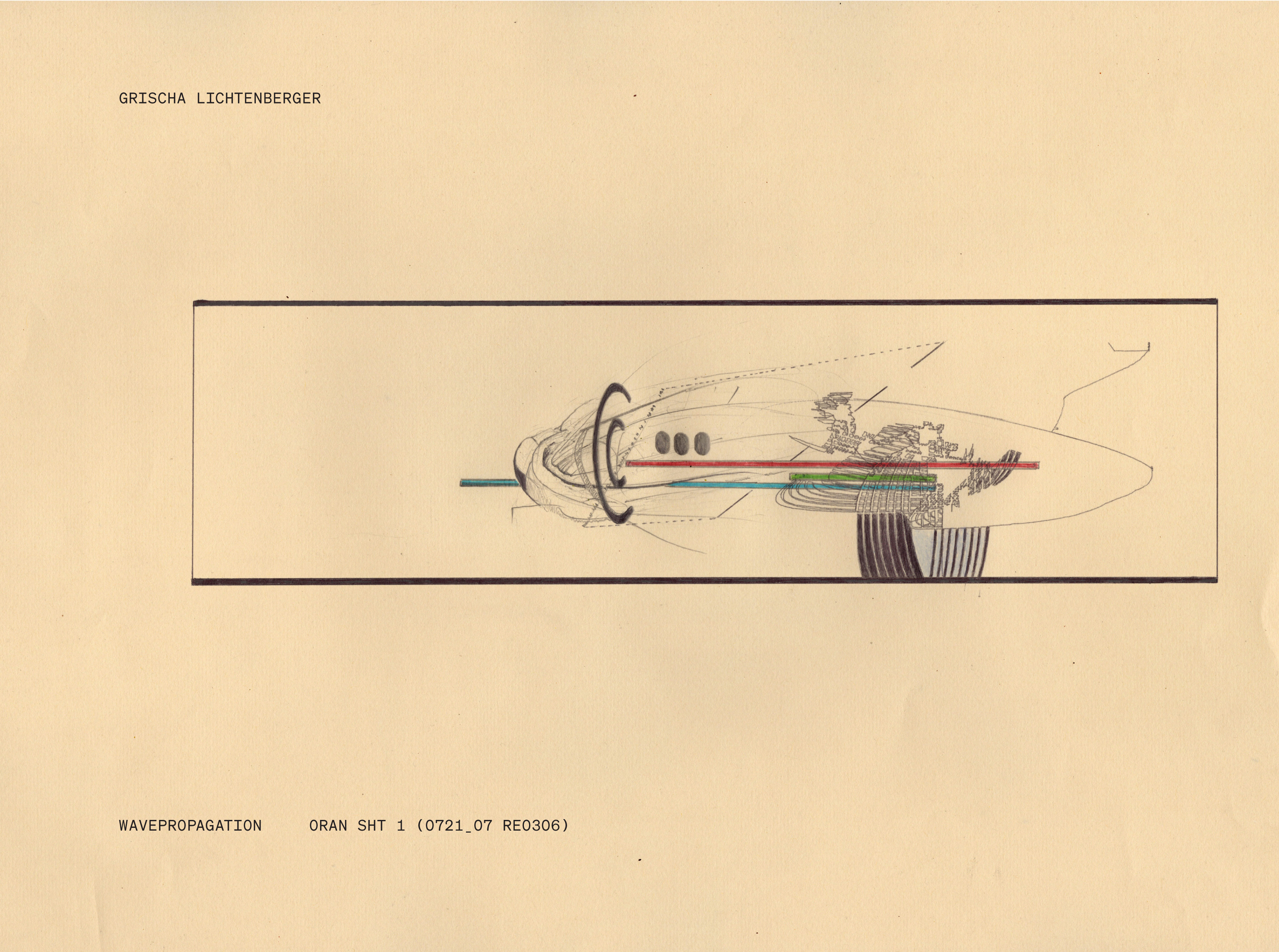
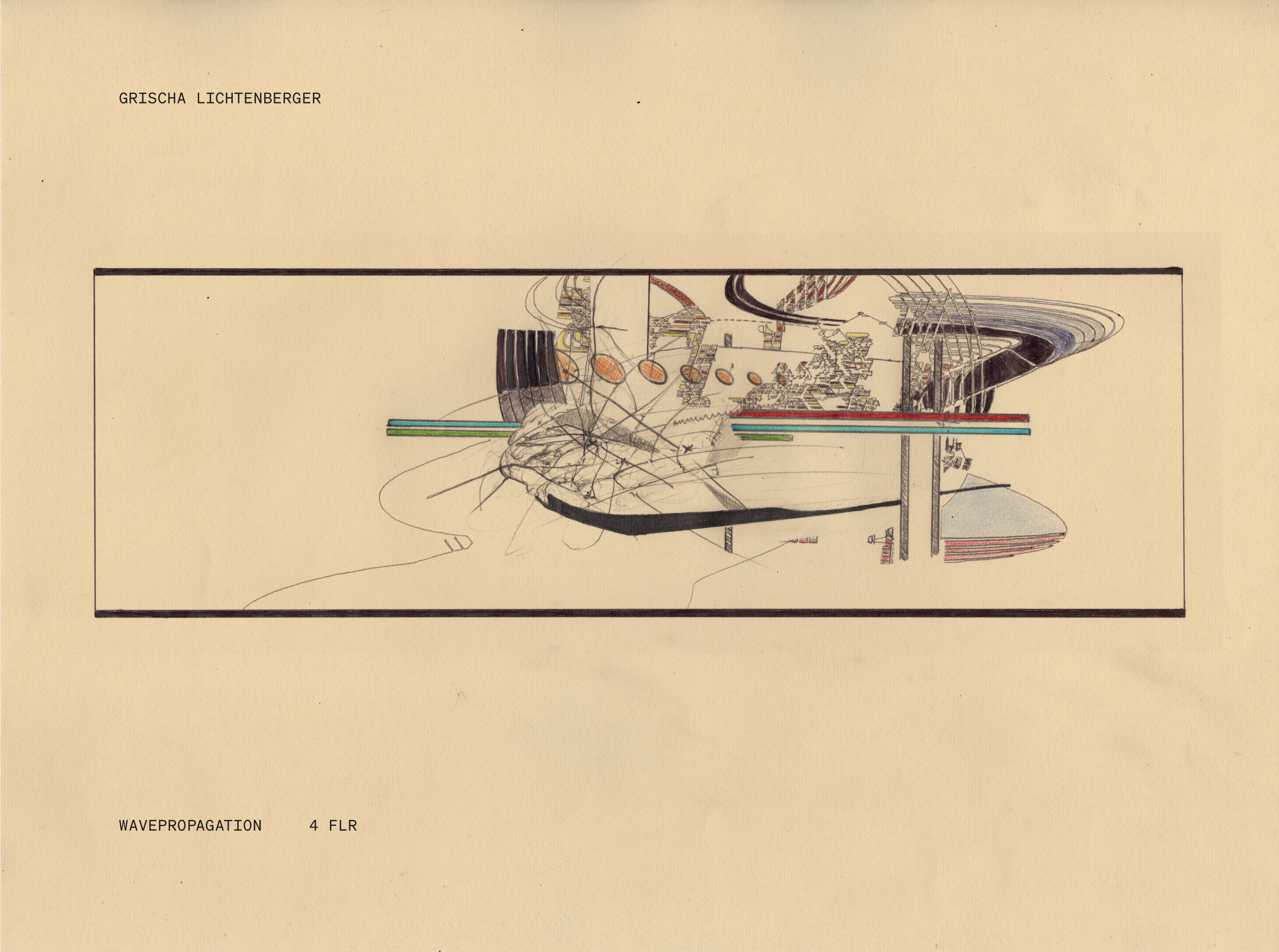
wavepropagation originates from a simple constraint: to construct entire pieces through the manipulation of a single functional oscillator, generating melody, bass and percussion from one voice.
By transforming its waveform, introducing transients, harmonic shifts and low-frequency pitch envelopes, a single oscillator can produce the impression of multiple, independent sound sources. Moving between elementary sine waves, triangular shapes and more chaotic, noise-like forms, wavepropagation explores how complexity can emerge from a single continuous signal.
At the core of the record is a fascination with the amount of information a wave can contain. A loudspeaker performs one basic movement — pushing and pulling air — yet through this movement it can reproduce the complexity of an entire orchestra.
The idea is reflected in an experience on Kyiv’s Darnytskyi Bridge, where Lichtenberger observed the surface of the Dnipro: swimmers, boats and activity along its banks leaving overlapping traces in the water. The image recalled Richard Feynman’s observation that the seemingly chaotic waves of a swimming pool contain information about everything that has disturbed its surface.
wavepropagation applies this principle to sound: multiple events can coexist within a single moving form.
The title also refers to the way waves continue through moments of apparent cancellation. Two waves may meet and momentarily produce zero, yet neither disappears; both continue to propagate beyond that point.
At one moment: zero. At the next: something again.
The cancellation is local. The propagation is not.
You should also read:
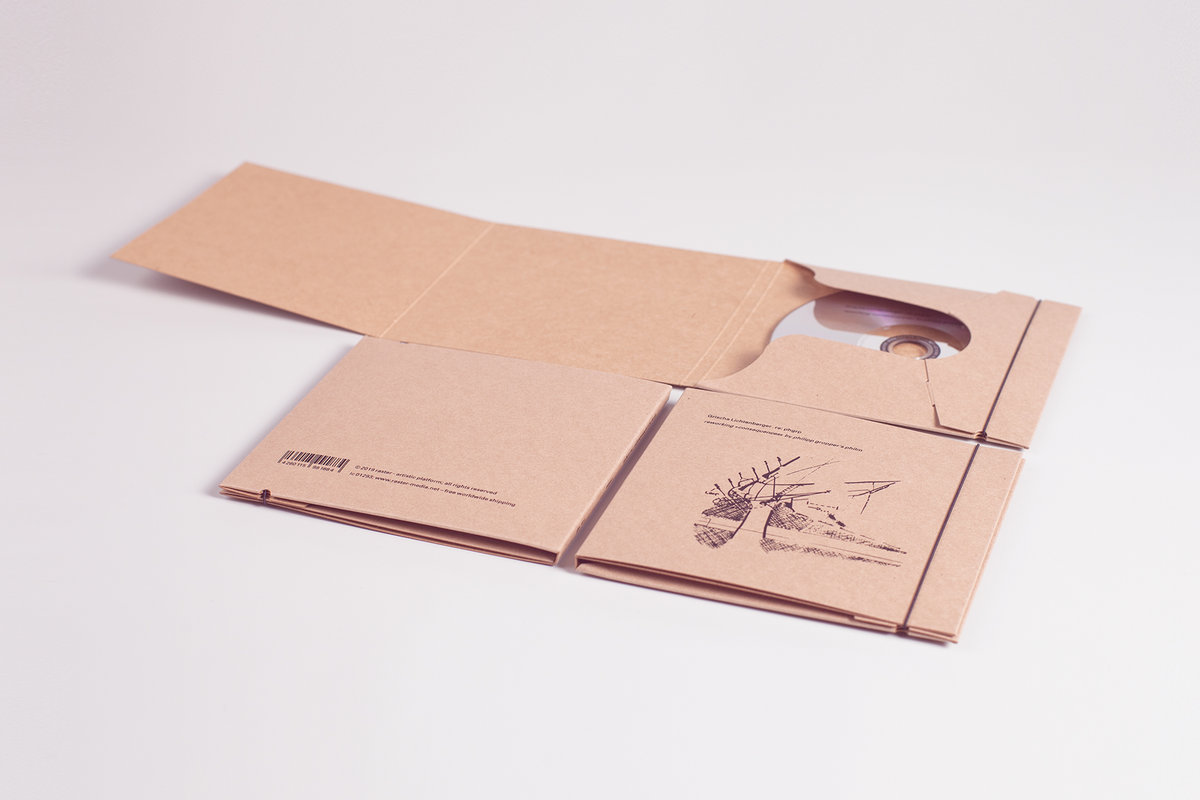
_rel: re:phgrp (reworking consequences by philipp gropper's philm) (r-m 188 2019)
re: phgrp (reworking »Consequences« by Philipp Gropper's PHILM) by Grischa Lichtenberger Grischa Lichtenberger’s music stands for broken rhythms, for high-density manipulations that emphasize the digital and fractal nature of its working process. A mindset that grew closer to contemporary jazz in recent years. Since free…
_rel: spielraum / allgegenwart / strahlung (r-n 168/172/173) 2016
spielraum/allgegenwart/strahlung - limited edition 12"vinyl + handmade silkscreen print out on oct 7th 2016 ep 1 spielraum - invisible freedom they say that the inventions of the famous swiss clock happened in the spare time. the farmer who were working on them had nothing left…
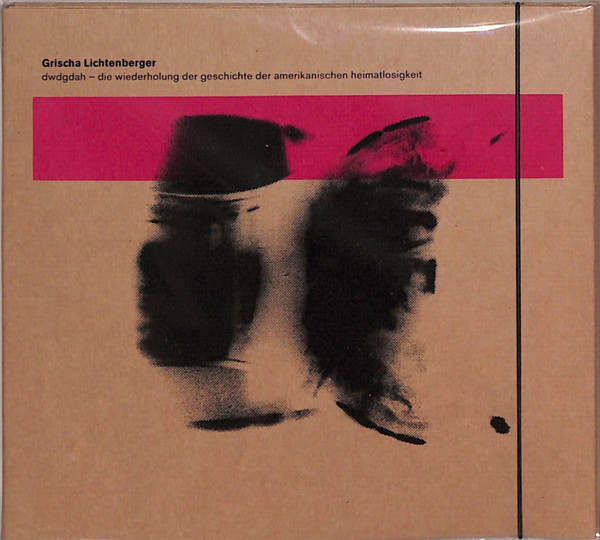
_rel: die wiederholung der geschichte der geschicte der amerikanischen heimatlosigkeit (dwdgdah) (rm 211) 2023
making electronic music means working with files. besides cutting them, rearranging them, manipulating them, this also means working with the archive, confronting different dates in time with eachother. creating the liveset for dwdgdah created the unique opportunity for me to confront material that is almost…
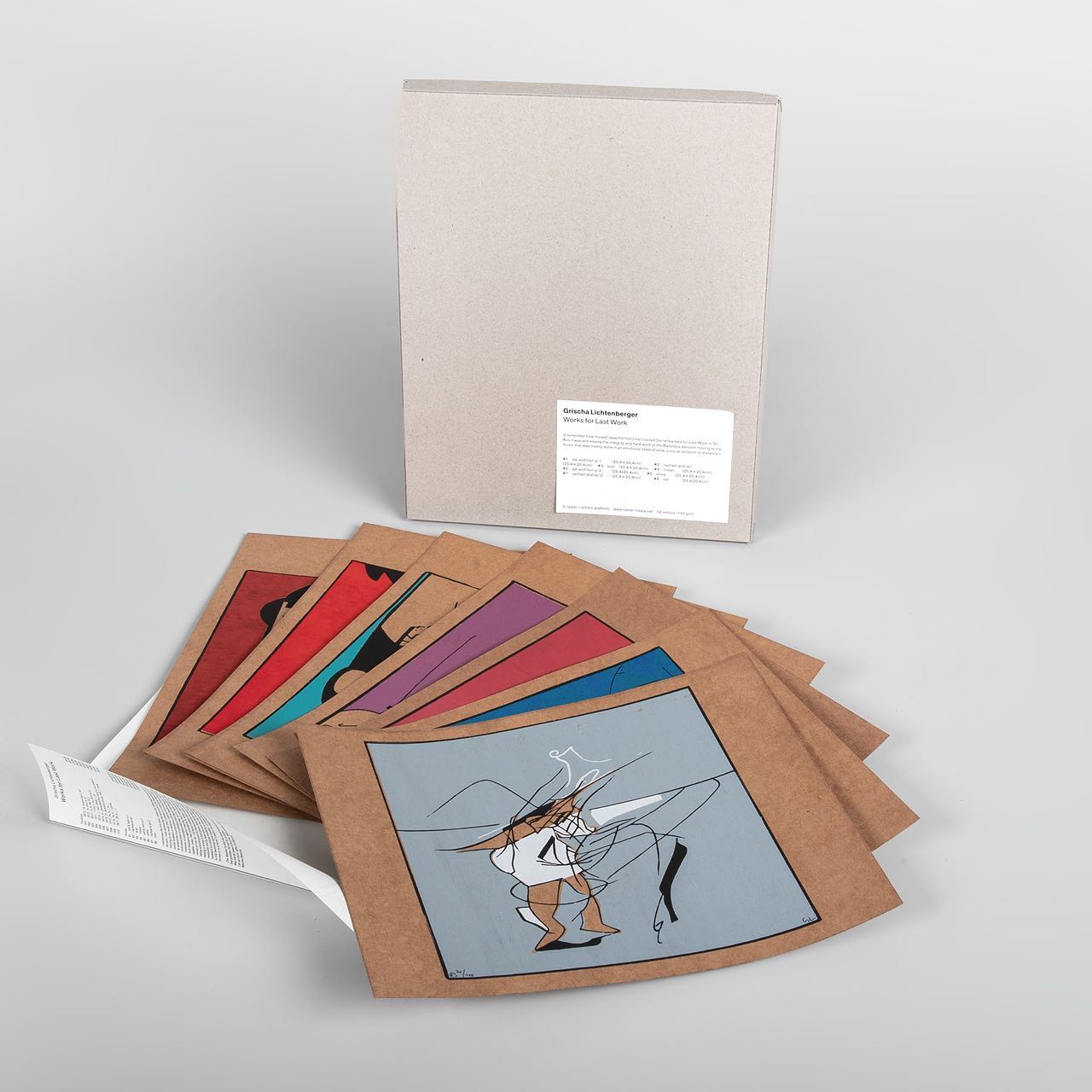
_rel: works for last work (r-m ext013) 2023
works for last work (digital audio + limited silkscreenprint edition) (raster-media ext013)
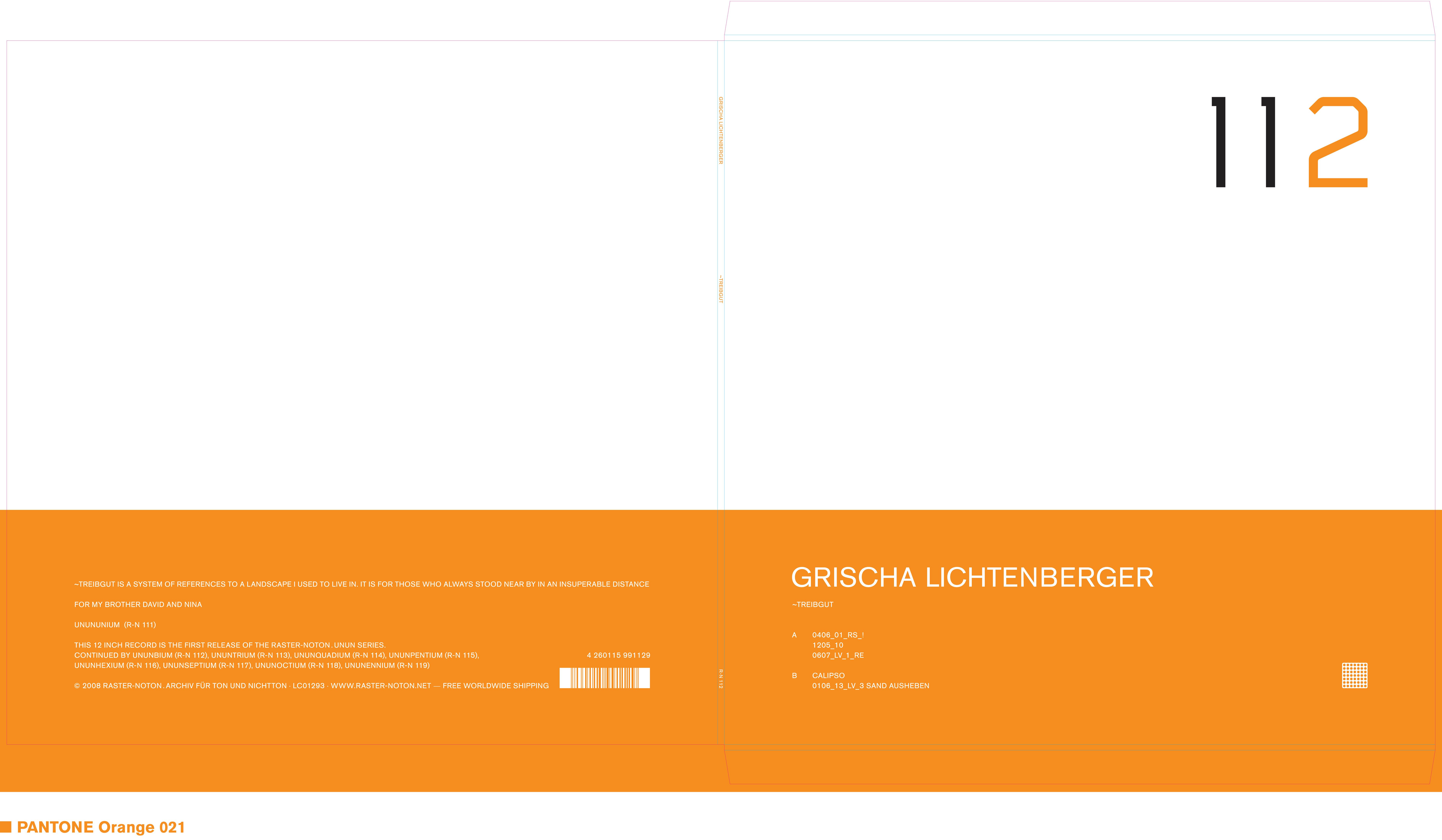
_rel: ~treibgut (ununumbium r-n112)
die schwierigekeit über den zusammenhang der arbeiten zu schreiben verrät schon sehr viel von der auseinandersetzung der arbeiten selbst: ~treibgut oder treibgut, wie machs gut ist keine konzeption, sondern mehr abbild der auseinandersetzung um die legitimation von künstlerischer produktion selbst. "hier, ist der ort, der…